
What is the difference between structural silicone and regular silicone?
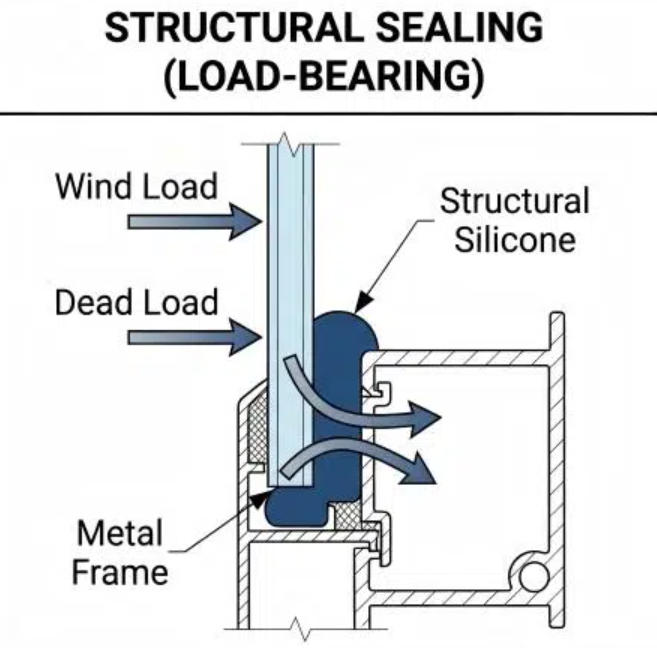
Both tubes may look similar on the shelf, but structural silicone and regular silicone are built for very different jobs. One is designed to hold things together under stress; the other is meant to keep water, air, and dust out. Choosing the wrong type can lead to failed seals, safety issues, and expensive repairs down the line.
What Makes Structural Silicone Different
It carries structural loads
Structural silicone is formulated to bond glass, metal panels, and other cladding materials directly to a building frame. In curtain wall systems, it replaces mechanical fasteners like bolts and clips, transferring wind loads and dead loads from the panel to the supporting structure. That is why engineers specify it for high-rise facades and glass-heavy architecture.
Higher strength and stricter standards
Structural silicones are tested to standards such as ASTM C1184 and ETAG 002. They offer high tensile strength, excellent elongation, and stable adhesion after years of UV exposure and temperature swings. A two-component structural silicone sealant is often used on large insulating glass units because it cures quickly and delivers the consistent performance big projects demand.
Where Regular Silicone Fits In
Sealing, not supporting
Regular silicone sealant excels at waterproofing and weatherproofing. It flexes with joint movement, resists mold, and holds up outdoors. You will find it around windows, bathrooms, kitchens, HVAC ducts, and expansion joints. It is not rated to bear weight, so it should never be asked to do a structural silicone's job.
Easier to apply and more budget-friendly
Regular silicones come in ready-to-use cartridges and require no mixing. They cure with atmospheric moisture and are forgiving for smaller repairs. For general construction and maintenance, a reliable silicone sealant gives you the weather resistance and flexibility you need without the engineering-grade price tag.
How to Choose the Right One
Use structural silicone when
You are bonding glass or panels to a frame, the joint must transfer loads, or the project requires certified structural performance. Always follow the manufacturer's structural glazing guidelines and get engineering approval.
Use regular silicone when
You need a waterproof, flexible seal around windows, doors, bathrooms, or HVAC components. If the area will be painted afterward, consider an acrylic mastic sealant for a finish that accepts paint.
Understanding the difference keeps your project safe, compliant, and long-lasting. When in doubt, check the product data sheet and consult an engineer before using any silicone in a load-bearing application.


