E-mail:
sales@silicone-sealant-china.com

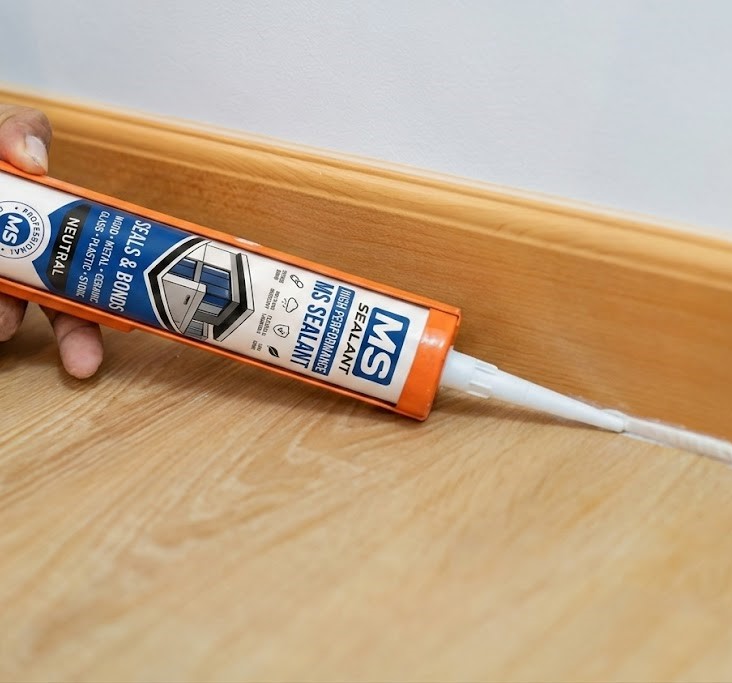
Walk down the sealant aisle and two tubes dominate the shelf: MS sealant and silicone sealant. Both stay flexible, both seal, and both look similar in the gun. Yet they behave very differently once cured. Knowing the difference saves money and callbacks.
MS sealant is built on modified silane polymer chemistry, a hybrid that combines the elasticity of polyurethane with the weather resistance of silicone. It contains no isocyanates or solvents, cures with low odor, and bonds to almost any substrate without primer. On skirting boards, flooring joints, and panel work, an acrylic mastic sealant remains the cheaper paintable option for dry interior seams.
Silicone sealant is based on polysiloxane chemistry. It cures with air moisture into a rubber that resists UV, ozone, and extreme temperatures better than any other elastic sealant. An all-purpose silicone sealant is the standard choice for glass, ceramics, and wet areas.
MS sealant accepts paint after curing, so painted joints stay one color. Paint will not stick to silicone; the film peels within weeks. If the joint must match painted trim, MS wins by default.
Silicone handles roughly -50 °C to +200 °C and holds up for decades under direct sun. MS sealant works well from about -40 °C to +120 °C but ages faster under constant strong UV. For exterior facades and glazing, silicone stays the benchmark.
MS sealant bonds primer-free to wood, concrete, plastics, coated metal, and even slightly damp surfaces. Silicone grips glass, tile, ceramic, and metal extremely well but struggles on some plastics without priming. Mixed-substrate jobs favor MS; glass and tile jobs favor silicone.
Choose MS sealant for interior decoration, skirting and floor joints, panel bonding, and anywhere paint or low odor matters. Choose silicone for bathrooms, kitchens, glass, mirrors, and exterior weatherproofing. For load-bearing glass assemblies, only a two-component structural silicone sealant meets the engineering requirements.
Neither product replaces the other. Match the chemistry to the exposure, the substrate, and the finish, and both will outlast the wall around them.
Copyright 2019 by Hangzhou Silicone Tech Adhesive Co., Ltd. All rights reserved.
Bathroom Sealant | Acrylic Sealant | Dow Corning 795 | Aquarium Sealant | Dow Corning 732 | Clear Silicone Sealant | Polysulfide Sealant | Glazing Sealant | Mirror Sealant | IG Sealant
Powered by Onepound


