E-mail:
sales@silicone-sealant-china.com

A dependable sanitary silicone supplier answers four questions before you ask them: which biocide sits in the formula, which cure chemistry the product uses, how the cartridge behaves under pressure, and which batch test reports back up the claims. Nearly every wholesale complaint traces back to one of those four points, and you can verify all of them before placing an order. Price per carton alone tells you very little.
Sanitary grade earns its name from an added fungicide. Ask which active ingredient the factory uses and at what percentage. A supplier who answers with a number is easier to trust than one who answers with an adjective. Underdosed product looks identical on the shelf and turns black in a shower within a year — by then the containers are in your customers' vans, not your warehouse.
Both chemistries sell, but they are not interchangeable. An acetoxy silicone sealant grabs glass, glazed tile, and ceramic quickly and costs less. It releases acetic acid, so it pits chrome and stains marble. A neutral cure silicone covers chrome, mirror, stone, and metal frames without corrosion. A factory that stocks only one chemistry will recommend that one for every enquiry you send.
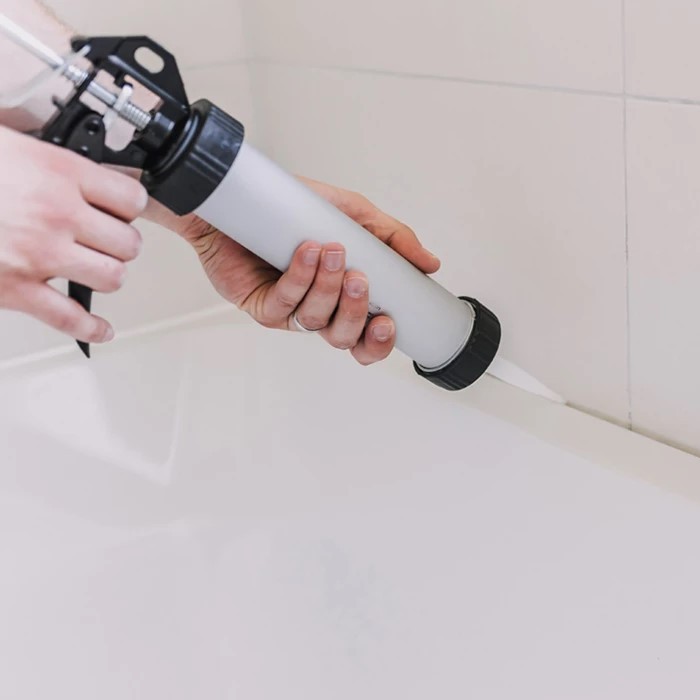
The cartridge is half the product and the first thing a tradesman judges. Check these before you commit to a container load:
Ask for documents tied to a production batch, dated inside the last twelve months. The useful set covers fungal resistance (ASTM G21 or ISO 846), adhesion and tensile data, VOC or REACH compliance, and an ISO 9001 certificate for the plant. A supplier who sends a generic catalogue PDF instead of a batch report has told you something useful about their quality system.
Send these in writing and compare the replies side by side:
Sanitary silicone is a repeat-purchase item, so the cost of a weak supplier shows up over several seasons rather than one delivery. Judge factories on documentation and cartridge quality first, then negotiate price. Where a customer needs a paintable joint instead of a silicone bead, an acrylic sealant belongs in the range as well. A supplier who can talk through all of this in numbers, and back it with batch records, is the one worth a long-term contract.
Copyright 2019 by Hangzhou Silicone Tech Adhesive Co., Ltd. All rights reserved.
Bathroom Sealant | Acrylic Sealant | Dow Corning 795 | Aquarium Sealant | Dow Corning 732 | Clear Silicone Sealant | Polysulfide Sealant | Glazing Sealant | Mirror Sealant | IG Sealant
Powered by Onepound


