E-mail:
sales@silicone-sealant-china.com

Yes, with one condition. Once cured, sanitary silicone sheds water at the joint it seals and stays flexible through years of showering, splashing, and cleaning. It is not a waterproofing membrane. It closes a gap between two surfaces; it cannot make a wall, floor, or shower tray waterproof on its own. That distinction decides whether a bathroom stays dry or leaks behind the tiles.
The terms are not interchangeable, and suppliers rarely spell them out:
So a sanitary sealant is waterproof as a material and a seal, but it is only one line of defence in an assembly.
In each case the sealant works because water runs off it. Gravity is doing half the job.
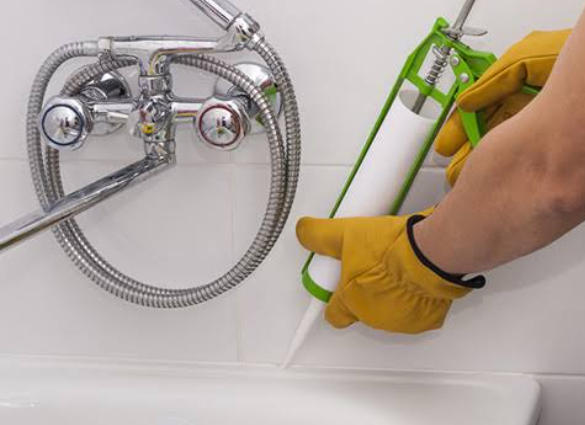
A joint that sits permanently under water — a submerged step, a leaking pipe box, a blocked shower gully — puts continuous hydrostatic load on the bead. Silicone will hold for a while, then water tracks behind the edge. Fix the drainage, not the sealant.
Sealant applied at the surface does nothing for water that has already entered through grout or a cracked tile. If a wall needs tanking, it needs a membrane underneath. A neutral cure silicone bead over the top only hides the problem until the plasterboard softens.
Silicone stretches, but it needs a thickness to stretch into. A joint wider than about 6 mm should carry a backer rod so the bead forms an hourglass section and bonds on two faces, not three. Fill a deep gap solid and the seal will tear at the first thermal cycle.
Silicone will not bond to damp tile, soap residue, or old sealant. The joint looks sealed on day one and fails within months — the most common cause of a leak that "should not have happened".
On glass, glazed tile, and ceramic an acetoxy silicone sealant bonds quickly and costs less. Around chrome mixers, mirrors, and stone, use neutral cure to avoid acid attack and staining. Where the joint has to be painted or filled rather than sealed, an acrylic sealant belongs in the specification instead.
Sanitary silicone is waterproof, and that is exactly where the confusion starts. It keeps water out of a joint it fully covers, and it will not save a wet area that lacks proper tanking, drainage, or preparation. Judge it as the last line of a system rather than the whole system, and the specification writes itself: dry substrate, correct chemistry, sensible joint dimensions, full cure before use.
Copyright 2019 by Hangzhou Silicone Tech Adhesive Co., Ltd. All rights reserved.
Bathroom Sealant | Acrylic Sealant | Dow Corning 795 | Aquarium Sealant | Dow Corning 732 | Clear Silicone Sealant | Polysulfide Sealant | Glazing Sealant | Mirror Sealant | IG Sealant
Powered by Onepound


