E-mail:
sales@silicone-sealant-china.com

There is no worse feeling than watching water seep behind freshly sealed tile. You spent the weekend running sealant along every joint, smoothing every bead, and stepping back to admire your work. Then someone takes a shower on Monday morning, and by Tuesday afternoon, there's a dark damp spot on the ceiling below or the drywall behind the tub looks like it's been sweating.
The problem was never the sealant you bought. It was that you never tested the seal before closing everything up. Waterproof testing isn't optional—it's the only way to know whether your anti-mold sealant actually performed under real conditions before you bury it behind tile, grout, and vanity panels.
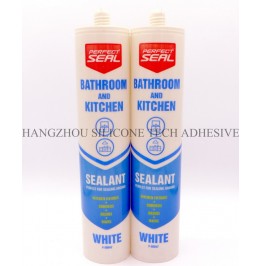
Most people skip this step because they assume the sealant works. It might. But you won't know for sure until water pressure pushes against it for a sustained period. And by then, if it fails, you're tearing out tile to fix a problem that a 48-hour test would have caught.
A fresh bead of sealant looks perfect. Smooth, shiny, perfectly tooled. But appearance has nothing to do with waterproof performance. Sealant can look flawless and still have micro-gaps, poor adhesion at the substrate interface, or internal voids from improper curing.
Water doesn't attack the surface. It finds the weakest point—usually where the sealant meets the substrate—and works its way in through capillary action. That process is slow. You won't see it on day one. You might not see it for weeks or months. But the damage starts immediately.
Water testing forces that failure to happen while you're still watching. You fill the area, apply pressure, and observe. If water gets through, you see it in real time and can fix it before anything permanent happens.
Every sealant manufacturer talks about mold resistance. Silver ions, fungicide additives, moisture-curing formulas—all designed to prevent mold growth on the sealant surface. But mold doesn't grow on good sealant. It grows where moisture accumulates behind failed seals.
If water penetrates behind your anti-mold sealant, the mold grows on the drywall, the studs, the insulation—not on the sealant itself. The anti-mold additives become irrelevant because the problem isn't mold on the surface. It's water behind the surface creating a hidden breeding ground.
Testing for waterproofing catches that problem before mold ever gets established.
You can't test the whole bathroom at once. You need to isolate a specific area—usually the shower floor, the tub surround, or a sink countertop joint. The rest of the bathroom stays dry and normal.
Use painter's tape and plastic sheeting to create a dam around the test zone. Tape goes on the tile or fixture surfaces, not on the sealant itself. Press the tape firmly so water can't seep under the edges. Overlap tape at corners by at least 25mm—a single layer at a corner will leak.
For shower floor testing, the dam goes around the perimeter where the floor meets the curb or threshold. For tub surrounds, tape runs along the top edge of the tub deck and down both sides where the wall meets the tub flange.
The dam doesn't need to be pretty. It needs to be watertight. Check it by running a hose along the tape line before you start—if water squeezes under at any point, reseal that section.
This is where people mess up. They seal the joint on Saturday, test it on Sunday, and wonder why it leaked. Most bathroom sealants need 24 to 72 hours to cure fully before water exposure. Some anti-mold formulations take even longer—up to 7 days for complete cross-linking.
Check the technical data sheet for the specific product you used. Look for "water exposure time" or "service ready" notation. If it says 72 hours, wait 72 hours. If it says 7 days, wait 7 days. Testing before full cure gives false failures—the sealant wasn't ready, not that it was bad.
Temperature affects cure time too. At 10°C, cure takes roughly twice as long as at 23°C. If your bathroom is cold, add extra time. When in doubt, wait longer than you think you need to.
Pour water into the isolated area slowly. Don't dump it in—a sudden surge can blow out poorly sealed corners or lift tape that wasn't applied well. Use a bucket or a pitcher to control the flow.
The water depth should be at least 25mm to 50mm—enough to create meaningful hydrostatic pressure against the sealant joints. Shallow water won't stress the seal enough to reveal weak points. You need real pressure pushing water into every gap, every micro-void, every imperfect bond line.
For shower floors, fill to about 30mm above the drain. For tub surrounds, fill the tub to the overflow level and let it sit. For sink countertop joints, flood the basin and let water sit against the backsplash seal.
Mark the water level with a piece of tape on the wall or fixture. You'll reference this mark later to check for water loss.
Minimum 24 hours. Ideally 48. For critical areas like shower floors where failure means demolition, go 72 hours.
During the test, check the water level every 6 to 8 hours. If the level drops more than 3mm in 24 hours (accounting for evaporation), you have a leak. Evaporation in a closed bathroom is minimal—usually less than 1mm per day. Anything beyond that is water escaping through the seal.
Don't open the test area during the hold period. Every time you lift the tape or drain the water, you disturb the sealant and potentially create new leaks that weren't there before. Let it sit. Let the water do its work.
Water doesn't always come through where you expect. The obvious spots—the corners, the drain perimeter, the fixture flanges—are where you should look first. But also check the ceiling below the test area, the walls adjacent to the joint, and the grout lines near the sealant.
Use a flashlight to look behind the tile if you can see any grout lines. Darkening grout, efflorescence (white powdery deposits), or a musty smell all indicate moisture migration behind the surface.
For tub surrounds, check the outside of the tub where it meets the wall studs. Water that penetrates the inner seal travels along the tub bottom and shows up on the exterior wall. That's a classic sign of a failed tub-to-wall seal.
After 48 hours, the water level should be within 1mm to 2mm of the original mark—and that loss should be attributable to evaporation, not leakage. The sealant joints look unchanged. No darkening, no softening, no visible gaps.
The substrate behind the seal—if you can access it—should be dry. Touch the drywall, the backer board, the studs. They should feel the same as everything else in the bathroom. No dampness, no discoloration, no musty odor.
If all of that checks out, the seal passed. You can proceed with grouting, tiling, or closing up the area.
If the water level dropped significantly, or you found damp spots behind the seal, you have a failure. Don't panic—this is exactly why you tested.
Drain the water completely and let the area dry for at least 48 hours. Moisture trapped behind the seal will prevent any repair from bonding properly. Use a fan to speed drying if needed.
Once dry, inspect the failed joint. Look for where the water came through—usually a gap at a corner, a spot where the sealant pulled away from the substrate, or a void in the middle of a long bead. Remove the failed sealant with a utility knife or a sealant remover tool. Clean the joint thoroughly with solvent, re-prime if needed, and reapply sealant using the proper multi-coat or thick-fill technique.
Let the repair cure for the full recommended time, then retest. Don't skip the retest. A repair that looked good but wasn't tested is just a guess.
The number one cause of test failure isn't the sealant—it's the surface. Dust, oil, moisture, or loose particles at the bond line create a barrier that prevents adhesion. The sealant looks bonded but is actually sitting on a contamination layer.
Water pressure pushes against that weak interface and forces separation. The sealant peels away from the substrate in a clean line, and water flows right through.
Before every test, ask yourself: did I clean the joint with solvent? Did I prime difficult substrates? Did I wait for the surface to dry completely? If any of those answers is no, that's your problem.
If the fixture moved while the sealant was curing—someone sat on the toilet, the tub was bumped, the sink was used—the sealant never formed a proper bond. It cured in a stressed position, and that internal stress creates micro-cracks that water exploits.
Fixtures must be completely still during cure. Tape off the area, put a sign on the door, and don't touch anything for the full cure period. This sounds obvious, but in a busy household, someone always uses the bathroom while the sealant is setting.
Sealant on paint, sealant on natural stone, sealant on certain plastics—these combinations fail more often than not. The sealant adheres to itself fine but can't bond to the substrate. The joint looks sealed but water wicks right through the interface.
If you're testing a joint involving painted drywall, marble, or PVC trim, make sure you used a compatible primer. Without primer, the test will fail no matter how perfect your application technique is.
After a passing test, drain the water and dry the area thoroughly. Any moisture left in the joint or on the substrate will interfere with grout adhesion or subsequent sealant layers. Use towels, a squeegee, and a fan to get everything bone-dry.
Check the sealant surface—it should feel firm and slightly tacky, not soft or gummy. If it feels soft, it wasn't fully cured before the test, and you need to let it sit longer before proceeding.
Write down the date, the area tested, the water depth, the hold time, and the result. Take photos of the water level marks and the joint condition before and after. This documentation matters if problems appear years later—you can prove the seal was tested and passed at the time of installation.
Most professionals keep a simple log. Date, location, depth, duration, result, notes. It takes five minutes and saves hours of argument if a homeowner claims the seal was never tested.
Even after a passing test, check the sealed joints again at 30 days and 90 days. Some failures don't show up immediately—they develop as the building settles, as fixtures shift, or as thermal cycling stresses the joint over time.
A quick visual check—looking for darkening, softening, or gaps—takes a minute. Catching a slow leak at 30 days is easy. Catching it at 6 months means mold remediation and tile removal.
Water testing is the most boring part of bathroom waterproofing. It's slow, it's messy, and nobody posts photos of it on social media. But it's the single step that separates a seal job that lasts from one that looks good for three months and then rots behind the wall.
Do the test. Wait the time. Check the results. Then you can close up the walls with actual confidence that the water is staying where it belongs—on the inside of the seal, not behind it.
Copyright 2019 by Hangzhou Silicone Tech Adhesive Co., Ltd. All rights reserved.
Bathroom Sealant | Acrylic Sealant | Dow Corning 795 | Aquarium Sealant | Dow Corning 732 | Clear Silicone Sealant | Polysulfide Sealant | Glazing Sealant | Mirror Sealant | IG Sealant
Powered by Onepound


