E-mail:
sales@silicone-sealant-china.com

You finished the job. Every joint looks smooth, every bead is perfectly concave, and the whole bathroom smells like a construction site. You step back, pat yourself on the shoulder, and figure you're done.
You're not done. Not even close.
Sealant installation is maybe 20% of the work. The other 80% is what happens in the weeks and months after you apply it. Bathrooms are brutal environments—constant moisture, temperature swings, chemical exposure from cleaning products, and physical abuse from daily use. All of that works on your sealant every single day whether you're paying attention or not.
The difference between sealant that lasts ten years and sealant that peels in six months often comes down to what you did—or didn't do—after the tool went down.
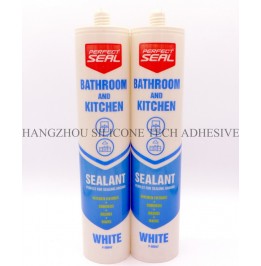
Everyone knows sealant needs time to dry. Almost nobody respects that time fully. The first 24 to 72 hours after application is when the cross-linking reaction happens—the chemical process that turns wet goo into a durable elastomer. Interrupt that process and you get a permanently weakened seal.
No water. No steam. No touching. No cleaning near the joint.
This means no showers, no baths, no running the sink near a freshly sealed joint, and definitely no wiping condensation off the mirror if it drips near your work. I've seen people run a hot shower the same night because "it looked dry on top." The surface dried. The core didn't. Three months later, that bead pulls away from the tub and water runs behind it.
Keep the bathroom ventilated but not drafty. A fan on low helps remove volatile byproducts without blowing dust onto the wet sealant. The ideal cure environment is 20°C to 25°C with 40% to 60% humidity. Too hot and it skins too fast. Too cold and it never fully cures.
Your finger wants to press into that bead. It looks so smooth and perfect. Resist. Every fingerprint leaves skin oils that create a contamination layer. Every press compresses the bead unevenly, thinning some spots and thickening others. That inconsistency becomes a stress concentration point where cracks start.
If you need to check whether it's cured, touch the very edge of the bead with one fingertip—barely. If it leaves a mark, it's not ready. If it feels firm and springy, it's good. But don't make a habit of checking. Every touch is a risk.
Bleach is the enemy. Not in a dramatic way—it doesn't eat through sealant overnight. But chlorine bleach slowly degrades the polymer chains in most bathroom sealants, making the surface brittle and porous over months. You won't notice until the sealant starts cracking at the edges or turning chalky.
Ammonia-based cleaners are almost as bad. They attack the same chemical bonds, especially in silicone formulations. The sealant looks fine for a year, then suddenly it crumbles when you try to wipe it.
Acidic cleaners—toilet bowl cleaner, lime remover, vinegar in high concentration—etch the surface and create micro-pores that trap moisture. Mold loves those pores. You end up scrubbing more to fight mold, which wears the sealant faster, which creates more pores. It's a cycle.
Warm water and a few drops of mild dish soap. That's it. Use a soft cloth or a non-abrasive sponge. Wipe along the sealant surface gently—don't scrub across it with pressure. For stubborn grime, let the soapy water sit for a minute first, then wipe.
For mold spots, use diluted white vinegar—maybe 1 part vinegar to 4 parts water. Apply it, let it sit for 10 minutes, wipe with a soft brush, rinse with clean water, and dry thoroughly. Don't let vinegar sit undiluted on sealant for more than a few minutes. It's acidic enough to do damage if left too long.
Dry the area after every cleaning. Standing water on sealant—even for an hour—gives mold spores everything they need to germinate. A quick wipe with a dry microfiber cloth takes 30 seconds and prevents most mold problems.
Mold doesn't appear out of nowhere. Before you see black spots, you'll see a change in the sealant itself. It starts looking dull instead of glossy. The color shifts slightly—silicone turns yellowish, latex goes chalky. The surface feels different under your finger—rougher, softer, or spongy in spots.
Check your sealant joints once a month. Run your fingernail along the bead. If it catches or pulls away from the substrate even slightly, that joint is losing adhesion. If you see any gap between the sealant and the tile or fixture—even a hairline—water is getting in.
The corners are where problems start first. Tub-to-wall intersections, drain perimeters, pipe penetrations—these spots flex more, collect more moisture, and fail earlier than straight runs. Inspect them weekly for the first three months, then monthly after that.
If the sealant is softening or swelling but still bonded, you might be able to save it. Clean the area with solvent, let it dry completely, and run a fresh thin bead of sealant over the top. This works when the old sealant is still adherent but has surface degradation.
If the sealant is peeling, cracking through the middle, or pulling away from the substrate in sections, don't patch it. Strip it all the way back to bare surface. Use a utility knife and a putty knife to remove every trace. Clean the joint with solvent, prime if needed, and reapply fresh sealant properly.
Patching over failed sealant is like putting a bandage on a broken bone. It looks fine for a week, then the whole thing collapses. The extra 20 minutes to strip and redo saves you the 4 hours of tear-out later.
Bathrooms without proper ventilation kill sealant faster than any cleaning product. If steam sits in the air for hours after every shower, it condenses on every surface—including sealant. That repeated wet-dry cycle stresses the material more than constant moisture would.
Run the exhaust fan for at least 30 minutes after every shower. Leave the door cracked if there's no fan. The goal is to get humidity below 60% within an hour of water use. A hygrometer costs 15 dollars and tells you exactly when your bathroom is too humid.
If your bathroom has a window, open it during and after showers. Cross-ventilation drops humidity faster than any fan. In winter, crack the window for 10 minutes even if it's cold—that burst of dry air does more than hours of fan running.
Hot water heats the bathroom air. Cold nights cool it down. That daily swing of 10 to 15 degrees causes the sealant to expand and contract. Over years, that cycling fatigues the material—especially at the bond line where the sealant meets the substrate.
You can't eliminate temperature swings, but you can reduce their impact. Don't blast the hottest water setting every single time—moderate temperatures are easier on everything. And if your bathroom has radiant floor heating, make sure the temperature doesn't exceed what the sealant can handle. Most bathroom sealants are rated to 80°C or so, but sustained heat above 60°C accelerates aging.
Every time someone sits on the toilet, the whole fixture rocks slightly. That rocking flexes the caulk joint at the base. Every time a cabinet door slams, the countertop vibrates and stresses the backsplash seal. These tiny movements add up over thousands of cycles.
You can't stop people from using the bathroom. But you can make the sealant more forgiving. Use a high-movement-rated sealant in these areas—the kind designed for joints that flex regularly. And apply it in the multi-coat method described in other guides—thin layers bond better and flex more than one thick bead.
Steel wool, scouring pads, stiff bristle brushes—these physically wear sealant surfaces. Every scrub removes a tiny layer of material. Over months, that erosion creates roughness that traps dirt and moisture, accelerating degradation.
Stick to soft cloths, sponges, and nylon brushes. If you need more aggressive cleaning for a specific spot, use a soft-bristled toothbrush. It's firm enough to dislodge grime but gentle enough not to abrade the sealant.
Walk through the bathroom once a month. Look at every sealant joint. Check for discoloration, softening, gaps, or mold. Wipe down with soapy water and dry. Takes five minutes.
Every three months, do a proper cleaning of all sealant joints. Apply diluted vinegar, scrub gently, rinse, dry thoroughly. Inspect the bond line at every fixture base—tub, shower, sink, toilet. Note any changes from the previous quarter.
Once a year, get down on your hands and knees and look at every joint from the side. Run your fingernail along the bond line. Press gently to check for soft spots. If anything feels different from last year, plan a repair before the next wet season.
After five years, most bathroom sealant is approaching the end of its effective life—even if it looks fine. Plan a full re-caulk during this window. Strip everything, prep the surfaces, prime where needed, and reapply. It's cheaper to do it preventively than to wait for a leak and do it as an emergency.
The bathroom is the hardest room in any house. Water, steam, heat, cold, chemicals, and physical stress all work on your sealant every day. The installation gets you in the door. The aftercare keeps you there.
Copyright 2019 by Hangzhou Silicone Tech Adhesive Co., Ltd. All rights reserved.
Bathroom Sealant | Acrylic Sealant | Dow Corning 795 | Aquarium Sealant | Dow Corning 732 | Clear Silicone Sealant | Polysulfide Sealant | Glazing Sealant | Mirror Sealant | IG Sealant
Powered by Onepound


