E-mail:
sales@silicone-sealant-china.com

Sealants are essential for creating watertight barriers in bathrooms, preventing leaks around pipes, joints, and fixtures. However, timing is critical when conducting pipeline water tests after sealant application. Testing too soon can compromise the sealant’s integrity, while waiting too long may delay project timelines. Understanding the ideal waiting period ensures reliable results and long-lasting protection.
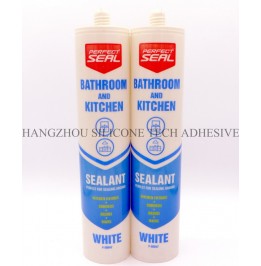
After applying sealant around bathroom pipes, the material requires time to cure properly. During the first 24 to 48 hours, the sealant transitions from a liquid to a solid state through chemical reactions or solvent evaporation. This initial curing phase is fragile, and any pressure—even from light water flow—can distort the sealant’s shape or weaken adhesion.
For most sealants, a minimum waiting period of 24 hours is recommended before conducting a water test. However, environmental factors like low temperatures or high humidity can extend this time. In cold or damp conditions, wait 48 hours to ensure the sealant has fully hardened. Avoid disturbing the area during this period to prevent accidental damage.
While the sealant may appear dry after 24–48 hours, achieving full curing—where it reaches maximum hardness and adhesion strength—takes longer. For standard sealants, this process typically spans 3 to 7 days, with some high-performance formulations requiring up to 28 days.
Testing pipelines before full curing risks permanent deformation or reduced elasticity, especially in areas subject to movement or thermal expansion. For example, a sealant around a shower pipe compressed too early may crack under pressure, leading to leaks. Always refer to the manufacturer’s guidelines for specific curing times, as variations exist based on material composition and environmental conditions.
The surrounding environment plays a pivotal role in determining how quickly a sealant cures and when it can safely bear water pressure. Cold temperatures slow chemical reactions, extending both initial and full curing periods. Conversely, high humidity can interfere with solvent-based sealants, causing prolonged drying times or a sticky surface.
In hot, dry conditions, some sealants may cure faster than usual, but this doesn’t necessarily mean they’re ready for water testing. Rapid curing can lead to brittleness, reducing the sealant’s ability to withstand movement or stress. Adjust your timeline based on real-world conditions, even if the label suggests a shorter curing period.
Once the sealant has cured adequately, proceed with a controlled water test. Begin by sealing drains and pipe openings temporarily to prevent water escape. Gradually fill the area around the sealed pipes with water, maintaining a depth of 2–5 centimeters to simulate real-world conditions.
Monitor the sealant closely for 24–48 hours, checking for signs of leakage, such as water stains on ceilings below or dampness around the seal. If no issues arise, the sealant has likely cured correctly. However, if leaks occur, drain the water immediately, allow the area to dry, and reapply the sealant following proper techniques.
Rushing the curing process to expedite water testing can lead to costly repairs down the line. Premature testing may create micro-cracks or weak points invisible initially but prone to failure under stress, vibration, or temperature fluctuations. This is particularly critical in bathrooms, where constant exposure to moisture and movement demands durable seals.
By adhering to recommended curing times and adjusting for environmental factors, you ensure the sealant performs as intended for years. Prioritize patience and thorough testing over hasty completion—the long-term benefits of a reliable, leak-free bathroom far outweigh the temporary inconvenience of waiting.
Copyright 2019 by Hangzhou Silicone Tech Adhesive Co., Ltd. All rights reserved.
Bathroom Sealant | Acrylic Sealant | Dow Corning 795 | Aquarium Sealant | Dow Corning 732 | Clear Silicone Sealant | Polysulfide Sealant | Glazing Sealant | Mirror Sealant | IG Sealant
Powered by Onepound


