E-mail:
sales@silicone-sealant-china.com

When sealing joints in bathrooms, the choice of sealant goes beyond mere waterproofing—it must also provide structural stability. Rigid bathroom sealants are engineered to deliver both, offering a firm, durable bond that resists movement and maintains shape under pressure. Unlike flexible alternatives, these sealants harden into a solid mass, creating a stable foundation for tiles, fixtures, and heavy materials. Their ability to hold joints in place makes them indispensable for areas requiring precise alignment and minimal deformation over time.
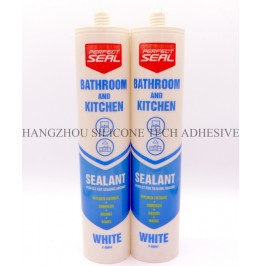
Bathrooms endure constant stress from water exposure, temperature fluctuations, and the weight of fixtures like bathtubs or shower trays. Rigid sealants address these challenges by forming a non-yielding barrier that prevents joints from shifting or separating. This stability is crucial for maintaining the integrity of tiled surfaces, which can crack or loosen if underlying seams move.
In showers or around bathtubs, tiles rely on rigid sealants to anchor them in place. When water seeps into loose joints, it weakens the adhesive between tiles and grout, leading to lifting or cracking. A rigid sealant acts as a secondary anchor, distributing weight evenly and reducing the risk of structural failure. This is especially important in high-traffic bathrooms or homes with heavy stone tiles.
Fixtures like freestanding bathtubs or wall-mounted sinks exert significant pressure on their mounting points. Rigid sealants provide a solid base that absorbs and distributes this weight, preventing the fixture from pulling away from the wall or floor. Their non-compressible nature ensures the seal remains intact even under prolonged stress, avoiding leaks that could damage subfloors or cabinetry.
Not all bathroom joints require flexibility—some demand unyielding support. Rigid sealants shine in scenarios where movement is minimal but structural integrity is paramount.
The vertical and horizontal corners of tiled bathroom walls are prone to stress from building settling or temperature changes. While flexible sealants might accommodate slight movement, rigid formulas lock these joints in place, preventing gaps from forming. This is particularly valuable in multi-story buildings where vertical shifts can occur over time.
The junction between bathroom floors and walls is a high-risk area for water ingress if the sealant fails. Rigid sealants create a watertight barrier that stays firm against the pressure of foot traffic or shifting flooring materials. Their durability ensures the seal remains effective even in commercial bathrooms or homes with large families.
Undermount sinks rely entirely on the sealant beneath them to stay attached to the countertop. A rigid formula provides the necessary strength to hold the sink’s weight without sagging or cracking. This prevents water from leaking into cabinets below, which could lead to mold growth or structural damage.
Bathrooms are notoriously humid, creating conditions that can degrade many materials. Rigid sealants are formulated to resist moisture, chemicals, and UV exposure, ensuring they maintain their structural properties for years.
Unlike organic materials like wood or some flexible sealants, rigid formulas are inorganic and non-porous, making them inhospitable to mold and mildew. This is critical in bathrooms, where persistent dampness can lead to health hazards and unsightly stains. A rigid sealant’s smooth surface also makes it easier to clean, further reducing microbial growth.
Bathroom cleaners often contain harsh chemicals that can erode softer sealants over time. Rigid formulas are designed to withstand exposure to bleach, ammonia, and other agents without breaking down. Additionally, UV stabilizers protect them from discoloration or weakening when exposed to sunlight through windows or skylights.
Selecting a rigid sealant involves evaluating factors like adhesion strength, curing time, and compatibility with your surfaces. For example, porous materials like concrete or untreated wood may require a primer to ensure proper bonding, while non-porous surfaces like glass or metal might need a sealant with stronger initial tack.
To maximize the benefits of rigid sealants, proper application is essential. Start by cleaning the joint thoroughly to remove dirt, grease, or old sealant residue. Use a caulk gun to apply the sealant in a steady, continuous bead, ensuring full coverage of the gap. Smooth the surface with a damp finger or caulk tool for a clean finish, and allow it to cure fully before exposing it to water or stress.
Rigid sealants require minimal maintenance once cured, but occasional inspections can help identify early signs of wear. If cracks or gaps appear, remove the damaged section and reapply fresh sealant to restore the joint’s integrity. Avoid using sharp tools during cleaning, as they might scratch the surface and compromise the seal.
By prioritizing rigid bathroom sealants for structural joints, homeowners and contractors can ensure long-lasting stability and waterproofing. Their ability to resist movement, support heavy loads, and endure harsh conditions makes them a cornerstone of reliable bathroom design.
Copyright 2019 by Hangzhou Silicone Tech Adhesive Co., Ltd. All rights reserved.
Bathroom Sealant | Acrylic Sealant | Dow Corning 795 | Aquarium Sealant | Dow Corning 732 | Clear Silicone Sealant | Polysulfide Sealant | Glazing Sealant | Mirror Sealant | IG Sealant
Powered by Onepound


