E-mail:
sales@silicone-sealant-china.com

When applying sealants in bathrooms or other enclosed spaces, volatile organic compounds (VOCs) released during curing can impact indoor air quality. Determining how long to wait before reoccupying the area requires analyzing factors like sealant type, environmental conditions, and ventilation. This guide breaks down the science behind VOC release timelines and safety thresholds.
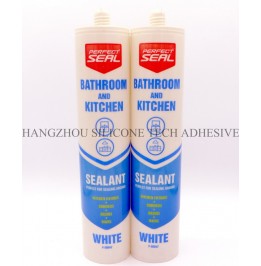
The primary determinant of VOC release time is the sealant’s chemical makeup. Solvent-based sealants, which use organic solvents as carriers, emit higher initial VOC levels compared to water-based or silicone-based alternatives. For example, solvent-based acrylic sealants may release VOCs for up to 72 hours post-application, while silicone-based sealants—which cure via chemical reactions rather than solvent evaporation—often reach safe levels within 24–48 hours.
Sealants cure through either evaporation (solvent-based) or chemical cross-linking (silicone, polyurethane). Evaporation-based curing releases VOCs continuously until the solvent fully dissipates, extending the safety period. In contrast, chemically curing sealants like two-part epoxies or hybrid polymers stop emitting VOCs once the reaction completes, often within 24 hours. However, some hybrid sealants may release trace amounts of alcohol or amine byproducts during curing, requiring additional ventilation.
Temperature and humidity significantly affect curing rates and VOC release. Higher temperatures accelerate solvent evaporation and chemical reactions, reducing the safety period by up to 50% in warm, dry environments. Conversely, cold or humid conditions slow curing, prolonging VOC release. For instance, a silicone sealant applied at 20°C (68°F) may reach safe levels in 24 hours, but at 10°C (50°F), the same process could take 48–72 hours.
Global standards define acceptable VOC concentrations in occupied spaces. The U.S. EPA recommends maintaining indoor VOC levels below 0.5 mg/m³ for long-term exposure, while European EN 16516 sets a 28-day limit of 1,000 μg/m³ for total VOCs (TVOCs) in residential areas. These thresholds account for cumulative exposure from multiple sources, not just sealants. After application, use a VOC meter to monitor levels until they fall below these benchmarks.
Short-term spikes in VOCs are less hazardous than prolonged low-level exposure. For example, a sealant emitting 2,000 μg/m³ of TVOCs for 12 hours poses a lower risk than one emitting 500 μg/m³ continuously for a week. Regulatory agencies often use 8-hour time-weighted averages (TWAs) to assess safety. If initial readings exceed limits, prioritize ventilation until the TWA drops below 0.5 mg/m³.
Not all VOCs are equally harmful. Formaldehyde, a common sealant additive, has a permissible exposure limit (PEL) of 0.75 ppm (parts per million) set by the U.S. Occupational Safety and Health Administration (OSHA). Benzene, another potential byproduct, has a stricter PEL of 1 ppm. Use air quality monitors capable of detecting individual compounds to ensure levels of hazardous VOCs remain below regulatory thresholds.
Proper airflow is the most effective way to shorten VOC release times. Open windows and use exhaust fans to create cross-ventilation, replacing contaminated air with fresh outdoor air. For enclosed spaces like bathrooms, run fans continuously for 48–72 hours post-application, even if the sealant claims to cure quickly. In areas without windows, use portable air purifiers with activated carbon filters to adsorb VOCs.
Maintaining 40–60% relative humidity optimizes curing speed and minimizes VOC retention. High humidity slows solvent evaporation, while low humidity can cause sealants to cure unevenly, releasing more VOCs over time. Use a hygrometer to monitor levels and adjust with dehumidifiers or humidifiers as needed. For example, in a bathroom with 70% humidity, reducing it to 50% can cut the safety period by 12–24 hours.
Residual sealant on tools or surfaces can continue emitting VOCs. Wipe down all equipment with water or solvent-free cleaners immediately after use to prevent off-gassing. For spills or excess sealant, scrape off solid residues and clean the area with mild detergents. Avoid using harsh chemicals like acetone, which can react with uncured sealant and release additional VOCs.
Even after the initial safety period, VOCs can accumulate from other sources like cleaning products or furniture. Schedule quarterly air quality tests using low-cost sensors or professional services to detect hidden emissions. If levels rise above 0.5 mg/m³, identify and eliminate the source, whether it’s residual sealant degradation or new contaminants.
Opt for products labeled "low-VOC" or "zero-VOC", which meet standards like Green Seal GS-11 or CDPH v1.2. These sealants use water or bio-based solvents instead of traditional chemicals, reducing initial emissions by 70–90%. While they may cost slightly more, their lower environmental impact and shorter safety periods justify the investment for health-conscious consumers.
Cracked or degraded sealants can release trapped VOCs years after application. Inspect sealants annually for signs of wear, such as discoloration, shrinkage, or mold growth. Replace damaged sections promptly to prevent long-term off-gassing. For high-traffic areas like bathrooms, consider reapplying sealant every 5–7 years to maintain a tight barrier against moisture and contaminants.
Copyright 2019 by Hangzhou Silicone Tech Adhesive Co., Ltd. All rights reserved.
Bathroom Sealant | Acrylic Sealant | Dow Corning 795 | Aquarium Sealant | Dow Corning 732 | Clear Silicone Sealant | Polysulfide Sealant | Glazing Sealant | Mirror Sealant | IG Sealant
Powered by Onepound


