E-mail:
sales@silicone-sealant-china.com

When selecting bathroom sealants, environmental performance is a critical factor that directly impacts indoor air quality and long-term health. This guide outlines actionable criteria for evaluating sealants through the lens of global environmental certifications, chemical composition, and functional performance.
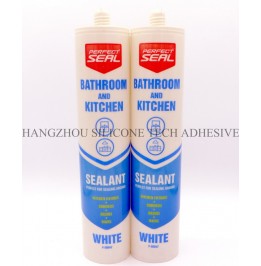
Certifications like French A+, German EC1 Plus, and U.S. FDA Food-Grade Monitoring establish strict thresholds for volatile organic compound (VOC) emissions. For instance, the French A+ certification requires sealants to emit ≤1,000 μg/m³ of total VOCs over 28 days, while the German EC1 Plus standard limits emissions to ≤60 μg/m³—a 94% reduction compared to basic requirements. These certifications ensure minimal off-gassing of harmful chemicals such as formaldehyde and benzene derivatives, which are common in solvent-based sealants.
In addition to international standards, regional regulations like China’s GB 30982-2014 mandate VOC limits for indoor sealants. This standard categorizes products into solvent-based, water-based, and reactive types, with reactive silicone-based sealants required to meet ≤100 g/kg VOC content. Compliance with such codes ensures alignment with local safety protocols, especially in high-humidity environments like bathrooms where prolonged chemical exposure risks escalate.
Sealants cure through chemical reactions, and the choice of curing agent determines their environmental impact. Alcohol-based (alkoxy) sealants release ethanol during curing, which is non-toxic and dissipates quickly. In contrast, acetoxy-based sealants emit acetic acid, which can corrode metal fixtures and irritate respiratory systems. For bathroom applications, alcohol-based sealants are preferable due to their neutral odor and compatibility with sensitive surfaces like stainless steel and natural stone.
Some manufacturers incorporate plasticizers like phthalates or white oil to enhance flexibility, but these substances can leach into water supplies and disrupt endocrine systems. Opt for sealants labeled "phthalate-free" and "white-oil-free," which rely on safer alternatives like silicone polymers for elasticity. Additionally, verify that the product does not contain isocyanates or halogenated compounds, which are classified as hazardous air pollutants by agencies like the U.S. EPA.
Bathrooms are prone to mold growth due to constant moisture exposure. Look for sealants with 0-level mold resistance certified by standards like BS EN 15651-3:2017, which evaluates performance in non-pressurized water contact areas. High-performance sealants undergo accelerated aging tests, such as 12 cycles of 28-day mold incubation, to ensure long-term efficacy. A sealant’s mold resistance is often tied to its hydrophobicity—the ability to repel water—which prevents microbial colonization without relying on toxic biocides.
Temperature fluctuations in bathrooms can cause sealants to crack, compromising their barrier function. Choose products with ≥300% elongation at break, a measure of flexibility under stress. This ensures the sealant can accommodate joint movements without tearing, reducing the need for frequent reapplications. Some advanced formulations incorporate self-healing polymers that repair minor cracks automatically, extending the product’s lifespan and minimizing waste.
Bathroom sealants fall into two categories: wet-zone sealants for showers, bathtubs, and sinks, and dry-zone sealants for walls, ceilings, and tile grout. Wet-zone sealants require higher mold resistance and waterproofing, while dry-zone sealants prioritize adhesion to porous surfaces like drywall. Using the wrong type can lead to premature failure—for example, a dry-zone sealant in a shower may degrade within months due to constant water exposure.
While color does not affect environmental performance, it influences maintenance and visual harmony. Neutral tones like white, gray, or beige are less likely to show stains compared to darker shades. Transparent sealants are ideal for glass partitions, as they create a seamless look without discoloration over time. For colored tiles, match the sealant to the grout to avoid contrasting lines that highlight imperfections.
Manufacturers often make vague claims like "eco-friendly" or "low-VOC" without substantiation. Demand access to third-party test reports from accredited laboratories like SGS or Intertek, which verify compliance with international standards. For example, a sealant claiming "15x mold resistance" should provide test data showing it withstood 15 cycles of mold incubation without failure, rather than relying on ambiguous marketing terms.
Short-term tests (e.g., 28-day mold resistance) are insufficient for bathrooms, where sealants may last 10+ years. Look for products with 5-year or longer performance warranties, backed by real-world testing in high-humidity environments. Some manufacturers conduct accelerated aging tests that simulate decades of use, providing confidence in the product’s durability.
Copyright 2019 by Hangzhou Silicone Tech Adhesive Co., Ltd. All rights reserved.
Bathroom Sealant | Acrylic Sealant | Dow Corning 795 | Aquarium Sealant | Dow Corning 732 | Clear Silicone Sealant | Polysulfide Sealant | Glazing Sealant | Mirror Sealant | IG Sealant
Powered by Onepound


