E-mail:
sales@silicone-sealant-china.com

Bathroom sealants play a vital role in preventing water damage, mold growth, and structural deterioration by creating watertight joints around sinks, showers, tiles, and fixtures. However, the effectiveness of these sealants hinges on proper application thickness. Too thin, and they fail to block moisture; too thick, and they crack under stress. Understanding this balance is essential for achieving long-lasting waterproofing in high-humidity environments.
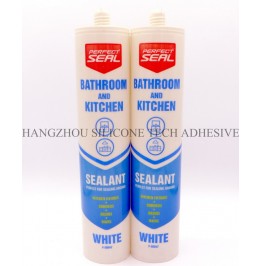
The thickness of a sealant bead directly impacts its ability to resist water penetration, withstand movement, and maintain adhesion over time. Here’s how it affects key waterproofing factors:
In showers and bathtubs, water exerts pressure on sealant joints, especially at the base of walls or around drains. A thicker bead provides more material to absorb and distribute this pressure, reducing the risk of leaks. Thin layers, by contrast, can be pushed aside or eroded by constant water flow, compromising the joint’s integrity.
For example, a 3mm-thick sealant bead may hold up under light splashing but could fail under full submersion or heavy water exposure. Increasing the thickness to 6–8mm enhances its capacity to withstand hydrostatic pressure, making it suitable for high-use areas like shower enclosures.
Bathroom materials like tiles, glass, and metal expand and contract with temperature changes. A sealant must stretch and compress without cracking to maintain waterproofing. Thicker beads generally offer greater flexibility, as they contain more elastic polymers that can absorb movement.
However, excessive thickness can reduce flexibility if the sealant cures too rigidly. The ideal thickness balances elasticity and structural support, typically ranging from 5–10mm for most bathroom joints. This range allows the sealant to move with the substrate while staying intact.
Sealant adhesion to surfaces like tiles, glass, and concrete depends on proper contact area. A thin bead may not cover surface irregularities, leaving gaps where water can seep through. Thicker applications ensure full contact, creating a stronger bond that resists peeling or delamination.
Yet, over-application can lead to uneven curing, where the outer layer dries faster than the center, weakening the bond. Applying sealant in layers—starting with a base coat and adding a second layer after partial curing—can help achieve optimal thickness without sacrificing adhesion.
Not all bathroom joints require the same sealant thickness. Factors like joint width, material type, and exposure to water dictate the ideal application. Here’s how to tailor thickness to common bathroom scenarios:
Vertical joints, such as those between wall tiles and a bathtub, experience less water pressure than horizontal joints like shower tray edges. For vertical applications, a 5–6mm thickness is often sufficient, as gravity helps keep the sealant in place during curing.
Horizontal joints, however, need thicker beads (8–10mm) to counteract water pooling and pressure. This is especially critical in walk-in showers or wet rooms, where water flows freely across surfaces.
The width of the joint also influences thickness. Narrow joints (3–5mm) should be filled completely with a single bead, as layering isn’t practical. For wider joints (10mm or more), use a backer rod to control depth and prevent three-sided adhesion, which can lead to cracking.
Insert the backer rod to fill 70–80% of the joint depth, leaving enough space for a 5–8mm sealant layer on top. This approach ensures the sealant bonds to both sides of the joint without sinking or slumping.
Different materials expand and contract at varying rates, requiring tailored sealant thickness. For example:
Always test the sealant on a small area first to ensure it adheres properly and maintains flexibility at the chosen thickness.
Even experienced DIYers and professionals can make errors in sealant thickness, leading to waterproofing failures. Here are pitfalls to avoid:
Skimping on sealant to save time or material is a common mistake. Thin beads (under 3mm) often lack the mass to resist water pressure, especially in high-traffic bathrooms. They may also shrink during curing, creating gaps that allow moisture ingress.
To fix this, remove the thin sealant and reapply a thicker layer, ensuring full coverage of the joint. Use a caulking gun with a consistent flow rate to maintain even thickness throughout the application.
Conversely, overfilling joints (beyond 10–12mm) can cause the sealant to cure unevenly, leading to internal stress. As the outer layer dries faster, it pulls on the still-soft center, creating cracks that compromise waterproofing.
If you’ve overapplied sealant, trim the excess with a utility knife or sandpaper once it’s partially cured but still pliable. Then, smooth the surface with a tool to create a uniform finish.
Temperature and humidity affect sealant curing time and thickness consistency. Applying sealant in cold weather (below 10°C/50°F) can slow curing, causing the material to sag or run, especially on vertical surfaces. High humidity (above 70%) may prolong drying, leading to uneven thickness.
To mitigate this, work in a well-ventilated area with stable temperatures. Use fans to improve airflow in humid conditions or heaters in cold environments. If possible, schedule sealing projects during mild weather to ensure optimal curing.
Achieving consistent sealant thickness requires practice and the right tools. Here are pro tips for mastering the process:
The size of the caulking gun nozzle determines the bead’s width and thickness. Cut the nozzle at a 45-degree angle to match the joint’s dimensions—a smaller opening for narrow joints, a larger one for wider gaps.
For straight joints, use a nozzle extension or a guide rail to maintain even pressure and movement. On curved surfaces, wrap sandpaper around a dowel to create a custom tooling edge that matches the joint’s contour.
Deep joints (over 10mm) benefit from a two-step approach. First, fill the joint halfway with sealant and tool it flat to remove air pockets. After partial curing (1–2 hours), apply a second layer and tool it into the desired shape.
This method prevents the sealant from sinking or cracking as it cures, ensuring consistent thickness throughout the joint. It also allows for better adhesion to both the backer rod (if used) and the substrate.
Use a thickness gauge or a plastic spatula marked with measurement lines to check the sealant’s depth during application. For vertical joints, hold the tool vertically against the bead to ensure it meets the target thickness.
On horizontal surfaces, press the tool gently into the sealant to gauge its resistance—a properly thickened bead will feel firm but slightly yielding. Adjust your application speed or pressure as needed to maintain consistency.
By understanding the relationship between sealant thickness and waterproofing, you can avoid common pitfalls and achieve durable, leak-free bathroom joints. Attention to material properties, joint design, and environmental conditions ensures your sealing projects stand up to daily use and moisture exposure.
Copyright 2019 by Hangzhou Silicone Tech Adhesive Co., Ltd. All rights reserved.
Bathroom Sealant | Acrylic Sealant | Dow Corning 795 | Aquarium Sealant | Dow Corning 732 | Clear Silicone Sealant | Polysulfide Sealant | Glazing Sealant | Mirror Sealant | IG Sealant
Powered by Onepound


