E-mail:
sales@silicone-sealant-china.com

Dual-component bathroom sealants are widely used for their durability and strong bonding capabilities. These sealants consist of two parts—a base component and a curing agent—that must be mixed in specific ratios to achieve optimal performance. Understanding the correct mixing ratios is essential for ensuring a watertight and long-lasting seal.
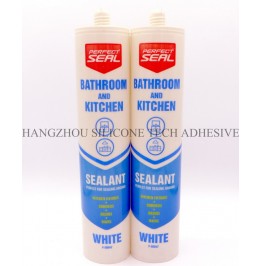
The mixing ratio for dual-component bathroom sealants typically falls within a range of 10:1 to 4:1, depending on the formulation and intended use. These ratios refer to the volume or weight of the base component to the curing agent.
A 10:1 ratio is one of the most common mixing proportions for general-purpose bathroom sealants. This means that for every 10 parts of the base component, one part of the curing agent is added. This ratio provides a balanced combination of workability and curing speed, making it suitable for most bathroom applications, including sealing joints around sinks, showers, and bathtubs.
For applications requiring faster curing times or enhanced mechanical properties, a 4:1 ratio may be recommended. This higher proportion of curing agent accelerates the hardening process and increases the sealant's strength and durability.
Several factors can influence the ideal mixing ratio for dual-component bathroom sealants. These include environmental conditions, substrate type, and desired performance characteristics.
Temperature and humidity levels can affect the curing process of sealants. In colder temperatures, a higher proportion of curing agent may be needed to ensure proper hardening. Conversely, in hot and humid conditions, a lower ratio may prevent premature curing.
The type of substrate being sealed can also impact the mixing ratio. Porous materials like concrete or wood may absorb more of the base component, requiring a slight adjustment in the ratio to maintain proper adhesion and curing.
Achieving a successful seal with dual-component bathroom sealants requires careful attention to mixing and application techniques. Follow these best practices to ensure optimal results.
Use calibrated measuring tools to ensure the correct ratio of base component to curing agent. Mix the components thoroughly until the color and consistency are uniform. Avoid introducing air bubbles during mixing, as these can weaken the seal.
Apply the sealant using a caulk gun or similar tool, maintaining steady pressure to ensure a continuous bead. Smooth the sealant with a spatula or finger dipped in soapy water to create a neat finish. Allow the sealant to cure fully before exposing it to water or stress.
Copyright 2019 by Hangzhou Silicone Tech Adhesive Co., Ltd. All rights reserved.
Bathroom Sealant | Acrylic Sealant | Dow Corning 795 | Aquarium Sealant | Dow Corning 732 | Clear Silicone Sealant | Polysulfide Sealant | Glazing Sealant | Mirror Sealant | IG Sealant
Powered by Onepound


