E-mail:
sales@silicone-sealant-china.com

Bathroom mold-resistant sealants designed for room-temperature curing require precise environmental control to achieve maximum adhesion, flexibility, and mold resistance. Understanding the interplay of temperature, humidity, and surface preparation ensures reliable performance in high-moisture environments.
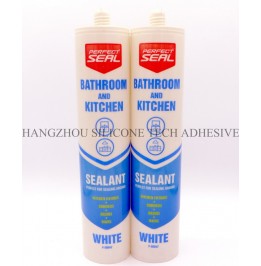
The ideal temperature range for curing most room-temperature bathroom sealants falls between 15°C to 35°C (59°F to 95°F). Within this window, the chemical cross-linking process occurs efficiently, ensuring proper hardening without compromising elasticity.
When temperatures drop below 10°C (50°F), curing slows significantly, potentially leading to incomplete polymerization. This results in:
To mitigate this, use localized heating with infrared lamps or space heaters to maintain the recommended range. Avoid direct heat application to prevent uneven curing.
Temperatures exceeding 35°C (95°F) accelerate curing too rapidly, causing:
In hot climates, schedule applications during cooler morning hours or use shaded areas to prevent overheating.
Relative humidity levels between 40% to 70% create optimal conditions for moisture-curing sealants. These products rely on atmospheric moisture to trigger cross-linking reactions.
In environments above 70% RH, curing may occur too quickly on the surface while remaining under-cured internally. This leads to:
Combat high humidity by:
Below 40% RH, curing slows as the sealant struggles to absorb sufficient moisture. Symptoms include:
To compensate:
Proper substrate conditioning directly impacts curing quality and long-term performance.
Remove all contaminants that could inhibit bonding or trap moisture:
Use non-oil-based cleaners followed by a 50/50 isopropyl alcohol-water solution for final disinfection. Allow complete drying before application.
Different surfaces require tailored preparation:
Proper joint geometry ensures even curing stress distribution:
For dynamic joints subject to movement, ensure the sealant’s elastic recovery matches the expected expansion/contraction cycles.
Copyright 2019 by Hangzhou Silicone Tech Adhesive Co., Ltd. All rights reserved.
Bathroom Sealant | Acrylic Sealant | Dow Corning 795 | Aquarium Sealant | Dow Corning 732 | Clear Silicone Sealant | Polysulfide Sealant | Glazing Sealant | Mirror Sealant | IG Sealant
Powered by Onepound


