E-mail:
sales@silicone-sealant-china.com

Bathrooms are unique environments that experience a wide range of temperatures. From the scalding hot water of a shower to the cold air during winter months, the materials used in bathroom construction, especially sealants, must be able to withstand these temperature fluctuations. Understanding the high - and low - temperature resistance of bathroom sealants is crucial for ensuring their long - term effectiveness and the overall integrity of the bathroom space.
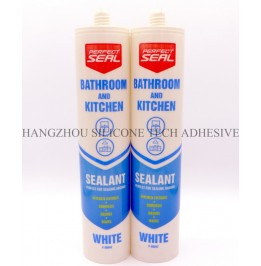
When exposed to high temperatures, one of the primary concerns for bathroom sealants is their adhesion to the surrounding surfaces. High heat can cause some sealants to soften, which may lead to a reduction in their adhesive properties. For example, if a sealant around a bathtub is not high - temperature resistant, the heat from a long, hot shower could cause it to lose its grip on the tile and bathtub surfaces. This can result in gaps forming between the sealant and the materials, allowing water to seep through and potentially cause damage to the underlying structure.
Some sealants are formulated with special polymers that have a high melting point and maintain their adhesion even at elevated temperatures. These polymers form strong chemical bonds with the surfaces they are applied to, ensuring that the seal remains intact even when subjected to high - heat conditions.
High temperatures can also cause sealants to deform. A sealant that is not resistant to high temperatures may become pliable and start to sag or lose its shape. In a bathroom, this could be particularly problematic around joints such as those between the shower wall and the floor or around the edges of a sink. If the sealant deforms, it can no longer effectively prevent water from entering these areas, leading to leaks and water damage.
Sealants with good high - temperature resistance are designed to retain their structural integrity. They have a high elastic modulus, which means they can resist deformation under heat stress. This allows them to maintain a tight seal around joints and prevent water ingress, even when the bathroom is exposed to high temperatures for extended periods.
In addition to affecting adhesion and shape, high temperatures can also impact the chemical stability of bathroom sealants. Some sealants may undergo chemical reactions when exposed to heat, which can lead to a change in their properties. For instance, certain sealants may release volatile organic compounds (VOCs) at high temperatures, which not only affects the indoor air quality but can also weaken the sealant over time.
High - quality, high - temperature - resistant sealants are formulated to be chemically stable under heat. They are less likely to react with other substances in the bathroom environment or release harmful chemicals, ensuring a safe and durable seal.
Low temperatures can cause sealants to become brittle. When a sealant loses its flexibility, it is more likely to crack when subjected to movement or stress. In a bathroom, where there is constant movement due to the use of fixtures and the natural settling of the building, a brittle sealant can quickly develop cracks. For example, around the base of a toilet, where there is frequent movement from sitting and standing, a low - temperature - resistant sealant is essential to prevent cracks from forming and water from leaking.
Sealants with good low - temperature resistance are formulated to remain flexible even in cold conditions. They contain additives that prevent the polymers from becoming rigid, allowing the sealant to stretch and compress as needed without cracking. This flexibility ensures that the seal remains intact, even in the coldest parts of the year.
Just as high temperatures can affect adhesion, low temperatures can also pose challenges. Cold surfaces can make it more difficult for sealants to bond properly. If the surface temperature is too low, the sealant may not cure correctly, resulting in a weak bond. This can lead to the sealant peeling away from the surface over time, creating gaps for water to enter.
Some low - temperature - resistant sealants are designed to cure effectively at lower temperatures. They have a modified curing mechanism that allows them to form strong bonds with surfaces even in cold environments. This ensures that the sealant adheres properly and provides a reliable waterproof seal, regardless of the temperature.
In areas with cold winters, bathrooms may be subjected to freeze - thaw cycles. When water seeps into small cracks in a sealant and then freezes, it expands, putting pressure on the surrounding material. When the ice thaws, the pressure is released, but the repeated cycle can cause the cracks to widen and the sealant to deteriorate.
Low - temperature - resistant sealants are formulated to resist the effects of freeze - thaw cycles. They have a low water absorption rate, which means that less water can penetrate the sealant in the first place. Additionally, they are able to withstand the expansion and contraction caused by freezing and thawing without cracking or losing their adhesive properties, ensuring a long - lasting seal in cold climates.
The type of polymer used in the formulation of a bathroom sealant is a major factor in its temperature resistance. Different polymers have different melting points, glass transition temperatures (the temperature at which a polymer changes from a hard, glassy state to a soft, rubbery state), and chemical stabilities. For example, silicone polymers are known for their excellent high - and low - temperature resistance. They have a wide operating temperature range and can maintain their flexibility and adhesion over a broad spectrum of temperatures.
Acrylic polymers, on the other hand, may have more limited temperature resistance. They tend to become brittle at low temperatures and may soften at high temperatures. However, by modifying the acrylic polymers with additives or blending them with other polymers, their temperature resistance can be improved to some extent.
Additives play a crucial role in enhancing the temperature resistance of bathroom sealants. Plasticizers can be added to increase the flexibility of the sealant at low temperatures, preventing it from becoming brittle. Heat stabilizers can be used to improve the chemical stability of the sealant at high temperatures, reducing the risk of degradation and the release of harmful substances.
Other additives, such as fillers, can also affect the temperature resistance of sealants. Fillers can improve the mechanical properties of the sealant, such as its strength and hardness, which can help it withstand temperature - induced stresses. However, the type and amount of fillers used must be carefully balanced to ensure that they do not negatively impact other properties of the sealant, such as its flexibility and adhesion.
The curing process of a sealant can also influence its temperature resistance. A properly cured sealant will have better mechanical properties and temperature resistance compared to an under - cured or over - cured one. The curing time and conditions, such as temperature and humidity, must be carefully controlled during the application of the sealant to ensure that it cures correctly.
If a sealant is not cured properly, it may have weak spots or areas with poor adhesion, which can make it more susceptible to damage from temperature changes. On the other hand, over - curing can cause the sealant to become too rigid, reducing its flexibility and making it more likely to crack at low temperatures.
In conclusion, the high - and low - temperature resistance of bathroom sealants is a complex characteristic that depends on multiple factors. By understanding these factors and choosing a sealant with appropriate temperature - resistant properties, homeowners can ensure that their bathrooms remain protected from water damage, regardless of the temperature conditions.
Copyright 2019 by Hangzhou Silicone Tech Adhesive Co., Ltd. All rights reserved.
Bathroom Sealant | Acrylic Sealant | Dow Corning 795 | Aquarium Sealant | Dow Corning 732 | Clear Silicone Sealant | Polysulfide Sealant | Glazing Sealant | Mirror Sealant | IG Sealant
Powered by Onepound


