E-mail:
sales@silicone-sealant-china.com

Let's cut straight to the chase — the number one complaint in bathroom waterproofing isn't the product itself. It's that the sealant moves, cracks, and peels within months. The fix? It all comes down to how you prepare, apply, and cure. No fancy products needed — just technique that actually works.
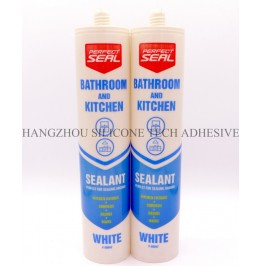
Most people slap sealant onto a wet or dusty surface and wonder why it slides off by Tuesday. The truth is simple: adhesion failure happens long before you see it with your eyes. If the substrate has oil, dust, or moisture, the bond is dead on arrival.
Start by cleaning the area thoroughly with rubbing alcohol or a degreasing cleaner. Wipe it down, let it dry completely — and I mean bone dry. Any residual humidity will create a barrier between the sealant and the surface, turning your waterproof layer into a loose film waiting to peel.
For concrete or cement surfaces, check for cracks and uneven spots first. Fill larger gaps with a compatible filler or anti-leakage plugging agent before you even think about applying sealant. A smooth, solid base is non-negotiable.
One thick coat sounds efficient. It isn't. Thick applications trap moisture underneath, cause uneven curing, and create internal stress that literally pushes the sealant away from the surface over time.
The proven method? Thin coats, multiple passes.
Apply your first layer using a notched trowel or caulk gun at a consistent 45-degree angle. Let it dry until it's tack-free — typically 3 to 6 hours depending on temperature and humidity. Then apply the second coat perpendicular to the first. This cross-direction technique creates a mechanical interlock that dramatically improves grip on the substrate.
For high-stress zones like pipe penetrations, floor drains, and corners where walls meet floors, reinforce with fiberglass mesh or waterproof tape. Press the mesh into the wet first coat so it becomes part of the membrane rather than sitting on top. This single step eliminates most displacement problems at vulnerable joints.
If you're working with a two-component system mixed with cement, maintain a ratio around 1:1 to 1:2 for sealant to cement. Stir mechanically — hand mixing leaves lumps and air bubbles that become weak points. Apply in 3 to 5 thin passes, each about 0.5 to 1mm thick, with full drying between coats.
Here's where most DIYers and even some pros get it wrong. Temperature and humidity aren't just background conditions — they directly control whether your sealant cures into a rock-solid membrane or a rubbery mess that shifts at the slightest touch.
Never apply sealant below 5°C. The chemistry simply won't activate properly, and you'll end up with a soft, gooey layer that moves under its own weight. Rainy or high-humidity days? Postpone the job. Moisture trapped during curing causes blistering, delamination, and yes — displacement.
The ideal window is a dry day with temperatures between 15°C and 30°C. After application, protect the area from water contact for at least 24 hours. Some formulations need up to 7 days for full cure strength. Rushing this step is like pouring concrete and then hosing it down — you're undoing your own work.
Toilets, sinks, and bathtubs are the usual suspects for sealant failure. The movement of these fixtures — even micro-movements from daily use — slowly works the sealant loose from the edges.
The fix starts with proper surface prep around the fixture base. Remove old sealant completely, clean the joint, and mask the edges with painter's tape if you want razor-clean lines. Apply sealant in a continuous bead around the entire perimeter — don't skip spots. Press it firmly with a finger dipped in soapy water to push it deep into the joint and eliminate air pockets.
For toilet bases specifically, run a full 360-degree bead where the porcelain meets the floor. The cured sealant should act like a flexible gasket — it compresses when the toilet shifts slightly and snaps back without cracking. This elasticity is what prevents displacement over years of use.
After installation, leave everything untouched for 24 hours minimum. I'd argue 48 hours is safer. During this period, no water, no cleaning, no testing. Let the bond fully develop.
Before you call the job done, run through these tests:
Press your thumb firmly into the cured sealant. It should resist and spring back, not indent or peel. Run your fingernail along the edges — there should be zero lifting or gapping. For floor applications, do a mini flood test: pour water over the sealed area and watch from below for 24 hours. Any seepage means the bond failed somewhere, and you need to re-prep and re-apply.
The bottom line is this: waterproof sealant doesn't fail because the product is bad. It fails because the surface wasn't ready, the coats were too thick, or the weather wasn't right. Get those three things correct, and your sealant will stay locked in place for years — no shifting, no peeling, no regrets.
Copyright 2019 by Hangzhou Silicone Tech Adhesive Co., Ltd. All rights reserved.
Bathroom Sealant | Acrylic Sealant | Dow Corning 795 | Aquarium Sealant | Dow Corning 732 | Clear Silicone Sealant | Polysulfide Sealant | Glazing Sealant | Mirror Sealant | IG Sealant
Powered by Onepound


