E-mail:
sales@silicone-sealant-china.com

Getting the grout color right in your bathroom can make or break the entire look. A well-chosen grout ties the space together, while a bad one screams "amateur hour." Since bathrooms are high-moisture zones where mold and grime love to settle, picking the right grout sealant is just as critical as picking the right color. Let's break down exactly how to nail both.
Bathrooms are not like living rooms or bedrooms. They face constant moisture, temperature swings, and exposure to shampoos, soaps, and cleaning chemicals. A grout that looks gorgeous on day one can turn yellow, black, or crumbly within months if you skip the basics.
The three non-negotiable performance指标 for bathroom grout are:
Polyurea-based grouts have become the gold standard for wet areas because they deliver superior waterproofing and can even be applied in damp conditions. Epoxy-based grouts rank a close second, offering excellent hardness and stain resistance. Avoid cement-based fillers in bathrooms entirely — they absorb moisture, crack easily, and turn black within a year or two.
If you are staring at a wall of color swatches and feeling completely lost, here is your safety net: light gray, silver gray, or off-white. These neutral tones work with virtually every tile color — white, beige, blue, green, even bold patterned tiles. They don't compete with the tile, they don't show dirt as quickly as pure white, and they keep the space feeling clean and open.
Light gray is honestly the MVP of bathroom grout. It hides water stains better than white, doesn't clash with colored tiles, and gives small bathrooms a sense of airiness. Silver gray works beautifully with blue or green tiles, creating a cool, spa-like vibe.
The "invisible grout" technique is hugely popular right now. You pick a grout color that sits just one shade darker or lighter than your tile, creating the illusion that the floor or wall is one continuous slab. This works exceptionally well with:
The key rule: your grout should be one shade deeper or one shade lighter than the tile. Never go identical — it looks dirty. Never go two shades apart — it looks jarring.
Want your bathroom to feel bold? Contrast grouting is the way to go, but keep it controlled. The classic white tile with black grout combination never gets old — it is clean, graphic, and instantly elevates the space. For a softer contrast, try light gray tiles with a warm gold or champagne grout on an accent wall behind the vanity.
Follow the 70-30 rule: 70% of your bathroom uses a neutral base grout, and only 30% (a single wall, a niche, a border) gets the contrasting pop. Going full contrast everywhere in a small bathroom creates visual chaos, not drama.
This is where most people mess up. The finish of your grout should mirror the finish of your tile.
In bathrooms specifically, matte grout tends to hide water spots and soap scum better than high-gloss options, which is a practical win on top of the aesthetic one.
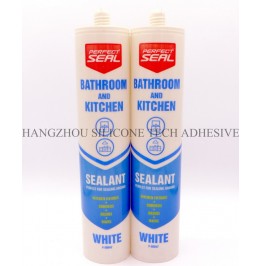
Grout fills the space between tiles. Sealant goes around edges and joints — where the tile meets the bathtub, the sink, the shower tray, or the window frame. These are dynamic joints that expand and contract with temperature and moisture, so they need a flexible, high-elasticity sealant.
Silicone-based sealants are the go-to for these transitions. They stretch without cracking, resist mold, and handle constant water exposure. Do not use regular grout in these spots — it will crack and peel within months.
For the actual tile joints in a shower area, prioritize a polyurea or epoxy grout with proven waterproofing. In less wet zones like a dry bathroom wall, a standard epoxy grout with good mildew resistance works fine.
Always grab a grout sample and test it on your actual tile. Color looks different under natural light versus store lighting, so apply a small strip, let it cure, and check it in both daylight and your bathroom's artificial light. Take a photo of the tile and grout sample side by side — your phone camera reveals color mismatches your eyes might miss.
Keep joint width between 1 and 2 millimeters for the best results. Gaps wider than 3 millimeters make even the best grout look messy and are nearly impossible to hide.
One final note: pure white grout in bathrooms is a gamble. It looks pristine at first but yellows quickly under UV light and cleaning chemicals. If you love the white look, opt for a yellowing-resistant off-white or a very light gray instead. Your future self will thank you.
Copyright 2019 by Hangzhou Silicone Tech Adhesive Co., Ltd. All rights reserved.
Bathroom Sealant | Acrylic Sealant | Dow Corning 795 | Aquarium Sealant | Dow Corning 732 | Clear Silicone Sealant | Polysulfide Sealant | Glazing Sealant | Mirror Sealant | IG Sealant
Powered by Onepound


