E-mail:
sales@silicone-sealant-china.com

That little strip of material running along the back edge of your bathroom vanity — the backsplash — does a lot more than it looks like it does. It keeps water from seeping behind the countertop, protects your wall from splashes, and honestly, it finishes the whole look. But here's the thing: if the sealant bond fails, water gets behind the counter, and you are looking at swollen cabinets, moldy walls, and a headache you really did not sign up for.
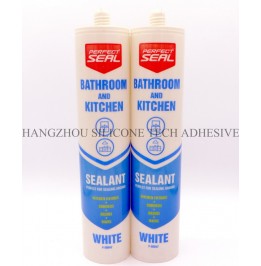
Getting the sealant application right is not rocket science, but it does require paying attention to a few details that most people skip. Let's walk through it.
People tend to focus on the countertop-to-wall seal and forget about the backsplash strip entirely. That strip sits right where water pools during handwashing and brushing teeth. Every single day, moisture hits that joint. If the sealant is weak, cracked, or poorly bonded, water creeps behind the backsplash and slowly destroys the wall substrate underneath.
Over time, you will notice paint bubbling, drywall softening, or that unmistakable musty smell behind the vanity. By then, the damage is already done. A solid sealant bond at the backsplash is your first line of defense.
The sealant also holds the backsplash strip in place. Whether it is a tile strip, a stone piece, or a solid surface extension, it needs to be mechanically and chemically bonded to both the countertop and the wall. A failed bond means the strip can shift, lift, or even fall off — especially if someone leans on the counter.
Not every sealant is built for the same job. For a bathroom backsplash, you are dealing with constant moisture, occasional temperature changes, and direct water contact. That rules out a lot of options right off the bat.
Silicone sealants have been the go-to for bathrooms for decades, and for good reason. They are fully waterproof, remain flexible over time, and resist mold growth. The downside? They do not bond well to every surface. Silicone sticks to glass, glazed tile, and most stone, but it can be unreliable on porous materials like natural marble or unsealed wood.
Polyurethane sealants bond aggressively to almost anything — stone, tile, wood, metal, solid surface. They are also waterproof once cured and tend to be more durable under physical stress. The trade-off is they can be slightly less flexible than silicone, which matters if your backsplash strip expands and contracts with temperature swings.
Hybrid sealants try to give you the best of both worlds. They bond like polyurethane and stay flexible like silicone. For a backsplash that sits on multiple materials — say a solid surface countertop meeting a painted wall — hybrids are often the smartest pick.
Do not use acrylic latex caulk for a bathroom backsplash. It is not waterproof, it shrinks as it dries, and it will pull away from the joint within weeks. It is fine for dry interior trim work, but not here.
Also skip any sealant that is labeled "paintable" if you are bonding to a tile or stone backsplash. Those formulations are softer and less water-resistant. Save them for dry areas where you plan to paint over the joint later.
This is the step that ruins most sealant jobs, and nobody talks about it enough. If there is any soap residue, dust, old caulk, or moisture on the bonding surface, the sealant will not stick. Period.
Wipe down both the countertop edge and the wall with isopropyl alcohol. Not water, not soapy water — isopropyl alcohol. It evaporates fast, leaves no residue, and cuts through grease better than anything else. Let the surfaces dry completely before you even think about squeezing out the sealant.
If you are working over old sealant, remove every bit of it. Use a plastic scraper or a utility knife, being careful not to gouge the tile or countertop. Any leftover old sealant will create a weak layer between the new sealant and the surface, and that bond will fail from day one.
Some surfaces — especially natural stone, certain solid surface materials, and painted walls — benefit from a primer coat before sealant goes on. A primer creates a chemical bridge that dramatically improves adhesion. If your sealant manufacturer recommends a primer for your specific materials, do not skip it. It adds five minutes to the job and can save you from a repair down the road.
A common mistake is putting little dots of sealant every few inches along the backsplash joint. That is not a bond — that is a guess. You need a continuous bead of sealant running the full length of the backsplash where it meets both the countertop and the wall.
Load your caulk gun properly. Cut the tip at a 45-degree angle, and make sure the opening is slightly wider than the joint you are filling. Too small a tip means you are forcing the sealant out, which introduces air bubbles and uneven distribution.
Run the bead slowly and steadily. Do not stop and start — a continuous line bonds better than a series of disconnected blobs.
After applying the bead, smooth it with a wet finger or a dedicated sealing tool. Press the sealant firmly into the joint so it makes full contact with both surfaces. The goal is to eliminate air pockets and ensure the sealant is pressed into every corner of the joint.
Wipe away excess with a damp cloth immediately. Do not let it skin over first — once it starts curing, you cannot smooth it properly, and you will end up with a rough, uneven line that collects dirt.
Applying sealant over a wet surface is probably the number one reason bonds fail in bathrooms. Even if the wall looks dry, moisture can be trapped in the grout or behind the tile. Wait until everything is bone dry. If you are in a hurry, a hair dryer on low heat can help, but do not rush it.
Another frequent error is using too little sealant. The bead needs to fully fill the joint and make contact with both surfaces. A thin skim of sealant will look fine for a week, then peel away because there was not enough material to create a real bond.
Also, do not paint or caulk over the joint before the sealant has fully cured. Most sealants need 24 to 48 hours to cure completely, though some hybrids cure faster. Check the technical sheet for your specific product and actually wait that long. Touching it early or putting weight on it can permanently deform the bond.
Even the best sealant job will eventually need attention. Bathroom environments are brutal — constant humidity, cleaning chemicals, and temperature shifts all take a toll.
Inspect the backsplash sealant at least twice a year. Look for cracks, gaps, or areas where the sealant has pulled away from the wall or countertop. If you see any separation, remove the old sealant completely, clean the surfaces again, reprime if needed, and reapply fresh sealant.
Avoid using abrasive cleaners right along the sealant line. Harsh scrubbing can physically damage the sealant and break the bond. Stick to mild soap and water for routine cleaning, and use a soft cloth or sponge — never a scouring pad near that joint.
One more thing: if your backsplash strip is made of a material that moves — like natural stone, which can expand slightly with moisture — make sure you are using a highly flexible sealant. A rigid bond on a moving surface will crack no matter how well you applied it. Flexibility matters more than strength in these spots.
Copyright 2019 by Hangzhou Silicone Tech Adhesive Co., Ltd. All rights reserved.
Bathroom Sealant | Acrylic Sealant | Dow Corning 795 | Aquarium Sealant | Dow Corning 732 | Clear Silicone Sealant | Polysulfide Sealant | Glazing Sealant | Mirror Sealant | IG Sealant
Powered by Onepound


