E-mail:
sales@silicone-sealant-china.com

The moment you finish applying sealant, the clock starts ticking on how easily you can get rid of the excess. Acting swiftly is crucial because as the sealant begins to cure, it becomes more difficult to remove cleanly.
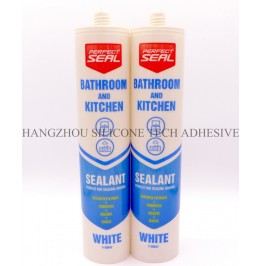
If the sealant you've used is of a softer variety, like some silicone - based ones, you have a relatively short window. Within the first 15 - 30 minutes after application, you can use a damp cloth or sponge. Gently wipe along the edges of the sealed area where the excess has spread. The moisture helps to keep the sealant in a semi - liquid state, making it easier to wipe away without leaving residue. Make sure the cloth or sponge is clean to avoid introducing dirt or debris onto the fresh sealant.
For sealants that have started to set but are not fully cured, which might be the case after about 30 minutes to an hour depending on the environmental conditions (temperature and humidity), a plastic scraper can be useful. Hold the scraper at a shallow angle, around 15 - 30 degrees, to the surface. Carefully scrape along the edge of the sealant bead to remove the excess. Be gentle to avoid scratching the underlying surface, whether it's tile, glass, or metal. You may need to follow up with a damp cloth to clean up any remaining small bits.
The type of surface you're working on plays a significant role in determining the best tool for removing excess sealant.
On smooth surfaces such as glass shower doors or metal fixtures, a razor blade scraper can be highly effective. However, extreme caution is necessary to prevent cuts and scratches. Hold the razor blade at a very low angle, almost parallel to the surface, and gently slide it along the edge of the sealant. The sharp edge of the blade can easily cut through the excess sealant without damaging the smooth surface underneath. After using the razor blade, wipe the area with a soft, lint - free cloth to remove any remaining sealant particles.
Porous surfaces require a more delicate approach. Using a razor blade on these surfaces can cause permanent damage by scratching or gouging. Instead, opt for a nylon scrub brush or a soft - bristled toothbrush. Dip the brush in a solution of warm water and a mild detergent. Gently scrub along the edge of the sealant to loosen and remove the excess. The soft bristles will not harm the porous surface while still being effective at getting rid of the sealant. Rinse the area with clean water and dry it thoroughly.
Sometimes, even with the right timing and tools, the excess sealant can be particularly stubborn. In such cases, chemical solutions can come to the rescue.
If the sealant is still in a relatively uncured state but has become too thick to remove with just water and a cloth, a solvent - based cleaner can be used. Look for a cleaner that is specifically designed for the type of sealant you've applied. Apply a small amount of the cleaner to a clean cloth and gently rub it onto the excess sealant. The solvent will help to break down the sealant, making it easier to wipe away. Be sure to work in a well - ventilated area as solvents can emit strong fumes. Also, test the cleaner on a small, inconspicuous area first to ensure it doesn't damage the underlying surface.
For sealant that has fully cured and is proving difficult to remove, an enzyme - based cleaner can be a great option. These cleaners work by breaking down the chemical bonds in the sealant over time. Apply the enzyme - based cleaner according to the manufacturer's instructions, usually by spraying it onto the excess sealant and letting it sit for a specified period, often several hours. After the waiting time, use a plastic scraper or a nylon brush to gently remove the softened sealant. You may need to repeat the process if the sealant is particularly thick or well - adhered.
Once you've successfully removed the excess sealant, taking proper care of the surface is essential to maintain its appearance and integrity.
After removing the excess, clean the entire area with a mild detergent and warm water. This will remove any remaining cleaner residue or small sealant particles. For surfaces that can be polished, such as metal or some types of tile, use a suitable polishing compound to restore the shine and luster. Apply the polish according to the instructions, usually using a soft cloth in circular motions.
To avoid having to deal with excess sealant in the future, take steps during the application process. Use masking tape along the edges of the area where you want to apply the sealant. This creates a clean boundary and prevents the sealant from spreading onto unwanted areas. Once the sealant is applied and before it starts to cure, carefully remove the masking tape at a 45 - degree angle to the surface. This will leave you with a neat, professional - looking sealant line with minimal excess to clean up.
Copyright 2019 by Hangzhou Silicone Tech Adhesive Co., Ltd. All rights reserved.
Bathroom Sealant | Acrylic Sealant | Dow Corning 795 | Aquarium Sealant | Dow Corning 732 | Clear Silicone Sealant | Polysulfide Sealant | Glazing Sealant | Mirror Sealant | IG Sealant
Powered by Onepound


