E-mail:
sales@silicone-sealant-china.com

There is a specific kind of misery that comes from a leaking shower enclosure. It starts with a faint smell—damp drywall, mold, something rotted behind the tile. You ignore it for weeks. Then you notice the grout around the shower frame is turning black. Then the caulk line has pulled away from the glass. By the time you tear out the surround, you are staring at a soggy stud, a ruined subfloor, and a repair bill that could have bought a new car.
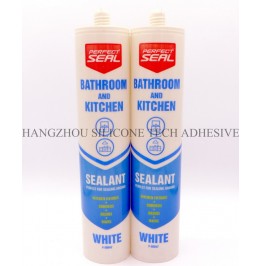
The shower enclosure frame is the most abused joint in any bathroom. It takes the direct impact of water pressure, the constant expansion of heated glass, the movement of the frame itself, and the daily chemical assault of soap and shampoo. Most standard sealants fail here within a year—not because they are cheap, but because the application doesn't account for the unique physics of a glass-to-frame joint.
Waterproofing this area isn't just about squeezing a bead. It is about managing movement, creating a drainage path, and ensuring the sealant bonds to surfaces that are constantly changing temperature.
Glass moves. It sounds solid, but when hot water hits a shower screen, the glass pane expands. Even tempered glass expands and contracts with heat. A standard shower screen can move by a millimeter or two during a hot shower.
If you seal that glass rigidly to the frame—using a hard sealant or applying too much pressure—the glass has nowhere to go. It bows slightly, or it pushes against the sealant. That pressure eventually blows the bead out from the top or bottom.
The sealant at a shower frame must act like a gasket, not a glue. It needs to compress when the glass expands and recover when it cools down. If the sealant is too stiff, it cracks. If it is too soft, it oozes out of the joint. Finding that balance is the entire game.
Most shower frames don't sit perfectly flush against the tiled wall. There is almost always a gap—sometimes hairline, sometimes 3mm or 4mm wide—caused by uneven tiling or a slightly warped frame.
People try to fill that gap with sealant. That is a mistake. Sealant is not grout. If you try to bridge a wide gap with sealant alone, the cure will be uneven. The outside skins over while the inside stays wet, creating a hollow tube. Water finds that hollow tube immediately.
You need a compressible filler for the gap, and sealant only for the contact surfaces. Skipping this step is why shower frames leak behind the tile.
The bond between sealant and glass is surprisingly weak if the glass isn't clean. Shower glass accumulates a film of soap scum, hard water deposits, and body oils. That film is hydrophobic—it repels water and repels sealant.
Wipe the glass edge and the frame surface with isopropyl alcohol. Not water, not window cleaner. Alcohol cuts through the oils and evaporates cleanly, leaving a receptive surface. Use a lint-free cloth so you don't leave fibers behind.
Check the frame material. If it is aluminum or powder-coated steel, the surface is usually non-porous and bonds well. If it is PVC or acrylic, the surface energy is low, and you might need a specific primer. Without primer on plastic frames, the sealant will peel off like a sticker within months.
Taping off shower glass is tricky because the surface is smooth and vertical. Standard painter's tape often falls off. Use a low-tack masking tape designed for delicate surfaces—the kind used in auto painting.
Apply the tape to the glass about 2mm away from the joint line. You want the sealant to touch the glass edge, not the tape. If the tape is too close, the sealant bridges over it instead of bonding to the glass, creating a weak point right at the edge.
Press the tape firmly. Run a fingernail along the edge to seal it against the glass. Any gap under the tape lets sealant bleed underneath, and once it cures, you have a ridge of rubber on your shower screen that looks terrible and collects dirt.
Never apply sealant directly into a deep gap between the frame and the wall. Always use a closed-cell polyethylene backer rod. Cut the rod to fit snugly into the gap—it should be a tight friction fit, not loose.
The rod serves two purposes. First, it limits the depth of the sealant so it cures uniformly. Second, it creates a bond-break at the back of the joint. The sealant cures against the rod on the front face only, leaving the back free to move.
If you skip the rod, the sealant cures against the wall on the back and the frame on the front. That creates a rigid bridge that cracks the moment the frame moves. With the rod, the sealant acts like a flexible boot—anchored at the front, free at the back.
A single thick bead of sealant on a shower frame is a recipe for disaster. It sags on the vertical surfaces and skins over unevenly on the horizontal ones.
Apply the sealant in two thin passes. The first pass wets the surface—press it firmly into the joint against the backer rod and the glass edge. Use a putty knife or a spatula to pack it in. Let this first pass skin over for about 15 to 20 minutes.
Then apply the second pass. This one builds the profile. Tool it into a concave shape—pressed deep into the joint at the bottom, tapering to a thin line at the top. The concave shape is critical because it directs water down and away from the joint instead of letting it sit against the sealant-frame interface.
Two thin passes give you better adhesion, deeper tooling, and a more durable seal than one thick squeeze.
The finish on a shower frame seal does more than look good—it controls water flow. A convex bead (rounded on top) traps water. A flat bead holds water in a thin film. Only a concave bead sheds water effectively.
Use a rounded tool or a wet finger to press the bead into the joint. Move steadily along the frame, maintaining even pressure. The goal is to compress the sealant by about 20% to 30% of its wet thickness. That compression forces it into the micro-texture of the frame and glass, maximizing contact area.
At the corners—where the frame meets the glass at a 90-degree angle—use a small tool or your wet finger to press the sealant firmly into the radius. Don't try to tool a sharp corner with a big tool. You will pull the bead away from the glass. Use a small rounded spatula or even a chopstick wrapped in tape for tight corners.
Water pressure pushes against the sealant from the inside of the shower. If the sealant is flat or convex, that pressure forces water behind it. The sealant needs to slope slightly outward—away from the shower—so gravity helps push water off the joint instead of into it.
When you tool the bead, angle your tool slightly outward. The bottom of the bead should be wider than the top, creating that funnel shape. This is especially important at the bottom rail of the shower frame where water pools naturally.
At the bottom rail, apply a slightly thicker bead and tool it aggressively. The weight of water is highest here, and the sealant needs maximum contact to resist being pushed out.
The top rail of a shower frame is where leaks happen most often. Water runs down the glass, hits the top rail, and sits there. If the sealant bead is thin or poorly bonded, water wicks behind it and runs down the wall inside the enclosure.
Apply a generous bead at the top rail. Don't be shy here—this is the primary water deflection point. Use the backer rod to control depth, then apply two passes of sealant. Tool it deeply so the bead curves up slightly against the glass, creating a dam that directs water back into the shower instead of over the edge.
Some installers put a small bead of sealant on top of the frame rail itself—a cap bead—to seal the top edge of the joint. This adds an extra layer of protection but requires careful tooling so it doesn't look like a blob of glue sitting on the frame.
Shower frames are in the wettest, most humid part of the bathroom. Steam from showers raises the ambient temperature and humidity, which affects cure speed.
High humidity speeds up moisture-cure sealants. That sounds good, but it means the skin forms faster, reducing the window for tooling. Work in short sections—apply and tool one side of the frame, then move to the next. Don't try to do the entire enclosure in one go.
Low temperature slows cure. If your bathroom is unheated and it's winter, the sealant might take 48 hours or longer to fully cure. Don't rush it. Cold cure means weaker bonds. If possible, run a space heater in the bathroom for 24 hours after sealing to keep the temperature above 18°C.
Good airflow is essential. A fan running on low pulls away volatile byproducts and helps the sealant cure evenly. Stagnant air traps solvents and moisture against the bead, causing surface defects—bubbles, wrinkles, or a tacky film that never fully hardens.
Keep the fan running for at least 24 hours after sealing. Don't take a hot shower for 48 hours minimum. The steam from a hot shower hits uncured sealant and interrupts the cross-linking reaction. The surface becomes weak and porous, and mold moves in immediately.
Walk around the shower frame once a month. Look at the bead from different angles. Check for gaps where the bead has pulled away from the glass or frame. Check for discoloration—yellowing or blackening indicates mold or UV degradation.
Run a damp cloth along the bead and see if water beads up or sheets out. If water sheets out evenly, the seal is hydrophobic and working. If water clings to the surface in irregular patches, the sealant has lost its water-repellent properties and needs replacing.
Never use steel wool or abrasive pads on shower frame sealant. The physical abrasion creates micro-scratches that trap moisture and accelerate aging.
Use warm water and mild soap. For soap scum buildup on the bead, spray with diluted vinegar, let it sit for five minutes, wipe with a soft cloth, and dry. Don't let vinegar sit for more than ten minutes—it can degrade some sealant chemistries if left too long.
Dry the bead after every shower if possible. A quick squeegee pass along the frame takes ten seconds and removes the water film that mold needs to establish.
If the bead is cracking through the middle, pulling away from the glass in sections, or feels soft and spongy when you press it, strip it and reseal. Patching over a failed bead is pointless—the new sealant won't bond to the old failed material.
Strip completely down to the bare frame and glass. Clean with solvent, prime if needed, re-apply backer rod, and apply fresh sealant in two thin passes. It takes an hour or two, but it prevents the water damage that costs thousands to repair.
The shower frame is the front line of defense in your bathroom. Water hits it first, pressure pushes against it hardest, and movement stresses it most. Treat the seal with the respect it deserves—proper prep, correct depth, concave tooling, and patient curing—and it will hold for years. Cut corners on any of those steps, and you are just buying time before the mold comes back.
Copyright 2019 by Hangzhou Silicone Tech Adhesive Co., Ltd. All rights reserved.
Bathroom Sealant | Acrylic Sealant | Dow Corning 795 | Aquarium Sealant | Dow Corning 732 | Clear Silicone Sealant | Polysulfide Sealant | Glazing Sealant | Mirror Sealant | IG Sealant
Powered by Onepound


