E-mail:
sales@silicone-sealant-china.com

The vanity counter joint is the most visible sealant line in the bathroom. It runs right at eye level, right where you splash water every time you wash your hands. It sits between two materials that expand and contract at different rates—ceramic or stone on top, wood or particleboard underneath. And yet most people treat it like an afterthought, running a quick bead with the leftover sealant from the shower and calling it a day.
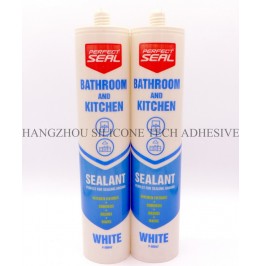
That joint fails faster than almost any other seal in the bathroom. Within weeks, the bead pulls away from the countertop. Within months, black mold creeps along the edge. Within a year, water has worked its way into the cabinet below and the whole vanity smells like a wet basement.
The vanity edge isn't just a cosmetic detail. It's a functional waterproof barrier that protects expensive cabinetry from constant water exposure. Getting it right requires understanding how the joint moves, what materials you're bonding, and why the finish matters as much as the seal itself.
Most bathroom joints connect tile to tile or tile to fiberglass. Those substrates expand and contract at roughly the same rate when temperature changes. A vanity counter is different—you're usually sealing ceramic, marble, or engineered stone to a wood-based cabinet.
Stone expands very little with heat. Wood expands significantly. When hot water hits the counter, the stone stays put while the wood swells underneath. That differential movement shears the sealant right at the bond line. A rigid sealant cracks. A flexible one survives—but only if it's applied correctly.
This is why vanity edge sealant needs higher elongation than shower sealant. Look for products rated at 35% to 50% movement capability. Standard bathroom silicone at 25% won't handle the daily thermal cycling at a sink edge.
Shower floors slope toward the drain. Water runs off. Vanity counters are mostly flat or sloped toward the backsplash. Water sits on the surface, pools at the joint, and finds its way into the seam every single time you wash your hands, rinse a cup, or splash water brushing your teeth.
There's no drainage path at a vanity edge. The sealant is the only thing standing between water and the cabinet. That makes the bond line critical—not just the top surface where you see the bead. The bottom of the bead, where it meets the countertop edge, is where failure starts.
This joint collects everything—toothpaste splatter, soap residue, skin oils from leaning on the counter, dust from cabinets opening and closing. Before you apply anything, clean both surfaces with isopropyl alcohol on a lint-free cloth.
Wipe the stone edge first. Then wipe the wood or laminate surface right where the bead will sit. Pay special attention to the inside corner where the countertop meets the backsplash. That corner traps grime in a way that flat surfaces don't. A cotton swab dipped in solvent works better than a cloth in tight corners.
After wiping, let both surfaces dry for at least 15 minutes. Moisture on the wood is especially problematic—it prevents adhesion and can cause the wood to swell after sealing, pushing the bead off.
Use painter's tape along both sides of the joint—on the countertop surface and on the wall or backsplash. The tape creates a clean edge and protects the finished surfaces from smears.
Press the tape down firmly, especially at the corners. A loose edge under the tape lets sealant bleed underneath, and once it cures, you're scraping it off with a razor blade. Not fun.
For the bottom edge where the counter meets the cabinet front, masking is trickier. Some people skip it and just tool the bead carefully. Others use thin tape along the cabinet face. Either way works—just be consistent. If you mask, peel the tape while the sealant is still tacky, about 10 to 15 minutes after application. If you don't mask, tool immediately.
A vanity edge bead needs a specific profile—concave on top, pressed firmly into the joint at the bottom. Think of a shallow U shape. The widest point of contact should be at the bottom where the countertop edge meets the cabinet, tapering to a thin line at the top surface.
This shape does two things. First, it maximizes contact area at the bond line where adhesion matters most. Second, it directs water down and away from the joint instead of letting it sit in a film on top of the bead. Water beads up and runs off the curved surface instead of pooling.
To achieve this, you need a backer rod for any gap deeper than 3mm. Push the rod into the joint so it sits flush with the countertop edge. Then apply sealant over it, pressing the tool into the rod's edge as you smooth. The rod creates the depth you need for a proper concave profile without wasting sealant.
If the cabinet is wood or wood veneer, the grain direction affects how sealant bonds. Wood grain runs in one direction. Sealant applied across the grain—perpendicular to it—bonds better than sealant applied parallel to the grain.
When you run your bead along the counter edge, you're moving parallel to the grain on the cabinet face. That's fine for the top surface. But at the bottom edge where the bead meets the cabinet front, make sure you press the sealant across the grain lines. Use a tool to score lightly across the grain before applying—shallow crosshatch marks give the sealant mechanical keying.
Laminate and melamine surfaces don't have grain, but they're slippery. Sand them lightly with 120-grit paper before sealing, then wipe with solvent. That roughness gives the sealant something to grip.
Tool the bead in one continuous pass from one end to the other. Don't stop and restart—each stop creates a ridge line where water collects. Move steadily, pressing the tool at a 45-degree angle into the joint.
The pressure should be firm but not aggressive. You're compressing the sealant into the joint, not squeezing it out. If you press too hard, material挤出s from the sides and you lose contact at the bond line. If you press too lightly, the bead stays round on top instead of forming the concave shape you need.
A wet finger works well for vanity edges because it's soft enough to conform to the curve of the countertop. A small silicone tool works better for straight runs along the backsplash. Match the tool to the joint geometry.
This is where vanity seals fail first. The inside corner where the countertop drops down to meet the sink basin creates a tight radius that most beads can't fill properly. Sealant bridges across the corner instead of bonding into it, leaving a void right where water pools.
Cut the backer rod shorter than the gap—leave about 5mm of space. Apply sealant and press it firmly into the corner with a small tool or your wet finger. The extra space lets you compress the material into the radius without pushing it out the other side.
Run two thin passes instead of one thick one. The first pass wets the corner. Let it skin for 10 minutes. The second pass fills the remaining depth. This layered approach gets sealant into the tight radius where a single bead would just bridge over.
The backsplash joint is usually simpler—a straight vertical line where the countertop edge meets the tile or wall. But it's exposed to the same thermal movement and water exposure as the rest of the vanity edge.
Apply the bead the same way—backer rod if the gap is deep, pressed into the joint, tooled concave. The key difference is that the backsplash surface is usually tile, which bonds well to most sealants. The countertop edge is the weaker substrate, so focus your adhesion effort there.
If the backsplash is painted drywall instead of tile, prime it first. Paint releases oils that inhibit sealant cure. A coat of primer solves this and creates a reliable bond surface.
Vanity areas sit at room temperature. They don't get the steam exposure that showers do. That sounds easier, but it actually creates a different problem—slower, more uneven cure.
In a shower, steam accelerates moisture-cure sealants. At a vanity, the air is drier and the temperature is more stable. Cure happens slower but more evenly. The trade-off is that the longer cure time means more opportunity for dust and contaminants to settle on the wet bead.
Keep the vanity area clean during cure. Close the cabinet doors. Don't lean on the counter. Don't open and close drawers near the joint. Every vibration and air current disturbs the curing surface.
Sinks generate localized humidity—splashing water evaporates and creates a micro-climate right at the joint. That humidity is actually helpful for moisture-cure sealants. It keeps the surface from skinning too fast.
But too much humidity—from a leaky pipe, a running faucet, or a bathroom with poor ventilation—slows cure and encourages mold on the uncured surface. Wipe up any standing water near the joint during the cure period. Don't let the bead sit in a puddle.
Ideal cure conditions: 20°C to 25°C, 40% to 60% relative humidity, no direct airflow on the bead. A closed bathroom with the door shut for 24 hours after sealing is perfect.
The vanity edge is mold's favorite spot in the bathroom. It's warm from the countertop, wet from splashing, and full of organic residue—toothpaste, soap scum, skin cells. Mold spores land on the sealant surface and find everything they need within hours.
A properly sealed and tooled joint resists this better than a poorly finished one. The concave profile sheds water. The smooth surface doesn't trap grime. The full bond at the bottom prevents moisture from wicking behind the bead where it creates hidden mold colonies.
But even the best sealant needs help. Wipe the vanity edge dry after every use. A quick pass with a microfiber cloth takes 10 seconds and removes the moisture film that mold needs to establish.
If you notice the sealant lifting at the countertop edge—even slightly—don't ignore it. That lift means the bond is failing. Water is getting behind the bead and working its way into the cabinet.
Clean the area with solvent. If the old sealant is still flexible, you can sometimes re-adhere it by pressing it back into the joint and running a fresh thin bead over the top. But if it's hard, cracked, or chalky, strip it completely and start over.
Stripping vanity edge sealant is annoying because you're working in a tight space between the counter and the wall. Use a thin putty knife and work slowly. Don't gouge the countertop edge—especially if it's stone or laminate. A dull razor blade held at a shallow angle works well for cutting through old bead without damaging the substrate.
Vanity edge sealant doesn't last as long as shower sealant because of the constant mechanical stress from leaning, placing items, and thermal cycling. Plan to inspect it every three months and re-seal every two to three years.
This doesn't mean stripping everything. If the bead is still bonded and just looks dull or slightly shrunken, a fresh thin coat over the top extends its life by another year or two. Full replacement is only needed when the bond has failed or the bead is cracking through.
The vanity edge is the most visible seal in your bathroom. Guests see it every time they use the restroom. It's also the most functional—protecting your cabinet from water damage that costs hundreds to repair. Spend the extra ten minutes getting the prep right, the bead shape correct, and the cure conditions perfect. That vanity edge will look clean and keep water out for years instead of becoming a mold magnet within months.
Copyright 2019 by Hangzhou Silicone Tech Adhesive Co., Ltd. All rights reserved.
Bathroom Sealant | Acrylic Sealant | Dow Corning 795 | Aquarium Sealant | Dow Corning 732 | Clear Silicone Sealant | Polysulfide Sealant | Glazing Sealant | Mirror Sealant | IG Sealant
Powered by Onepound


