E-mail:
sales@silicone-sealant-china.com

Sealants are essential for creating watertight and airtight seals in various applications, from bathrooms and kitchens to exterior building joints. However, color changes in sealants after application can be a concern, affecting both aesthetics and performance. Understanding the factors that influence color stability and how to assess these changes is crucial for maintaining long-term durability and appearance.
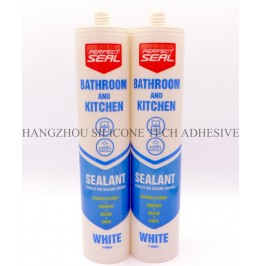
Several factors can contribute to color changes in sealants after application. Environmental exposure is one of the primary causes. Ultraviolet (UV) radiation from sunlight can break down the chemical bonds in sealants, leading to fading or discoloration. This is particularly common in outdoor applications where sealants are constantly exposed to the elements.
Chemical exposure is another significant factor. Sealants may come into contact with various chemicals during their service life, such as cleaning agents, solvents, or even atmospheric pollutants. These substances can react with the sealant material, causing color changes or staining.
The type of sealant used also plays a role. Different sealant formulations have varying levels of resistance to color changes. For example, some sealants may contain pigments that are more prone to fading under UV exposure, while others may be formulated with stabilizers to enhance color retention.
To determine whether color changes in a sealant are acceptable, it is essential to establish clear metrics and assessment methods. One widely recognized standard is the use of color difference measurements, expressed as ΔE values. According to national standards, a ΔE value of ≤3 is generally considered acceptable for most building materials, including sealants. This means that color differences within this range are unlikely to be noticeable to the human eye under normal viewing conditions.
Color difference measurements are typically obtained using a colorimeter or spectrophotometer. These instruments measure the color of the sealant sample and compare it to a reference or standard sample. The resulting ΔE value quantifies the degree of color difference between the two samples.
In addition to instrumental measurements, visual assessments can also be valuable. Trained observers can evaluate the sealant under controlled lighting conditions to determine if the color change is noticeable or objectionable. However, visual assessments are subjective and can vary between individuals, making instrumental measurements more reliable for objective evaluations.
While ΔE values provide a quantitative measure of color difference, the perception of color changes can also be influenced by several other factors. The background color and texture of the substrate can affect how noticeable a color change is. For example, a color change on a light-colored substrate may be more apparent than the same change on a dark-colored substrate.
The viewing angle and lighting conditions can also impact color perception. Changes in the angle of view or the type of lighting (e.g., natural daylight vs. artificial lighting) can alter the appearance of the sealant, making color differences more or less noticeable.
Additionally, the size and shape of the sealed area can influence color perception. A large, continuous sealed surface may show color variations more prominently than a small, discrete sealed joint.
To minimize color changes in sealants, it is essential to select a sealant formulation that is appropriate for the intended application and environmental conditions. Look for sealants that are specifically designed for outdoor use or exposure to chemicals if these factors are relevant to your project.
Proper application techniques can also help prevent color changes. Ensure that the substrate is clean and free of contaminants before applying the sealant. Follow the manufacturer's instructions regarding surface preparation, application temperature, and curing conditions to ensure optimal performance and color retention.
Regular maintenance and cleaning can also help manage color changes over time. Avoid using harsh chemicals or abrasive cleaning methods that could damage the sealant surface or accelerate color fading. Instead, use mild, non-abrasive cleaners and a soft cloth or sponge for routine cleaning.
Copyright 2019 by Hangzhou Silicone Tech Adhesive Co., Ltd. All rights reserved.
Bathroom Sealant | Acrylic Sealant | Dow Corning 795 | Aquarium Sealant | Dow Corning 732 | Clear Silicone Sealant | Polysulfide Sealant | Glazing Sealant | Mirror Sealant | IG Sealant
Powered by Onepound


