E-mail:
sales@silicone-sealant-china.com

Solvent-based bathroom sealants are widely used in wet environments such as bathrooms and kitchens due to their excellent adhesion and waterproofing properties. However, the bonding strength of these sealants is not constant and can be influenced by various factors. Understanding these factors is crucial for ensuring reliable and long-lasting sealing performance.
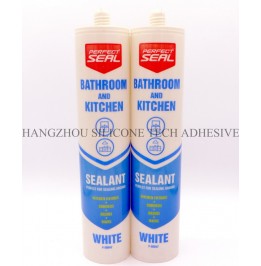
The type of polymer used in the sealant formulation significantly impacts its bonding strength. Polymers with higher molecular weights generally exhibit greater intermolecular forces, leading to improved cohesive strength. For instance, polyurethane-based sealants often demonstrate high bonding strength due to the strong hydrogen bonding and cross-linking within the polymer matrix. Conversely, lower molecular weight polymers may result in weaker bonds, especially if the molecular chains are too short to form effective entanglements.
The presence of side chains or branching in the polymer structure can also affect bonding strength. Small side chains may reduce intermolecular forces, while longer side chains can enhance them through increased chain entanglement and crystallization. For example, in some acrylic-based sealants, the incorporation of specific side chains can improve adhesion to various substrates by increasing the surface energy compatibility between the sealant and the substrate.
Cross-linking refers to the formation of chemical bonds between polymer chains, creating a three-dimensional network structure. Higher cross-linking density typically leads to increased bonding strength, as it restricts the movement of polymer chains and enhances the overall rigidity of the sealant. However, excessive cross-linking can make the sealant brittle, reducing its ability to withstand mechanical stress and environmental factors such as temperature fluctuations.
Temperature plays a critical role in the bonding strength of solvent-based sealants. During the curing process, higher temperatures can accelerate solvent evaporation and chemical reactions, leading to faster curing and potentially higher initial bonding strength. However, if the temperature is too high, it may cause premature curing, resulting in incomplete cross-linking and reduced long-term bonding strength. Conversely, low temperatures can slow down the curing process, extending the time required for the sealant to reach its full bonding strength and potentially leading to poor adhesion if the sealant does not cure properly.
Humidity levels in the environment can also impact the bonding strength of solvent-based sealants. High humidity can slow down solvent evaporation, prolonging the curing time and potentially leading to incomplete curing. Additionally, excessive moisture can react with certain components in the sealant, such as isocyanates in polyurethane sealants, leading to the formation of unwanted by-products and reduced bonding strength. On the other hand, low humidity can cause the sealant to cure too quickly, potentially resulting in a brittle bond that is more susceptible to cracking under stress.
Exposure to chemicals in the bathroom environment, such as cleaning agents, personal care products, and water treatment chemicals, can affect the bonding strength of solvent-based sealants. Some chemicals may react with the sealant components, causing degradation or swelling, which can weaken the bond between the sealant and the substrate. For example, exposure to strong acids or alkalis can break down the polymer matrix of the sealant, leading to a loss of adhesion and sealing performance.
The surface energy and roughness of the substrate play a crucial role in determining the bonding strength of solvent-based sealants. Substrates with high surface energy, such as metals and glass, generally provide better adhesion due to their ability to form strong intermolecular interactions with the sealant. In contrast, substrates with low surface energy, such as certain plastics and oils, may require surface treatment, such as plasma or chemical etching, to increase their surface energy and improve adhesion. Surface roughness can also affect bonding strength, as a rough surface provides more surface area for the sealant to adhere to, enhancing mechanical interlocking.
The cleanliness of the substrate surface is essential for achieving strong bonding with solvent-based sealants. Any contaminants, such as dust, oil, grease, or old sealant residues, can act as barriers between the sealant and the substrate, preventing proper adhesion. Thorough cleaning of the substrate surface using appropriate solvents or cleaning agents is necessary to remove these contaminants and ensure a clean, dry surface for optimal bonding.
The compatibility between the sealant and the substrate material is another important factor affecting bonding strength. Some sealants may not adhere well to certain materials due to differences in chemical composition or surface properties. For example, silicone-based sealants may not adhere well to certain plastics, while polyurethane sealants may have limited compatibility with certain metals. It is important to select a sealant that is specifically formulated for the intended substrate material to ensure reliable bonding.
For two-component solvent-based sealants, the mixing ratio of the components is critical for achieving the desired bonding strength. Incorrect mixing ratios can result in incomplete curing, reduced cross-linking density, and poor adhesion. Additionally, thorough mixing of the components is necessary to ensure a homogeneous mixture, as uneven mixing can lead to localized variations in bonding strength.
The application pressure and thickness of the sealant can also affect its bonding strength. Applying sufficient pressure during application helps to ensure proper contact between the sealant and the substrate, promoting adhesion and reducing the risk of air entrapment. The thickness of the sealant layer should be controlled within the recommended range, as excessive thickness can lead to slow curing, increased stress, and reduced bonding strength, while insufficient thickness may not provide adequate sealing performance.
Allowing sufficient curing time under appropriate conditions is essential for achieving the full bonding strength of solvent-based sealants. The curing time can vary depending on the type of sealant, environmental conditions, and substrate characteristics. It is important to follow the manufacturer's instructions regarding curing time and conditions, such as temperature and humidity, to ensure proper curing and optimal bonding performance.
Copyright 2019 by Hangzhou Silicone Tech Adhesive Co., Ltd. All rights reserved.
Bathroom Sealant | Acrylic Sealant | Dow Corning 795 | Aquarium Sealant | Dow Corning 732 | Clear Silicone Sealant | Polysulfide Sealant | Glazing Sealant | Mirror Sealant | IG Sealant
Powered by Onepound


