E-mail:
sales@silicone-sealant-china.com

In modern households, bathroom sealants play a crucial role in preventing water leakage and maintaining hygiene. When it comes to food-contact grade bathroom sealants, ensuring their safety is of paramount importance as they may come into contact with food or food-related items in certain scenarios, such as in kitchens adjacent to bathrooms or in multi-functional living spaces. Understanding the relevant safety standards is essential for both consumers and manufacturers to guarantee product quality and user health.
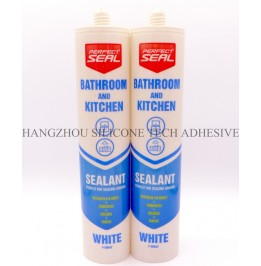
China has established a comprehensive set of food safety standards for food-contact materials, including sealants. The "GB 4806.15-2024 National Food Safety Standard - Adhesives for Food Contact Materials and Products" is a key standard specifically addressing adhesives used in food-contact scenarios. This standard, jointly issued by the National Health Commission and the State Administration for Market Regulation, came into effect on February 8, 2025. It provides detailed requirements for food-contact adhesives from raw material selection, production processes to the safety of the final products, aiming to prevent harmful substances from migrating into food.
The standard classifies food-contact adhesives into two categories based on their contact mode with food: direct contact and indirect contact. For direct-contact adhesives, the basic raw materials must comply with Appendix A and relevant announcements, and additives should meet the requirements of GB 9685. Indirect-contact adhesives have similar requirements for additives, while their basic raw materials need to conform to Appendix A, Appendix B, and relevant announcements.
Internationally, various countries and regions have their own food safety standards for food-contact materials. For example, the European Union has the "Regulation (EC) No 1935/2004," which stipulates that materials and products in contact with food should not endanger human health, cause unacceptable changes in food composition, or affect the sensory characteristics of food under normal or foreseeable use conditions.
In the United States, the Food and Drug Administration (FDA) plays a vital role in regulating food-contact materials. The FDA has specific requirements for different types of materials, and manufacturers need to ensure that their products comply with relevant regulations to obtain FDA approval for marketing.
The safety of food-contact grade bathroom sealants starts with raw materials. As per national and international standards, only approved raw materials can be used in the production of these sealants. For instance, in China, the raw materials for direct-contact adhesives are strictly regulated to ensure they do not contain harmful substances that could migrate into food.
Polymers used in sealants should have a high molecular weight to reduce the possibility of small-molecule substances migrating. Additionally, the use of additives should be minimized, and when used, they must be on the approved list and within the specified limits. For example, certain plasticizers and stabilizers that are known to be harmful to human health are prohibited or restricted in food-contact adhesives.
Migration tests are a critical part of assessing the safety of food-contact grade bathroom sealants. These tests simulate the actual use conditions of the sealants to determine whether harmful substances will migrate from the sealant into food. The test methods are specified in standards such as GB 31604.1 and GB 5009.156 in China.
During migration tests, food simulants are used to represent different types of food. For example, water is used to simulate aqueous foods, 3% acetic acid solution is used for acidic foods, and ethanol solutions are used for alcoholic foods. The sealant samples are in contact with these food simulants under specific conditions of time and temperature, and then the amounts of various substances that have migrated into the simulants are analyzed. The results of these tests must meet the specified limits to ensure the safety of the sealants.
Food-contact grade bathroom sealants should also meet certain sensory and physical-chemical requirements. In terms of sensory properties, direct-contact adhesives should have no abnormal odor, color, or taste that could affect the quality of food.
Physical-chemical indicators include parameters such as total migration, specific migration limits of certain substances, and heavy metal content. Total migration refers to the total amount of substances that can migrate from the sealant into food or food simulants under specified conditions. Specific migration limits are set for individual substances that are known to be potentially harmful, such as certain plasticizers and monomers. Heavy metals like lead, cadmium, and mercury are strictly regulated due to their toxicity, and their migration amounts must be within the specified limits to prevent health risks.
Manufacturers of food-contact grade bathroom sealants bear the primary responsibility for ensuring product compliance with safety standards. They need to establish a strict quality management system throughout the production process, from raw material procurement to finished product testing.
Manufacturers should select approved raw material suppliers and conduct regular audits to ensure the consistent quality of raw materials. During production, they must strictly follow the formulation and production processes specified in the standards to avoid cross-contamination and ensure product uniformity. After production, comprehensive testing of the finished products should be carried out according to relevant standards to verify their compliance before they are released to the market.
To demonstrate the compliance of their products, manufacturers can obtain relevant certifications. In China, products that meet the requirements of GB 4806.15-2024 can be labeled as "food-contact grade" and carry relevant compliance marks. Internationally, certifications such as FDA approval in the United States and CE certification in the European Union are widely recognized.
The certification process usually involves submitting product samples for testing by accredited laboratories, providing detailed product information and production process documentation, and undergoing on-site audits in some cases. Once the products pass all the requirements, the certification body will issue the corresponding certificate, which enhances the market competitiveness of the products and provides consumers with confidence in their safety.
In conclusion, food-contact grade bathroom sealants must adhere to strict safety standards to protect consumer health. By understanding the regulatory framework, key safety requirements, and compliance and certification processes, both manufacturers and consumers can ensure the safe use of these products in food-related environments.
Copyright 2019 by Hangzhou Silicone Tech Adhesive Co., Ltd. All rights reserved.
Bathroom Sealant | Acrylic Sealant | Dow Corning 795 | Aquarium Sealant | Dow Corning 732 | Clear Silicone Sealant | Polysulfide Sealant | Glazing Sealant | Mirror Sealant | IG Sealant
Powered by Onepound


