E-mail:
sales@silicone-sealant-china.com

You spent weeks picking out the perfect vanity. The countertop, the basin, the hardware — all spot on. But there's one area that almost every installer rushes through, and most homeowners never even think about until it's too late: the back panel. That flat surface sitting between your vanity and the wall is a moisture magnet, and if it's not sealed properly, you're basically inviting rot, mold, and warping into your bathroom.
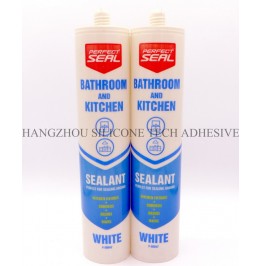
The back panel of a bathroom vanity doesn't get much attention. It's hidden, it's out of sight, and it feels like it doesn't matter. But that's exactly why it fails silently. Water vapor from showers, splashes from the sink, even humidity from a poorly ventilated room — all of it reaches that back panel eventually. And without a proper seal, it sits there, soaking in, slowly destroying the cabinet from the inside out.
Most vanity back panels are made from MDF, plywood, or moisture-resistant board. Even the ones labeled "water-resistant" aren't waterproof. They can handle occasional splashes, sure. But they cannot handle the constant exposure that happens in a real bathroom.
Over time, unsealed back panels absorb moisture from the air. The board swells, the edges warp, and the surface starts to bubble. If the vanity sits against a tiled wall, water that runs down the back of the cabinet gets trapped between the panel and the tile. There's nowhere for it to go. It just sits there, soaking into the wood, feeding mold spores, and creating that musty smell you can never quite locate.
By the time you notice the damage — peeling laminate, soft spots on the board, dark stains on the wall behind the vanity — the problem has been growing for months, maybe years. A proper sealant job takes twenty minutes. Replacing a rotted vanity takes a weekend and a lot more money.
Not every sealant belongs on a bathroom vanity back. The environment is unique — it's warm, humid, and it gets splashed regularly. You need something that can handle all of that without breaking down.
Acrylic sealant might work fine for a kitchen backsplash or a drywall joint. But behind a bathroom vanity? It will fail. Acrylic is water-based, it shrinks as it cures, and it doesn't bond well to painted or laminated surfaces. In a humid bathroom, it pulls away from the edges within weeks.
Silicone sealant is the only real choice here. It's permanently flexible, it bonds to virtually every surface, and it handles constant moisture without degrading. Look for a formula rated specifically for bathroom and wet-room use. The difference between a good silicone and a cheap one shows up fast — cheap silicone yellows, cracks, and peels. Good silicone stays clear, stays flexible, and stays put for years.
White sealant looks clean on grout lines. But on a back panel, it's the wrong call. The back of your vanity is usually painted, laminated, or covered in a melamine finish. A bead of white silicone against a dark or colored surface looks obvious and unfinished. Transparent silicone disappears. It seals the gap without drawing attention to itself, and if you ever need to inspect the back panel later, you can actually see what's going on.
There's one exception: if your back panel is white and the wall is white, white silicone can work. But transparent is almost always the safer, cleaner-looking option.
The space behind a vanity is dark, warm, and damp. It's basically a mold nursery. Any sealant you use there needs to have strong anti-mold properties built into the formula. Most bathroom-grade silicones come with this, but it's worth double-checking. If the sealant itself starts growing mold, you haven't solved anything — you've just added to the problem.
This isn't complicated, but there's a right way and a wrong way to do it. The wrong way is fast. The right way takes a few extra minutes and lasts years longer.
Wipe the entire back panel with a dry cloth first to remove dust. Then go over it again with a slightly damp cloth to pick up any grease or residue. If there's old sealant along the edges, scrape it all off with a utility knife. Any dirt, oil, or old caulk left on the surface will prevent the new sealant from bonding. This step takes five minutes and it's the most important one in the whole process.
The back panel usually sits flush against the wall, but there's almost always a tiny gap — sometimes just a millimeter, sometimes more. That gap is all water needs. Run a continuous bead of silicone along every edge where the panel meets the wall. Top, bottom, both sides. Don't skip any edge. Don't assume one side is tight enough. Water finds every gap eventually.
This is the spot everyone misses. The back panel meets the underside of the countertop, and that junction is a prime leak point. Water runs down the back of the basin, hits the countertop, and pools right where the panel meets the surface. A bead of silicone along that top edge is just as important as the wall edges. It takes ten seconds to apply and it saves you from a slow leak that could warp the entire cabinet.
Use a wet finger or a plastic smoothing tool to press the sealant firmly into the gap. The goal is a clean, concave bead that sits flush with both surfaces. An unsmoothed bead collects dust, traps moisture, and looks sloppy. Smooth it within the first few minutes before the silicone starts skinning over. Wipe your tool with soapy water between passes to keep things clean.
This is the hard part — waiting. Silicone needs at least 24 hours to cure properly. Some formulas take 48 hours. During that time, don't run water, don't put anything heavy on the countertop, and don't test the seal by splashing water on it. I know it's tempting. But if you disturb the sealant before it's fully cured, you compromise the bond and you're back to square one.
The back panel is the main event, but it's not the only place where water sneaks in behind your vanity.
The hot and cold water pipes, the drain pipe — all of them pass through the wall and connect to the back of the vanity. Each pipe creates a gap. Each gap is a potential leak point. Run a small bead of silicone around every pipe where it enters the wall. It doesn't need to be thick — just enough to fill the gap and block moisture.
If your vanity sits on the floor or on legs that touch the ground, the bottom edge where it meets the floor tile needs sealing too. Water splashes onto the floor during every use, and it works its way under the cabinet. A thin bead of silicone along that bottom edge keeps the floor dry and the cabinet base from rotting.
Some vanities have cutouts for plumbing access or electrical outlets. Those cutouts are basically open invitations for water. Seal around every cutout with silicone. Fill any unused holes completely. Even a small opening can let enough moisture in to cause serious damage over time.
I've watched good sealant jobs fail because of tiny mistakes that are easy to avoid.
Applying sealant to a wet surface. Even a damp back panel will prevent proper adhesion. Dry it completely first.
Using too little sealant. A thin, patchy bead doesn't fill the gap — it just sits on top of it. Apply enough to fully fill the joint from edge to edge.
Not smoothing the bead. A rough, unsmoothed bead traps air and moisture underneath itself. It defeats the entire purpose.
Curing in a cold or humid room. Silicone needs stable conditions to cure properly. If your bathroom has no ventilation and it's freezing, the sealant may never fully set. Pick a dry, warm day and keep the windows open for airflow.
Skipping the top edge near the countertop. Seriously, don't do this. It's the most common leak point and the easiest one to seal.
The back panel of your bathroom vanity is the most neglected surface in your entire bathroom. It's hidden, so it feels unimportant. But it's the first thing to rot when moisture gets behind it. A proper seal takes twenty minutes, costs almost nothing, and protects your vanity for years. Do it right, and you'll never have to worry about what's happening behind that cabinet again.
Copyright 2019 by Hangzhou Silicone Tech Adhesive Co., Ltd. All rights reserved.
Bathroom Sealant | Acrylic Sealant | Dow Corning 795 | Aquarium Sealant | Dow Corning 732 | Clear Silicone Sealant | Polysulfide Sealant | Glazing Sealant | Mirror Sealant | IG Sealant
Powered by Onepound


