E-mail:
sales@silicone-sealant-china.com

There's nothing quite as annoying as walking into your bathroom and finding a puddle on the floor that shouldn't be there. You look up — and sure enough, water is slowly dripping from the shower head base. That little gap between the fixture and the wall has been leaking for weeks, maybe months, and you just kept ignoring it.
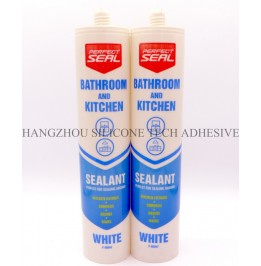
Sound familiar? You're not alone. The shower head base is one of the most overlooked spots in any bathroom, and it's also one of the most common sources of slow, steady leaks. The fix isn't complicated, but it does require the right sealant and a proper technique. Get it wrong, and you'll be back here in a few weeks dealing with the same drip.
Most people assume the shower head itself is the problem. It rarely is. The real culprit is almost always the connection point where the base meets the wall. Over time, several things happen:
The wall tile shifts slightly due to temperature changes. The original sealant dries out and cracks. Mineral deposits from hard water eat away at whatever was holding things together. And every time you adjust the shower head angle, you're putting tiny stresses on that joint.
What you end up with is a hairline gap — barely visible — that lets water seep behind the wall. You don't notice it until the damage is already done. Soft drywall, peeling paint, mold behind the tiles. All from a gap you could cover with your pinky finger.
Sealing the base properly isn't just about stopping the drip. It's about protecting the wall behind it.
This is where people go wrong most often. They grab whatever caulk is lying around and slap it on. A week later, it's falling off.
Forget acrylic. Forget latex. For any area that touches water regularly, silicone sealant is the only real option. It stays flexible, it bonds to tile and metal, and it handles constant moisture exposure without breaking down. Acrylic sealant might look fine for the first few days, but in a shower environment, it hardens, cracks, and peels within weeks.
Make sure you're using a 100% silicone formula — not a "silicone-acrylic hybrid" or anything labeled as "paintable." Those are meant for dry areas like kitchen backsplashes, not for spots that get blasted with water every single day.
White sealant on white grout looks clean. Transparent sealant on colored tiles looks invisible. The rule is simple: match the sealant to the surface it's touching, not the grout lines. If your tiles are white, go white. If they're dark gray or black, transparent or dark-tinted silicone blends in much better and doesn't create that obvious white line that screams "I sealed this myself."
Shower bases move. The pipe expands and contracts with hot water. The wall flexes slightly. If your sealant is rigid, it will crack every time the fixture shifts even a millimeter. High-quality bathroom silicone stays elastic for years. When you're picking one up, check the label for terms like "permanently flexible" or "high movement capability." That's what you want.
You don't need special tools. You do need to follow the steps in order, because skipping even one of them is why most DIY seals fail.
This is the part nobody wants to do. Use a utility knife or a caulk remover tool to scrape out every bit of old sealant from around the base. Get down to bare tile and bare metal. If you can see any mold, wipe the area with a diluted bleach solution and let it dry completely. Sealing over old caulk or mold is pointless — the new stuff won't stick, and you're just trapping the problem underneath a fresh layer.
After cleaning, wipe the area with a dry cloth and let it sit for at least an hour. Any remaining moisture will prevent the silicone from bonding properly. I know it feels like you're wasting time, but this single step is the difference between a seal that lasts five years and one that fails in five weeks.
If the gap between the base and the wall is wider than about 5mm, stuff a foam backer rod into it first. This gives the sealant something to bond to and controls the depth. Without it, you end up using way too much sealant, and the bead stays too thick — which means it takes forever to cure and looks bulky.
Cut the nozzle at a 45-degree angle, load it into the gun, and apply a continuous bead of silicone all the way around the base. Don't stop and restart. A continuous bead bonds better and looks cleaner. Press the trigger with steady, even pressure — not too hard, not too soft. The bead should sit slightly proud of the gap, not sunken into it.
You have about 5 to 10 minutes before the silicone starts forming a skin. Use a wet finger (dip it in soapy water first) or a plastic smoothing tool to press the sealant firmly into the gap and create a smooth, slightly concave shape. This pushes the silicone deep into the joint and removes air pockets that could cause leaks later.
Wipe off excess with a damp cloth, then leave it alone for at least 24 hours. Don't touch it, don't test it, don't even look at it too hard. Let it cure fully before running water over it.
The base isn't the only place where water sneaks in. If you're already holding a caulk gun, there are a few other spots that need the same attention.
That pipe sticking out of the wall — the shower arm — has a connection point that's just as vulnerable as the base. Water travels along the pipe and finds the tiniest gap to escape through. Run a bead of silicone around the entire circumference where the arm enters the wall. It takes 30 seconds and saves you from a slow leak that could rot out the wall stud over time.
The flexible hose connects to the base with a nut. That nut can loosen over time from vibration and water pressure. Even if it's tight, the threads create tiny gaps. A small ring of silicone around the connection point acts as a secondary seal. If the nut does loosen, the silicone catches the water before it hits the wall.
If you have a shower tray or a raised curb, the seam where it meets the wall tiles needs sealing too. Water pools there during every shower, and without a proper seal, it works its way behind the tray and into the floor structure. This is a bigger job, but the same principles apply — clean, dry, silicone, smooth, wait.
I've seen this go wrong so many times, and it always comes down to the same few errors.
Applying sealant over wet surfaces. It won't bond. Period.
Using the wrong type of sealant. Acrylic in a shower is a waste of time.
Not smoothing the bead. An unsmoothed bead has air pockets, poor adhesion, and it collects dirt faster.
Testing the seal too soon. If you turn the water on after 6 hours, you're basically undoing your own work. Give it a full 24 to 48 hours depending on the product.
Skipping the backer rod on wide gaps. This leads to wasted sealant and a weak bond.
The shower head base is a small spot. But it's one of the most important seals in your entire bathroom. Get it right, and you won't be staring at another mysterious puddle six months from now.
Copyright 2019 by Hangzhou Silicone Tech Adhesive Co., Ltd. All rights reserved.
Bathroom Sealant | Acrylic Sealant | Dow Corning 795 | Aquarium Sealant | Dow Corning 732 | Clear Silicone Sealant | Polysulfide Sealant | Glazing Sealant | Mirror Sealant | IG Sealant
Powered by Onepound


