E-mail:
sales@silicone-sealant-china.com

Let's be honest — nobody talks about bathroom edge sealing until mold starts creeping along the grout lines. Then suddenly it's a five-alarm emergency. The truth is, proper sealant application around wall tiles isn't just cosmetic. It's the invisible shield between your beautiful renovation and a slow, moisture-fueled disaster.
Whether you're dealing with a brand-new build or rescuing an older bathroom from years of neglect, getting the sealant right makes all the difference. Here's how to do it like someone who actually knows what they're doing.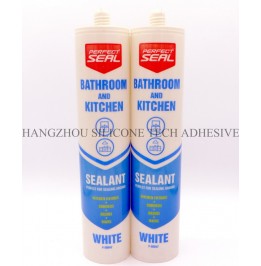
Bathrooms are brutal environments. Steam, splashing water, constant humidity — it all conspires against every exposed joint and gap. Without proper sealing, water seeps behind tiles, into walls, and into places you can't even see. That's when mold appears, grout turns black, and that fresh renovation smell gets replaced by something far less pleasant.
The edges where wall tiles meet other surfaces — corners, window frames, vanity countertops, shower trays — are the weakest points. Sealant fills those gaps, blocks moisture intrusion, and keeps everything looking clean for years instead of months.
A well-sealed bathroom doesn't just look better. It actually lasts longer. And it saves you from scrubbing mold off caulk every six months like some kind of never-ending chore.
Not all sealants are created equal, and using the wrong one in a wet room is basically inviting trouble.
Standard silicone breaks down fast in humid conditions. Look for sealants specifically rated for bathroom use with strong anti-mold properties. The best ones achieve zero-level mold resistance even after extended exposure to moisture. If you have kids or allergies at home, this isn't optional — it's essential.
Here's a rule most people don't know: use white sealant for most wall joints where it blends with grout or paint, and transparent sealant for areas near the floor or where you want a seamless look. Transparent sealant around the bottom of skirting boards, for instance, keeps dirt from showing and creates a clean visual line between wall and floor. White sealant works great along the top of skirting boards, blending perfectly with the wall surface.
For door frames and window perimeters, transparent tends to look more natural and less intrusive. The key is matching the sealant color to the surface it's covering — not just grabbing whatever's on the shelf.
Bathrooms are enclosed spaces with limited ventilation. Any sealant you use should be low-odor or odorless, and ideally certified for indoor air quality. Some products carry food-grade safety certifications, which tells you the raw materials are clean enough for kitchen use too. Always open windows during application regardless, but a genuinely low-VOC product means you're not breathing in chemicals while you work.
You don't need to be a contractor to pull this off. But you do need patience and the right technique.
This is where most DIYers mess up. Clean every gap thoroughly — remove old caulk, dust, water stains, and any debris. Use a small scraper or utility knife to get rid of old sealant that's cracked or moldy. Let the area dry completely before you start. If there's any moisture trapped in the gap, the new sealant won't adhere properly and will peel off within weeks.
Stick masking tape along both sides of the gap you're sealing. This gives you a perfectly straight edge and makes cleanup effortless. Press the tape down firmly so sealant doesn't seep underneath. When you're done, just peel it off and you've got a clean, sharp line every time. For beginners, this single trick transforms your results from messy to magazine-worthy.
Slice the sealant tube tip at a 45-degree angle. The opening should match the width of the gap you're filling — not wider, not narrower. If the nozzle is too big, you waste sealant and the bead looks bulky. Too small, and you don't get full coverage. A flat, oval-shaped bead comes out when you slightly flatten the tip before cutting, which makes smoothing much easier.
Press the trigger and move steadily along the gap. Don't stop and start — continuous application gives you a uniform bead that looks professional. If you pause, you'll get lumps and uneven spots that are nearly impossible to fix later. Keep your hand steady, maintain even pressure, and let the sealant flow naturally into the joint.
Within a few minutes of applying, use a finger cot, a dedicated smoothing tool, or a plastic scraper to press the sealant into the gap and create a smooth, concave surface. The multi-edge smoothing tools that come with most kits are far better than using your bare finger — they give you different profiles depending on the joint width. Work quickly before the sealant starts skinning over.
Once it's smoothed, remove the masking tape while the sealant is still slightly tacky. Peel slowly at an angle to avoid pulling the bead away from the edge.
Certain areas in a bathroom demand sealant attention more than others. Missing even one of these is a recipe for future headaches.
This is the number one missed spot. The gap between the toilet base and the wall is often just a centimeter wide — too narrow for a caulk gun to reach easily. Many installers skip it entirely. But water splashes back there constantly. If it's not sealed, moisture gets trapped, mold grows unseen, and eventually you get that nasty smell that no amount of cleaning fixes. Demand that this area gets sealed by hand if the gun can't reach.
Every junction where the shower tray meets the wall, where corner shelves sit against tile — these collect water and soap scum. A clean bead of sealant around each edge keeps water from penetrating behind the tray and causing damage to the substrate.
Every interior corner where the wall meets the floor in a bathroom should be sealed. This includes the perimeter of any raised shower platform. Water pools in these corners during showers, and without sealant, it slowly eats away at grout and adhesive.
Bathroom windows are exposed to rain and condensation from both sides. The sealant around the frame is your first line of defense against water infiltrating the wall cavity. Use a generous bead and make sure it's continuous — no gaps.
A 300ml tube typically covers about 12 meters of bead at a 5mm width. Measure your gaps beforehand so you don't run out mid-project. Once opened, sealant starts curing — try to use it within 30 minutes for best results.
Avoid applying sealant during humid seasons or rainy weather. Moisture in the air interferes with curing and adhesion. Pick a dry day, open the windows for ventilation, and let everything cure for at least 24 hours before exposing it to water.
If you're working on an older bathroom where the old sealant is black with mold, don't just cover it up. Strip it all out first. That old caulk is already compromised, and sealing over it just traps the problem underneath.
For gaps wider than 5mm, consider installing a backer rod or foam strip first, then seal over it. This gives you better depth control, uses less sealant, and creates a neater finish.
The bottom line? Edge sealing in a bathroom isn't a detail — it's the foundation of durability. Do it right once, and you won't be scraping mold off your walls for the next decade.
Copyright 2019 by Hangzhou Silicone Tech Adhesive Co., Ltd. All rights reserved.
Bathroom Sealant | Acrylic Sealant | Dow Corning 795 | Aquarium Sealant | Dow Corning 732 | Clear Silicone Sealant | Polysulfide Sealant | Glazing Sealant | Mirror Sealant | IG Sealant
Powered by Onepound


