E-mail:
sales@silicone-sealant-china.com

Nobody thinks about the edge where the bathtub meets the wall until something goes wrong. A dark line of mold creeps in, the sealant peels away from the tub rim, and suddenly your bathroom looks like it has not been cleaned in a decade. The truth is, most bathtub edges fail within the first year because nobody sealed them properly in the first place.
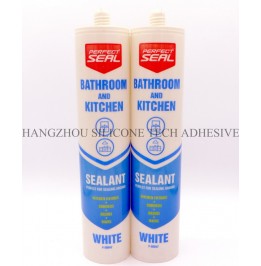
That narrow strip of space between your tub and the wall is one of the wettest, most neglected spots in the entire bathroom. Shower water splashes there every single day. Steam settles there overnight. Soap scum builds up in a way you cannot even see. It is the perfect storm for mold, and if your sealant is not doing its job, you are going to be scrubbing black streaks for the rest of your time in that house.
The joint between your tub and the wall is not a simple flat seam. It is a curved surface meeting a flat surface, often with a slightly uneven gap that changes width depending on where you measure. That irregularity alone makes sealing tricky.
Then there is the movement factor. Bathtubs flex slightly when you fill them with hot water. The tub expands a tiny bit, the wall does not, and that differential movement puts stress on whatever sealant you used. A rigid sealant cracks under that stress. A flexible one survives.
Moisture is the real enemy though. Every time you take a shower, water runs down the tub wall and hits that joint. It sits there, soaking into the sealant. Over time, the sealant absorbs water, softens, and starts pulling away from the surfaces it is supposed to bond to. Once a gap forms, mold moves in within days.
The grout behind the tub — if there is any — is even worse. Grout is porous. It absorbs water like a sponge, and that moisture wicks right into the sealant joint, accelerating failure from both sides.
Most people grab whatever silicone is sitting on the shelf at the hardware store and call it a day. That works fine for a quick fix, but it does not solve the mold problem long term.
Standard bathroom silicone is waterproof and flexible, which covers the basics. But plain silicone does nothing to stop mold from growing on its surface. It resists it a little, sure, but if spores are already floating around your bathroom — and they always are — they will colonize the sealant within weeks. You end up with black dots right on the bead itself.
For a bathtub edge, you want a silicone sealant with antimicrobial additives built into the formula. These agents do not kill existing mold, but they prevent new spores from taking root on the sealant surface. That prevention is what keeps the joint looking clean for years instead of months.
Acetoxy silicone smells like vinegar when it cures. It bonds well to glazed tub surfaces and tile. Neutral-cure silicone has no smell and sticks better to acrylic tubs, fiberglass, and painted walls. Match the cure type to your tub material, or the bond will fail no matter how good the sealant is.
Hybrid sealants are worth a look if your tub meets the wall at an awkward angle or if the gap width varies a lot along the joint. They bond like polyurethane but stay flexible like silicone, which means they handle the curved tub surface better than pure silicone in some cases.
Most hybrid formulations also come with antimicrobial properties included, so you get the adhesion strength and the mold resistance in one product. For bathtub edges specifically — where the joint is curved, the gap is uneven, and moisture is constant — hybrids often outperform standard silicone.
Stay away from acrylic latex caulk near a bathtub. It is not waterproof, it shrinks as it dries, and it will pull away from the tub rim within weeks. It has no place in a wet zone.
I cannot stress this enough. If there is any old sealant left on the tub rim or the wall, the new sealant will not bond to the actual surface. It will bond to the old stuff, and the old stuff will peel off, taking the new layer with it.
Use a plastic putty knife or a silicone removal tool. Get into every curve, every corner, every spot where the old sealant has started to lift. If it is stubborn, soak the area with isopropyl alcohol for 10 minutes to soften it, then scrape again.
Do not use a metal blade or a razor near an acrylic or fiberglass tub. One slip and you have a gouge that is nearly impossible to fix.
Soap residue kills sealant adhesion. It sounds dramatic, but it is true. If you wipe the tub rim with soapy water, you leave behind a thin surfactant film that acts like a release agent. The sealant will sit on top of that film instead of bonding to the tub surface.
Use isopropyl alcohol. Wipe the entire tub rim, the wall surface, and the area where the two meet. Let it dry completely — at least 20 minutes — before you apply any sealant.
If you see mold in the joint, kill it before you seal. A diluted bleach solution or straight white vinegar works. Scrub it out with an old toothbrush, rinse thoroughly, and dry the area before moving on.
Most glazed porcelain or enamel tubs do not need primer. But acrylic and fiberglass tubs are a different story. Their surfaces are smooth and non-porous, which means silicone has a hard time gripping them.
A primer designed for plastic surfaces creates a chemical bond that makes the sealant stick like it was glued there. Apply the primer to both the tub rim and the wall, let it dry according to the instructions, and then apply your sealant on top. Skipping primer on an acrylic tub is one of the fastest ways to get a failed seal.
The biggest mistake people make with bathtub edges is trying to force a straight bead of sealant along a curved surface. The sealant does not want to bend. It wants to sit flat. When you fight the curve, you get gaps, air pockets, and a bead that looks terrible.
Instead, work with the curve. Use a small sealant tool or a wet finger and press the sealant into the joint as you move along the tub rim. Keep the bead thin and consistent — about 3 to 5 millimeters wide and deep. A thin bead cures faster, bonds better, and stays flexible longer than a thick one.
If the gap between the tub and the wall is wider than 6 millimeters, stuff a foam backer rod into the gap first. This controls the depth of the sealant bead and gives it something to bond to. Without a backer rod, you end up using way too much sealant, it takes forever to cure, and the center of the bead never fully hardens.
Do not try to fill the entire joint in one pass. Apply a thin bead, smooth it, let it cure for 24 hours, then apply a second layer if needed. Two thin layers bonded together are far stronger than one thick glob that never cures properly.
Most sealants cure from the outside in. A thick bead skins over on the surface while the inside stays soft for days. That internal stress causes cracking, and the whole thing fails from the inside out.
After applying the sealant, tool it into a smooth concave shape — like a shallow channel that slopes away from the tub. Use a wet finger or a small silicone tool and press the sealant firmly into both the tub rim and the wall.
The concave shape serves a purpose. It directs water away from the joint and toward the tub basin instead of letting it pool right at the sealant line. A flat or convex bead traps water, and trapped water is the fastest path to mold.
Wipe your tool with a damp cloth between passes. Work quickly — most sealants begin skinning over within 10 to 15 minutes, and once that happens, you cannot tool it properly anymore.
Most people seal the front and sides of the tub but completely forget the back edge — the strip where the tub rim meets the wall behind it. That back edge gets just as much moisture as the front, sometimes more, because water splashes backward when you step out of the tub.
Seal the entire perimeter. Every inch. Do not skip the back. Water does not care which side of the tub it hits. It will find any unsealed gap and get under the tub.
If your tub has an overflow plate or hole, the sealant around that opening needs special attention. That is a direct water path into the wall cavity behind the tub. If the sealant fails there, water runs straight down behind the wall and into the subfloor.
Use a high-movement silicone or a polyurethane sealant around the overflow opening. Apply it in thin layers over a backer rod, tool it smooth, and make sure the bead fully encircles the opening — not just the visible half.
The joint where the bottom of the tub meets the floor or tile deck is another high-risk spot. Water pools there every time you shower. The sealant here needs to be extra flexible because the tub can shift slightly under weight, and the floor can expand with moisture.
Use a hybrid sealant or a high-movement silicone at this joint. Apply over a backer rod, build up in thin layers, and tool it into a smooth concave shape that slopes away from the tub. Check this joint every few months — it degrades faster than the wall joints because it is exposed to standing water and cleaning chemicals.
Even the best sealant job needs checking. Bathroom environments are relentless — steam, cleaning chemicals, temperature swings, and constant water exposure all wear down sealant over time.
Run your finger along the tub edge sealant every six months. Feel for any rough spots, cracks, or gaps. If the sealant feels hard and brittle instead of soft and flexible, it has lost its elasticity and needs to be replaced. If you see any mold growing on the sealant surface, clean it immediately with a diluted bleach solution or white vinegar, then reapply fresh sealant over the cleaned area.
When re-sealing, always remove the old material completely. Do not apply new sealant over old sealant. The old layer prevents proper adhesion, and the new sealant will fail just as fast as the last one did.
One more thing that most people overlook: if your bathroom does not have a working exhaust fan, no sealant in the world will keep that tub edge clean. Ventilation removes the moisture before it has a chance to settle into the joint. Sealant handles the water that gets in. A fan keeps the moisture from building up in the first place. Use both, and your tub edge will stay mold-free for years.
Copyright 2019 by Hangzhou Silicone Tech Adhesive Co., Ltd. All rights reserved.
Bathroom Sealant | Acrylic Sealant | Dow Corning 795 | Aquarium Sealant | Dow Corning 732 | Clear Silicone Sealant | Polysulfide Sealant | Glazing Sealant | Mirror Sealant | IG Sealant
Powered by Onepound


