E-mail:
sales@silicone-sealant-china.com

Walk into any modern bathroom and you'll see it — that frameless glass shower screen, the glass shelf above the vanity, maybe even a glass splashback behind the basin. It looks clean, it looks expensive, and it makes the whole room feel bigger. But there's a problem hiding in plain sight.
The gap between the glass and the wall is one of the most neglected spots in any bathroom. Nobody looks at it. Nobody thinks about it. Until water starts creeping behind the glass, mold starts growing along the seal, and that beautiful frameless shower starts looking like it belongs in a horror movie.
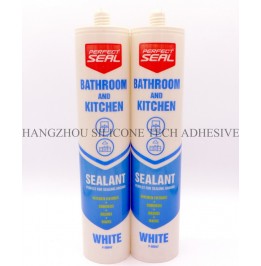
Sealing the junction where glass meets wall tile isn't optional. It's the single most important detail in your entire glass installation. Skip it, and everything else you did to make the bathroom look good starts falling apart from the inside.
Glass doesn't move. Walls do. Even a tiny amount — thermal expansion, building settlement, vibration from footsteps. That microscopic movement is enough to crack a rigid sealant within months. And once the seal cracks, water gets in.
Behind a glass shower screen, water spray hits the wall constantly. Some of it runs down behind the glass. If there's no seal, it sits there against the tile, soaking into the grout, working its way into the adhesive, and eventually reaching the wall cavity. You won't see it from the front. But behind the glass, it's a slow disaster.
The same thing happens with glass shelves, glass splashbacks, and any glass panel mounted to a tiled wall. The joint is always the weak point. Always.
Not every sealant sticks to glass. Not every sealant stays flexible. And not every sealant can handle being splashed with hot water every single day.
Acrylic caulk on glass is a waste of time. It doesn't bond well to glass surfaces, it shrinks as it cures, and it has zero flexibility. The moment the wall shifts even a fraction of a millimeter, the acrylic pulls away and water gets through.
100% silicone sealant bonds to glass, tile, metal, and stone. It stays permanently flexible. It handles constant water exposure without degrading. This isn't a suggestion — it's a requirement. If you're sealing glass to any surface in a bathroom, use silicone. Full stop.
Where the glass meets the tile, transparent silicone is almost always the right choice. It disappears into the joint, creates a clean invisible line, and lets you see if any moisture or mold is forming behind the glass. If you use white sealant against a dark tile, you get that obvious white stripe that looks sloppy and draws attention to the joint.
The only time colored silicone makes sense is if the glass edge meets a painted wall or a surface where transparent would look out of place. But for tile-to-glass joints, transparent wins every single time.
The space behind glass is dark, warm, and constantly damp. It's the perfect breeding ground for mold. Any sealant you use there needs to have strong anti-mold properties. Most bathroom-grade silicones include this, but double-check before you buy. A sealant that grows mold itself defeats the entire purpose.
This isn't rocket science, but doing it fast means doing it wrong. Slow down and follow each step.
Wipe the glass edge with isopropyl alcohol to remove any fingerprints, grease, or residue. Then wipe the tile surface with the same. Any dirt, oil, or soap film left on either surface will prevent the silicone from bonding. This takes two minutes and it's the step most people rush through.
If there's old sealant along the joint, scrape it all off with a utility knife. Get down to bare glass and bare tile. You cannot seal over old caulk. It won't stick, and you're just hiding the problem.
After cleaning, let both surfaces air dry for at least 30 minutes. Even a thin film of moisture will compromise the bond. I know it feels like overkill, but silicone needs a completely dry surface to adhere properly. Any water trapped in the joint will cause the sealant to fail from the inside out.
Apply masking tape along the glass edge and along the tile edge, leaving the gap exposed between them. This gives you a perfectly straight, clean line. Press the tape down firmly so sealant doesn't seep underneath. When you peel the tape off after smoothing, you'll have a sharp, professional-looking joint with no messy edges.
Cut the silicone tube tip at a 45-degree angle. The opening should match the width of the gap — not wider. A wider nozzle wastes sealant and creates a bulky bead. A narrower nozzle doesn't fill the joint properly. For most glass-to-wall gaps, a 6mm to 8mm opening works well.
Press the trigger and run a smooth, steady bead of silicone along the entire joint. Don't stop and restart. A continuous bead bonds better, looks cleaner, and has fewer weak points. Keep even pressure so the bead is consistent from start to finish.
You've got about 5 to 10 minutes before the silicone starts forming a skin. Use a wet finger or a plastic smoothing tool to press the sealant firmly into the gap. The goal is a smooth, slightly concave surface that sits flush with both the glass and the tile. This pushes the silicone deep into the joint, removes air pockets, and creates a watertight seal.
Wipe off excess with a damp cloth, then remove the masking tape while the sealant is still tacky. Peel slowly at an angle to avoid pulling the bead away from the edge.
Don't run water over it. Don't test it. Don't even breathe on it too hard. Leave it alone for a full 24 hours minimum, ideally 48. Silicone needs time to cure fully, and disturbing it before that point compromises the entire bond.
Everyone remembers the shower screen. But there are other glass-to-wall connections in a bathroom that leak just as often.
The bottom edge gets sealed because everyone can see it. The top edge? Almost never. But water runs down the glass and pools right where the top edge meets the wall. That joint needs the same treatment as the bottom. Run a bead of silicone along the entire top edge, smooth it, tape it, and let it cure.
Glass shelves look great until the silicone behind them fails. Water drips down the wall, hits the shelf bracket, runs behind the glass, and sits there against the tile. Most people never think to seal behind the shelf. They should. A thin bead of silicone around every bracket where it meets the wall takes two minutes and prevents a slow leak that could stain the tile permanently.
If you have a glass panel behind your basin instead of tile, the edges where the glass meets the wall need sealing too. Toothpaste splatter, water from washing your face, steam from hot water — all of it hits those edges. Without sealant, water works its way behind the glass and into the wall cavity. Seal every edge, top and bottom, left and right.
If your shower has two glass panels meeting at a corner, that vertical joint between them needs sealing as well. Water runs down that corner every time you shower. If it's not sealed, it drips behind both panels and pools at the floor. Apply silicone along the entire vertical seam, smooth it, and let it cure.
I've watched too many good jobs get ruined by the same few errors. Steer clear of these.
Using acrylic instead of silicone. It will fail within weeks.
Applying sealant to a wet surface. It won't bond. Dry everything first.
Skipping the masking tape. The joint will look messy and uneven.
Not smoothing the bead. An unsmoothed bead traps air and moisture, and it looks terrible.
Testing the seal too soon. Run water over it before 24 hours and you're undoing your own work.
Leaving gaps in the bead. Every millimeter of unsealed joint is an entry point for water. Make the bead continuous from end to end.
The glass-to-wall joint is invisible most of the time. But it's the most important seal in your bathroom. Get it right, and that frameless shower stays looking like it did the day it was installed. Get it wrong, and you'll be scraping mold off tile and replacing rotted wall boards within a year.
Copyright 2019 by Hangzhou Silicone Tech Adhesive Co., Ltd. All rights reserved.
Bathroom Sealant | Acrylic Sealant | Dow Corning 795 | Aquarium Sealant | Dow Corning 732 | Clear Silicone Sealant | Polysulfide Sealant | Glazing Sealant | Mirror Sealant | IG Sealant
Powered by Onepound


