E-mail:
sales@silicone-sealant-china.com

You can have the most beautiful marble threshold in your bathroom. You can spend a fortune on the tile work, the fixtures, the lighting. But if the stone base isn't sealed properly where it meets the floor and the wall, none of that matters. Water will get in. It always does. And when it does, it destroys everything from the inside out — quietly, slowly, and without giving you any warning until it's already too late.
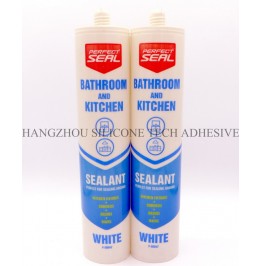
The stone base is the foundation of your bathroom. It sits at the bottom of the shower, it runs along the bathtub edge, it forms the lip where the wet area meets the dry floor. Every drop of water that hits the floor during a shower eventually finds its way to that joint. If there's no sealant there, water seeps underneath, pools against the substrate, and starts eating away at everything it touches.
Most people never think about this until they pull up a tile and find black mold covering the floor underneath. By then, the damage has been happening for months. A proper seal takes twenty minutes. Fixing what happens when you skip it takes weeks and a lot more money.
The stone base — whether it's marble, granite, travertine, or any natural stone — sits at the intersection of three surfaces: the floor tile, the wall tile, and the shower tray or bathtub. That triple junction is where water accumulates constantly. Every shower, every bath, every time someone splashes water on the floor — it all ends up at that joint.
Stone itself is porous. Even sealed stone absorbs some moisture over time. But the real problem isn't the stone. It's the gap between the stone and the floor, and the gap between the stone and the wall. Those gaps are tiny — sometimes less than a millimeter — but they're enough.
Water doesn't need a big opening. It needs a crack. And once it gets under the stone base, it has nowhere to go. It sits there against the adhesive, soaks into the mortar bed, works its way into the waterproof membrane, and eventually reaches the subfloor. From there, it travels along joists, drips through ceilings, and shows up as stains in the room below.
The stone base joint is the entry point for almost every bathroom water damage case. Seal it properly, and you cut off the problem at the source.
Stone is a tricky surface to seal. It's heavy, it's dense, and it doesn't flex. The sealant you choose has to handle all of that while staying bonded for years in a constantly wet environment.
Forget acrylic. Forget latex caulk. Those products have no business being anywhere near a stone base. Acrylic shrinks as it cures, it doesn't bond well to stone, and it hardens over time. Within a few months in a bathroom, it cracks and peels away from the stone surface.
100% silicone sealant bonds to stone, tile, and metal. It stays permanently flexible. It handles constant water exposure without degrading. If you're sealing a stone base, silicone isn't just the best choice — it's the only choice that will actually last.
Not all silicone works the same on stone. Some formulas contain chemicals that can stain or discolor natural stone over time, especially lighter varieties like marble or travertine. Look for a silicone sealant that's labeled as safe for natural stone. These formulas are chemically neutral and won't react with the stone surface.
It's worth spending an extra minute checking the label. A cheap silicone that stains your marble base is worse than no sealant at all.
White sealant on a dark stone base looks terrible. Colored sealant on a light stone base looks obvious. Transparent silicone disappears into the joint. It seals the gap without drawing attention to itself, and it lets you actually see what's happening underneath the stone. If moisture or mold starts forming behind the base, you'll spot it right away instead of discovering it months later when the damage is severe.
Transparent silicone also matches any grout color, any tile color, any stone color. It's the universal choice, and it always looks cleaner than the alternatives.
This isn't complicated, but it has to be done right. Skipping steps is why most stone base seals fail within a year.
Use a utility knife or a caulk remover tool to scrape out all the old sealant from around the stone base. Get down to bare stone and bare tile. If there's mold on the surface, wipe it with a diluted bleach solution, let it dry completely, then wipe again with clean water. You cannot seal over old caulk. It won't stick, and you're just hiding the problem under a fresh layer.
This step is tedious. I won't lie. But it's the most important one in the whole process. Every failed seal I've ever seen traces back to someone skipping this part.
Wipe the stone edge with isopropyl alcohol to remove any grease, residue, or soap film. Then wipe the adjacent tile surface with the same. Any dirt or oil left on either surface will prevent the silicone from bonding properly. This takes three minutes and it makes a massive difference in how long the seal lasts.
After cleaning, let both surfaces air dry for at least an hour. Any moisture trapped in the gap will prevent the silicone from adhering. I know it feels like you're wasting time, but this single step is the difference between a seal that lasts five years and one that fails in five months.
Apply masking tape along the stone edge and along the tile edge, leaving the gap exposed between them. Press the tape down firmly so sealant doesn't seep underneath. This gives you a perfectly straight, clean line. When you peel the tape off after smoothing, you'll have a sharp professional-looking joint with no messy edges.
Cut the silicone tube tip at a 45-degree angle. The opening should match the width of the gap — not wider. For most stone base joints, a 6mm to 8mm opening works well. A wider nozzle wastes sealant and creates a bulky bead. A narrower nozzle doesn't fill the joint properly.
Press the trigger and run a smooth, steady bead of silicone along the entire joint. Don't stop and restart. A continuous bead bonds better, looks cleaner, and has fewer weak points. Keep even pressure so the bead is consistent from start to finish. Go all the way around the base — every edge, every corner, every junction where stone meets tile.
You've got about 5 to 10 minutes before the silicone starts forming a skin. Use a wet finger or a plastic smoothing tool to press the sealant firmly into the gap. The goal is a smooth, slightly concave bead that sits flush with both the stone and the tile. This pushes the silicone deep into the joint, removes air pockets, and creates a watertight seal.
Wipe off excess with a damp cloth, then remove the masking tape while the sealant is still tacky. Peel slowly at an angle to avoid pulling the bead away from the edge.
Don't run water over it. Don't step on it. Don't test it. Leave it alone for a full 24 hours minimum, ideally 48. Silicone needs time to cure fully, and disturbing it before that point compromises the entire bond.
Everyone knows to seal the bottom edge where the stone meets the floor. But there are other joints around the stone base that leak just as often — and they're completely invisible until the damage is done.
This is the number one missed spot. The stone base runs along the wall, and where it meets the vertical tile, there's a joint that collects water every single time you shower. Water runs down the wall, hits the stone base, and pools right at that junction. If it's not sealed, water works its way behind the stone and into the wall cavity.
Run a bead of silicone along the entire length where the stone base meets the wall tile. It takes two minutes and it stops a leak you didn't even know you had.
Where two pieces of stone meet at a corner inside the shower — that inside joint is almost never sealed. Water pools in those corners during every shower. Without sealant, it sits there against the stone, soaking into the adhesive, and eventually reaching the substrate.
Apply silicone along every inside corner where stone meets stone. Make sure the bead is continuous — no gaps, no breaks.
If your shower has a tray, the stone base usually sits on top of it or butts up against it. That junction is a prime leak point. Water runs off the tray, hits the stone base, and finds the tiniest gap to escape through. Run a bead of silicone along the entire perimeter where the stone meets the tray. It takes three minutes and it protects the tray edge for years.
If your shower drain is set into the stone base — and most are — there's a gap around the drain flange where it meets the stone. That gap is constantly exposed to water. Even a tiny unsealed section lets water seep under the stone. Apply a ring of silicone around the entire drain flange where it meets the stone. Make sure the bead is continuous all the way around.
I've watched too many good sealant jobs get destroyed by the same handful of errors. Avoid these and you'll be ahead of most people.
Applying sealant to a wet surface. It won't bond. Dry everything first.
Using acrylic or latex instead of silicone. Those products fail within weeks in a bathroom.
Not removing old sealant before applying new. The new stuff won't stick to the old stuff.
Not smoothing the bead. An unsmoothed bead traps air and moisture, and it looks terrible.
Testing the seal too soon. Run water over it before 24 hours and you're undoing your own work.
Skipping the masking tape. The joint will look messy and uneven.
Leaving gaps in the bead. Every millimeter of unsealed joint is an entry point for water.
The stone base is the foundation of your bathroom. It takes the most abuse, it gets the most water, and it's the most important surface to seal properly. Get it right once, and you won't be pulling up moldy tiles and replacing rotted substrates any time soon.
Copyright 2019 by Hangzhou Silicone Tech Adhesive Co., Ltd. All rights reserved.
Bathroom Sealant | Acrylic Sealant | Dow Corning 795 | Aquarium Sealant | Dow Corning 732 | Clear Silicone Sealant | Polysulfide Sealant | Glazing Sealant | Mirror Sealant | IG Sealant
Powered by Onepound


