E-mail:
sales@silicone-sealant-china.com

Incompatibility Risks When Mixing Different Types of Sealants
Sealants are engineered with specific chemical compositions to meet performance requirements in diverse applications, from construction to industrial piping. Mixing incompatible sealants can compromise structural integrity, trigger chemical reactions, or lead to premature failure. Understanding these risks is critical for ensuring long-term reliability and safety.
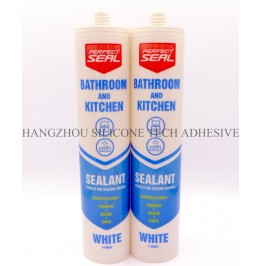
Silicone sealants are broadly categorized into structural and weatherproofing types, each formulated for distinct roles. Structural sealants, used in glass curtain walls or aluminum-to-glass bonding, prioritize tensile strength, elongation, and adhesion under dynamic loads. Weatherproofing sealants, such as those for window perimeters or exterior joints, focus on UV resistance, flexibility, and moisture exclusion.
Chemical Incompatibility
Structural sealants often contain higher cross-linking densities and additives like adhesion promoters to withstand wind loads and thermal cycling. Weatherproofing sealants may include plasticizers or fillers to enhance elasticity. Mixing these types can disrupt curing chemistry, leading to incomplete polymerization, reduced adhesion, or embrittlement. For example, a study on curtain wall failures revealed that substituting weatherproofing sealants for structural ones caused joint displacements exceeding 50% of the original design capacity within five years.
Application-Specific Risks
In high-rise buildings, structural sealants must maintain bond strength under seismic activity or wind pressures exceeding 2 kPa. Weatherproofing sealants, while resilient to temperature swings, lack the load-bearing capacity to prevent glass panel detachment. Using them interchangeably risks catastrophic failures, such as glass fallout during storms.
Metal piping systems rely on two primary thread sealing methods: PTFE tape (physical sealing) and anaerobic adhesives (chemical curing). Combining these approaches introduces irreversible failures.
Mechanism Conflict
PTFE tape fills thread gaps through mechanical compression, forming a barrier against fluid leakage. Anaerobic adhesives cure in the absence of oxygen, bonding threads via metal-ion-catalyzed polymerization. When PTFE tape is applied first, it blocks adhesive contact with metal surfaces, preventing curing. Uncured adhesive remains fluid, allowing pressurized fluids to erode the tape and cause leaks.
Long-Term Degradation
Anaerobic adhesives may contain acrylic esters that react with PTFE under prolonged exposure, causing material softening or swelling. This weakens both the tape and adhesive, creating pathways for corrosion or contamination. In hydraulic systems, such degradation can introduce particulates into valves, leading to operational failures.
Dosage Control Challenges
PTFE tape occupies thread volume, reducing space for adhesive application. Overfilling with adhesive to compensate increases the risk of excess material entering the fluid stream, clogging filters or damaging seals. A case study on compressed air systems showed that mixed sealing methods raised leakage rates by 300% compared to single-method applications.
Polyurethane and silicone sealants dominate construction and automotive sectors but require distinct curing conditions.
Humidity Dependence
Polyurethane sealants cure via moisture-induced cross-linking, needing relative humidity above 40% to form a durable elastomer. Silicone sealants, particularly neutral-cure types, rely on atmospheric moisture but tolerate lower humidity levels. In arid climates, polyurethane sealants may remain tacky indefinitely, while silicone sealants cure fully. Mixing these in low-humidity environments leaves polyurethane components uncured, resulting in weak joints prone to cracking under stress.
Chemical Interactions
Polyurethane sealants contain isocyanates that react with amines or alcohols during curing. Silicone sealants may include amino-functional silanes as adhesion promoters. Combining these can trigger premature cross-linking or gas generation, causing bubbling or delamination. In automotive windshield installations, such interactions have led to sealant failure rates exceeding 15% in mixed-use scenarios.
Thermal Stability Differences
Polyurethane sealants typically withstand temperatures up to 80°C, while high-temperature silicone sealants endure continuous exposure to 200°C. Using polyurethane in engine compartments or exhaust systems risks thermal degradation, releasing toxic fumes and losing adhesion. Conversely, silicone sealants in cold environments may become too rigid, compromising flexibility required for structural movement.
High-performance industrial sealants, such as those for steam piping or chemical storage, are engineered with proprietary additives to resist specific stressors.
Temperature Extremes
Steam piping sealants contain inorganic fillers like graphite or mica to withstand temperatures exceeding 600°C. General-purpose sealants without such additives soften or melt, causing joint failure. A power plant audit found that substituting standard sealants for high-temperature variants in boiler systems led to 80% of joints leaking within six months.
Chemical Resistance
Sealants for oil refineries or solvent storage tanks incorporate fluoropolymers or hydrocarbon-resistant elastomers to prevent swelling or dissolution. Using non-resistant sealants in these environments results in rapid deterioration, releasing volatile organic compounds (VOCs) and contaminating stored chemicals.
Pressure Tolerance
Hydrostatic pressure sealants for dams or underwater structures use thixotropic formulations to resist displacement under water columns exceeding 100 meters. Standard sealants lack the yield stress to remain in place, leading to washout and structural instability.
By adhering to manufacturer guidelines and avoiding cross-type applications, industries can mitigate risks associated with sealant incompatibility, ensuring safety and operational efficiency across diverse environments.
Copyright 2019 by Hangzhou Silicone Tech Adhesive Co., Ltd. All rights reserved.
Bathroom Sealant | Acrylic Sealant | Dow Corning 795 | Aquarium Sealant | Dow Corning 732 | Clear Silicone Sealant | Polysulfide Sealant | Glazing Sealant | Mirror Sealant | IG Sealant
Powered by Onepound


