E-mail:
sales@silicone-sealant-china.com

Nobody wants to talk about substrate leveling. It's dusty, it's slow, and it feels like busywork when you just want to squeeze some waterproof sealant into that corner and call it a day. But here's the thing—water doesn't care about your patience. It finds every low spot, every hairline depression, every uneven seam where water pools and slowly works its way behind your tile.
The real secret behind bathroom waterproofing that lasts ten years or more has almost nothing to do with the sealant itself. It starts with what's underneath. If the base surface isn't properly leveled and prepped, you're essentially building a dam on sand.
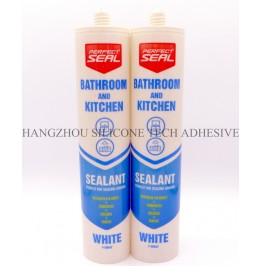
Most people hear "leveling" and picture pouring self-leveling compound over an entire bathroom floor. That's one approach, sure, but substrate preparation for waterproof sealant work covers a lot more ground than that. It means addressing uneven joints, filling depressions at fixture bases, smoothing out rough grout lines, and ensuring every surface the sealant touches is solid, flat, and free of defects.
Think about the typical bathroom problem area: where the bathtub meets the tile wall. That junction almost never sits perfectly flush. There's usually a gap, a lip, or a slight step caused by imperfect tile installation. Water collects there every single time you shower. If you just run a bead of sealant over that uneven gap, the sealant bridges across the void instead of bonding to both surfaces. Within weeks, it pulls away from one side and water sneaks through.
Leveling the substrate means eliminating those voids, steps, and depressions so the sealant makes full contact across the entire joint surface. Not partial contact. Not bridging. Full, intimate contact from edge to edge.
Grab a straightedge—a metal ruler or a long level works fine—and lay it across the joint you plan to seal. Run it in multiple directions. If light shows underneath, you've got a gap. Even a 1mm depression is enough to cause problems because waterproof sealant behaves differently over voids versus solid surfaces. Over a void, it sags, cures unevenly, and develops internal stresses that crack it later.
Run your hand along the joint too. Your fingertips are surprisingly good at detecting lippage—that tiny step where one surface sits slightly higher than the adjacent one. If you feel a ridge or a drop-off, that needs addressing before any sealant goes down.
Check the corners around drains, pipe penetrations, and fixture mounting flanges. These are the usual suspects. Caulk or grout often shrinks away from these points during curing, leaving a crescent-shaped void that collects water like a tiny swimming pool.
Here's something that trips up even experienced installers. Concrete and cement-based backer board absorb water. If you apply sealant directly to a dry but porous surface, the substrate sucks moisture out of the sealant too quickly, causing poor cure and weak adhesion. Conversely, if the surface is saturated, the sealant can't bond properly because there's a film of water between the two materials.
The sweet spot is a surface-dry but internally moist substrate—what some trade guides call "damp but not wet." For cementitious materials, this usually means the surface should be dry to the touch for at least 24 hours after any water exposure, but the material itself still retains some internal moisture. That internal moisture actually helps certain sealants cure properly by providing the humidity they need for moisture-cure chemistries.
Not every gap gets filled the same way. Small hairline depressions under 2mm can often be addressed with a thinned sealant or a compatible filler applied before the main bead. For larger voids—say 3mm to 10mm—a cementitious patching compound or a polymer-modified repair mortar works better. These materials bond to the substrate and create a solid, level base that the waterproof sealant can grip.
The key mistake people make is using regular grout or thin-set to fill gaps before sealing. Those materials shrink as they cure, recreating the void you just filled. Always use a shrinkage-compensating or flexible filler for gap repair in wet areas. Something with polymer content that moves slightly instead of cracking rigid.
When filling around pipe penetrations, pack the material in firmly. Don't just slather it on top—press it into the joint so there are no air pockets. Air pockets become water pockets, which become mold pockets, which become callbacks.
Old grout lines in showers are rarely smooth. They're pitted, crumbled, and full of micro-voids. Before applying waterproof sealant over existing grout, you need to smooth those surfaces. A grinding disc on an angle grinder works well for this—just enough to knock down the high spots and open up the surface texture so the sealant can key into it.
Wear a mask and goggles, obviously. The dust from grinding old grout is nasty stuff. After grinding, vacuum the area thoroughly and wipe with a damp cloth followed by a solvent wipe. That dust is the enemy of adhesion. It settles into every pore and creates a contamination layer that no amount of sealant can bond through.
For tile edges that are chipped or rough, a wet-sanding pad with 120-grit paper smooths them down nicely. Again, clean afterward. The pattern is always the same: smooth the surface, then clean it like your life depends on it—because your waterproofing does.
Most repair mortars and leveling compounds need temperatures above 5°C to cure properly. Below that, the hydration reaction slows dramatically and you end up with a soft, chalky surface that crumbles when you try to seal over it. If your bathroom is unheated and it's winter, you might need a space heater for a day or two to get the substrate warm enough.
Humidity matters too, but in the opposite direction. High humidity slows the drying of cementitious patches, which sounds good until you realize you're trapping moisture inside the repair material. That trapped moisture later migrates into the sealant and causes adhesion failure. Aim for moderate humidity—around 50% to 60%—and good airflow.
Patience. This is where most DIY projects fall apart. You fill the gap, it looks perfect, and you want to seal immediately. Don't. Cementitious leveling compounds need minimum 24 hours to cure, and 48 to 72 hours is safer. Polymer-modified fillers cure faster—sometimes 4 to 8 hours—but even those benefit from overnight rest.
Test by pressing your thumb into the filled area. If it leaves a mark, it's not ready. If it feels hard and resists pressure, go ahead. Rushing this step means sealing over a material that's still shrinking or outgassing, both of which will push the sealant off the surface within weeks.
There's a reason professional waterproofing systems always start with substrate preparation. It's not because installers are perfectionists—it's because every defect in the base surface gets amplified by water over time. A 1mm gap that seems insignificant on day one becomes a 3mm channel after six months of thermal cycling and water pressure. The sealant stretches, thins, and eventually fails at the thinnest point.
Proper leveling distributes stress evenly across the joint. When the sealant sits on a flat, consistent surface, it cures uniformly, bonds fully, and handles the movement from building settling, thermal expansion, and daily use without concentrating stress at weak points.
The extra hour or two you spend leveling and prepping pays for itself the first time someone takes a hot shower and the water beads up cleanly instead of slowly creeping behind the tile. That's not luck. That's preparation.
Copyright 2019 by Hangzhou Silicone Tech Adhesive Co., Ltd. All rights reserved.
Bathroom Sealant | Acrylic Sealant | Dow Corning 795 | Aquarium Sealant | Dow Corning 732 | Clear Silicone Sealant | Polysulfide Sealant | Glazing Sealant | Mirror Sealant | IG Sealant
Powered by Onepound


