E-mail:
sales@silicone-sealant-china.com

When working on construction or renovation projects, there might be situations where you're tempted to mix sealants from different brands. Whether it's due to running out of one product or thinking that combining them could offer better performance, this approach comes with several important factors to keep in mind.
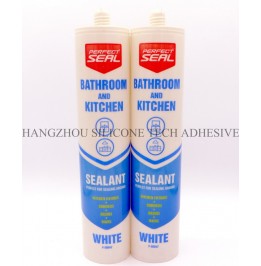
One of the most critical aspects when mixing sealants from different brands is chemical compatibility. Each brand formulates its sealants with specific chemical components, and these can interact in unpredictable ways when combined.
Different chemical bases in sealants can lead to adverse reactions. For instance, some sealants are silicone - based, while others might be acrylic or polyurethane - based. When these different types are mixed, they may not bond properly. Instead of creating a strong, unified seal, they could separate or form a weak, brittle layer. This can compromise the integrity of the seal, allowing moisture, air, or other substances to penetrate through the gaps. In a bathroom setting, if an incompatible mix of sealants is used around the shower enclosure, water could seep in, causing damage to the underlying structure and potentially leading to mold growth.
The curing process of sealants is also affected by chemical incompatibility. Each brand has its own curing time and mechanism. When mixed, the curing agents from different products may interfere with each other. This can result in either an extended curing time, leaving the area vulnerable for longer, or an incomplete cure, where the sealant remains soft and never reaches its full strength. For example, if a fast - curing sealant is mixed with a slow - curing one, the overall curing time could become inconsistent across the sealed surface, creating weak spots.
Mixing sealants from different brands can significantly impact the overall performance and durability of the seal.
The ability of a sealant to adhere to different surfaces is crucial for its effectiveness. Different brands have varying adhesion properties, and when mixed, these properties can be compromised. A sealant that is designed to bond well with a particular material, like glass or metal, may lose this ability when combined with another sealant. This can lead to the sealant peeling off over time, especially in areas that experience frequent movement or vibration, such as around windows or doors. For instance, if a sealant with poor adhesion to concrete is mixed with one that is supposed to bond well, the resulting mixture may not hold up under stress, causing the seal to fail.
Sealants are often required to accommodate a certain amount of movement in the structures they seal, such as thermal expansion and contraction or building settlement. Different brands have different levels of flexibility. Mixing them can result in a sealant that is either too rigid or too soft. A rigid mixture may crack under movement, while a soft one may not provide enough support, leading to deformation. In a joint between two building components that experience regular movement, an improperly mixed sealant could quickly deteriorate, requiring frequent repairs.
The process of applying mixed sealants and their final appearance are also important factors to consider.
Each brand of sealant has its own consistency and application characteristics. Some are thick and require a caulking gun for precise application, while others are more fluid and can be applied with a brush or roller. When mixed, the resulting consistency may be difficult to work with. It could be too thick, making it hard to spread evenly, or too thin, causing it to run and drip. This can lead to an uneven application, with some areas having too much sealant and others having too little. In a project where a smooth, consistent seal is required, such as around a bathtub, application difficulties can result in an unprofessional - looking finish.
Sealants from different brands often have different colors and textures. Even if they are labeled as the same color, there can be subtle differences. When mixed, these differences can become more pronounced, resulting in an uneven or mottled appearance. This is especially noticeable in areas where a uniform look is desired, such as on a tiled backsplash or around a window frame. A mismatched color or texture can detract from the overall aesthetic of the space and may require additional work to correct.
There are also regulatory and safety aspects to keep in mind when mixing sealants from different brands.
Different regions have specific standards and regulations regarding the use of construction materials, including sealants. These standards cover aspects such as fire resistance, emission levels of volatile organic compounds (VOCs), and environmental impact. When mixing sealants, it can be difficult to ensure that the resulting mixture still complies with these standards. For example, if one sealant has a high VOC content and is mixed with a low - VOC one, the overall emission level may exceed the allowed limit, posing health risks to occupants and potentially violating local regulations.
Each brand of sealant comes with its own set of safety precautions and handling instructions. These may include recommendations for ventilation, protective equipment, and storage conditions. When mixing sealants, it's important to consider the combined safety requirements. Some chemicals in the sealants may react to produce harmful fumes or substances. Without proper knowledge and precautions, workers could be exposed to health hazards. For instance, if two sealants that release toxic gases when mixed are used without adequate ventilation, it could lead to respiratory problems or other health issues for those working in the area.
In conclusion, while mixing sealants from different brands may seem like a convenient solution in some cases, it's essential to carefully evaluate the potential risks and implications. Understanding chemical compatibility, performance, application, and regulatory factors can help you make an informed decision and avoid costly and time - consuming problems down the line.
Copyright 2019 by Hangzhou Silicone Tech Adhesive Co., Ltd. All rights reserved.
Bathroom Sealant | Acrylic Sealant | Dow Corning 795 | Aquarium Sealant | Dow Corning 732 | Clear Silicone Sealant | Polysulfide Sealant | Glazing Sealant | Mirror Sealant | IG Sealant
Powered by Onepound


