E-mail:
sales@silicone-sealant-china.com

Temperature Adaptability Observations of Sealants After Application
Sealants are critical components in industrial and construction applications, ensuring airtight or watertight connections between surfaces. However, their performance under varying temperatures remains a focal point for engineers and technicians. This article explores how sealants respond to temperature fluctuations post-application, covering molecular behavior, structural integrity, and long-term durability.
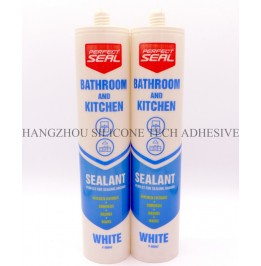
The physical properties of sealants—such as hardness, viscosity, and elasticity—are directly influenced by molecular interactions and chain mobility.
Low-Temperature Behavior
At sub-zero temperatures, polymer chains in sealants transition from a flexible state to a rigid, glass-like structure. This molecular immobilization reduces elasticity, increasing brittleness and susceptibility to cracking under stress. For example, in automotive applications, sealants near engine components may harden in cold climates, leading to joint failures if the material cannot absorb vibrations.
High-Temperature Behavior
Elevated temperatures accelerate molecular motion, weakening intermolecular forces. This results in reduced hardness and increased flowability, which can compromise adhesion. In extreme cases, thermal degradation may occur, characterized by chain scission and the release of volatile compounds. A study on silicone-based sealants revealed a 30% drop in tensile strength when exposed to 150°C for 24 hours, attributed to disrupted hydrogen bonding between filler particles and polymer matrices.
Repeated temperature changes induce cyclic stress, testing the sealant’s ability to maintain structural coherence.
Thermal Expansion and Contraction
Materials expand when heated and contract when cooled, creating differential movement between the sealant and bonded substrates. If the sealant lacks sufficient flexibility, this movement can lead to debonding or micro-cracking. For instance, in aerospace applications, sealants used in fuel tanks must endure temperatures ranging from -55°C to 85°C without losing elasticity.
Fatigue Resistance
Prolonged thermal cycling weakens the sealant’s internal structure, reducing its fatigue life. Laboratory tests on polyurethane sealants showed a 50% decline in crack resistance after 1,000 cycles between -20°C and 80°C. This degradation is exacerbated by moisture ingress, which accelerates hydrolysis in polymer chains.
Sealants deployed in harsh climates face sustained temperature extremes, demanding exceptional thermal stability.
Arctic and Antarctic Applications
In polar regions, sealants must resist embrittlement at temperatures below -40°C. Modified silicone formulations, incorporating nano-scale fillers, have demonstrated improved low-temperature flexibility while maintaining adhesion to metal and composite surfaces.
Desert and High-Altitude Conditions
In hot, arid environments, sealants are exposed to UV radiation and temperatures exceeding 60°C. UV-resistant additives and heat-stabilizing agents are often incorporated to prevent premature curing and surface cracking. For example, acrylic sealants modified with carbon black showed a 40% reduction in UV-induced degradation compared to unmodified variants.
Underwater and High-Pressure Scenarios
Sealants used in marine or subterranean applications must withstand hydrostatic pressure alongside temperature fluctuations. Hydrothermal vents, where water temperatures can exceed 300°C, require specialized formulations capable of resisting thermal shock and chemical erosion. Field trials on epoxy-based sealants revealed that those with glass flake reinforcements maintained integrity under combined pressure and thermal stress.
To optimize sealant performance across temperature ranges, the following factors should be prioritized:
By understanding the interplay between temperature and sealant behavior, engineers can select and apply materials that ensure reliable performance across diverse climatic conditions.
Copyright 2019 by Hangzhou Silicone Tech Adhesive Co., Ltd. All rights reserved.
Bathroom Sealant | Acrylic Sealant | Dow Corning 795 | Aquarium Sealant | Dow Corning 732 | Clear Silicone Sealant | Polysulfide Sealant | Glazing Sealant | Mirror Sealant | IG Sealant
Powered by Onepound


