E-mail:
sales@silicone-sealant-china.com

Neutral silicone bathroom sealants are a popular choice for various applications in the bathroom due to their unique properties. They offer excellent adhesion, flexibility, and resistance to water and mold, making them well - suited for a wide range of scenarios in this high - humidity environment.
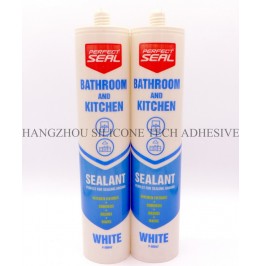
The joints between the sink and the countertop are highly susceptible to water infiltration. Water can easily splash onto these areas during daily activities like hand - washing and face - cleaning. Neutral silicone sealants are perfect for sealing these joints. Their strong adhesion ensures that they bond firmly to both the sink and the countertop materials, whether they are ceramic, porcelain, or stone. The flexibility of the sealant allows it to move with the sink and countertop as they expand and contract due to temperature changes, preventing cracks from forming. This effectively blocks water from entering the underlying cabinetry, protecting it from water damage, rot, and the growth of mold and mildew.
The bases of bathroom faucets are another area where water can accumulate. Over time, water can seep into the gaps around the faucet base, causing damage to the countertop or sink surface and the underlying plumbing. Neutral silicone sealants create a waterproof barrier around the faucet bases. They can conform to the irregular shapes of the faucet and the surface it is mounted on, ensuring a tight seal. This not only prevents water from leaking but also helps to keep the area clean and free from the buildup of soap scum and other debris.
The joints between the shower enclosure panels and the walls or floor are critical points for waterproofing. Water can escape through even the smallest gaps in these joints, leading to water damage to the surrounding walls and floors. Neutral silicone sealants are ideal for sealing these joints because of their excellent water resistance. They can withstand the constant exposure to water from showers and the high - humidity environment of the bathroom. The sealant's flexibility allows it to accommodate the movement of the shower enclosure panels, which may occur due to thermal expansion or the force of water pressure, without cracking or losing its seal.
Similar to shower enclosures, the joints between the bathtub and the surrounding walls need to be properly sealed to prevent water from leaking into the wall cavities. Neutral silicone sealants provide a long - lasting and effective seal in these areas. They can adhere to a variety of materials, including tile, acrylic, and fiberglass, which are commonly used for bathtubs and bathroom walls. The sealant's resistance to mold and mildew growth is particularly important in this area, as the warm and moist environment around the bathtub is conducive to the development of these fungi.
The connection point between the showerhead and the wall is another area that requires sealing. Water can drip or spray from this connection, especially if there is a loose fit or a small gap. Applying neutral silicone sealant around the showerhead connection creates a waterproof seal that prevents water from leaking into the wall. This helps to protect the wall structure from water damage and the growth of mold, ensuring the longevity of the bathroom's interior.
The edges of bathroom tiles, especially those on countertops, shower walls, or around the bathtub, can be vulnerable to water penetration. Neutral silicone sealants can be used to seal these tile edges, providing an additional layer of protection against water. They can fill in any small gaps or irregularities between the tiles and the adjacent surfaces, preventing water from seeping behind the tiles. This is particularly important in areas where water is frequently splashed, as it helps to maintain the integrity of the tile installation and prevent the tiles from becoming loose over time.
Grout is commonly used to fill the gaps between bathroom tiles, but it can deteriorate over time, especially in high - moisture areas. Neutral silicone sealants can be used as an alternative to traditional grout in some cases or to enhance the performance of existing grout. When used as a replacement, the sealant provides better water resistance and flexibility compared to grout, reducing the likelihood of cracks and water infiltration. When used to enhance existing grout, it can be applied over the grout lines to create a more waterproof barrier, extending the life of the grout and the tile installation.
If there are windows or doors in the bathroom, the frames need to be properly sealed to prevent water from entering the wall cavities. Neutral silicone sealants can be used to seal the gaps between the window or door frames and the surrounding walls. Their water - resistant properties ensure that water does not penetrate through these areas, protecting the structural integrity of the building. Additionally, the sealant's flexibility allows it to accommodate the movement of the window or door frames due to temperature changes or normal use, maintaining a tight seal over time.
Bathroom ventilation ducts are essential for removing excess moisture and odors from the space. However, the connections between the ducts and the walls or ceilings need to be sealed to prevent air leaks and the entry of moisture. Neutral silicone sealants can be used to seal these connections, ensuring that the ventilation system operates efficiently. They can create a tight seal around the ducts, preventing warm, moist air from escaping into the wall cavities and causing condensation and potential mold growth.
Copyright 2019 by Hangzhou Silicone Tech Adhesive Co., Ltd. All rights reserved.
Bathroom Sealant | Acrylic Sealant | Dow Corning 795 | Aquarium Sealant | Dow Corning 732 | Clear Silicone Sealant | Polysulfide Sealant | Glazing Sealant | Mirror Sealant | IG Sealant
Powered by Onepound


