E-mail:
sales@silicone-sealant-china.com

Before starting the caulking job in your bathroom, proper preparation is key to achieving a professional and long-lasting finish. This involves gathering the necessary tools, cleaning the surfaces, and protecting the surrounding areas.
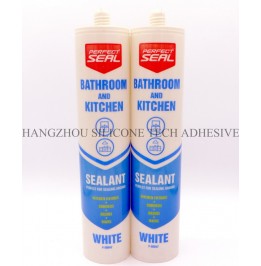
To begin, ensure you have all the manual caulking tools required for the task. A high-quality caulking gun is the primary tool, which allows for precise control over the flow of the mold-resistant sealant. You'll also need a utility knife or a sharp blade to cut the tip of the sealant cartridge at the appropriate angle and size. Additionally, have a caulk smoothing tool, such as a plastic or silicone spatula, to create a smooth and even finish on the applied sealant.
The surfaces where the sealant will be applied must be thoroughly cleaned to remove any dirt, dust, grease, or old sealant residues. Use a mild detergent solution and a scrub brush to clean the area, then rinse it with clean water and allow it to dry completely. For stubborn residues, you may need to use a solvent-based cleaner, but make sure to follow the manufacturer's instructions and ventilate the area properly. Once the surfaces are clean and dry, mask off the adjacent areas with painter's tape to prevent any accidental spillage or staining.
With the preparation complete, it's time to apply the mold-resistant sealant to the bathroom surfaces. This step requires attention to detail and a steady hand to ensure an even and consistent application.
Start by inserting the sealant cartridge into the caulking gun. Make sure the cartridge is properly seated and the plunger is at the back of the gun. Cut the tip of the cartridge at a 45-degree angle using the utility knife, adjusting the size of the opening according to the width of the gap you'll be filling. A smaller opening is suitable for narrow gaps, while a larger one is better for wider gaps. Once the tip is cut, puncture the inner seal of the cartridge using a long nail or a similar object to allow the sealant to flow freely.
Hold the caulking gun at a 45-degree angle to the surface and apply steady pressure to the trigger to start the flow of the sealant. Begin at one end of the gap and move the gun along the length of the gap in a smooth and continuous motion. Keep the tip of the cartridge close to the surface to ensure proper adhesion and a neat application. As you apply the sealant, try to maintain a consistent speed and pressure to avoid creating uneven spots or air bubbles.
After applying the sealant, the next step is to smooth and finish it to create a professional-looking result. This involves using a caulk smoothing tool to shape the sealant and remove any excess material.
Immediately after applying the sealant, use the caulk smoothing tool to shape it into the desired profile. Place the edge of the tool at the beginning of the sealant line and gently pull it along the length of the line, applying light pressure to create a smooth and even surface. For best results, wet the tool with a small amount of water or soapy water to prevent it from sticking to the sealant. Repeat the process as needed until you achieve a uniform and aesthetically pleasing finish.
Once the sealant is smoothed, use a damp cloth or sponge to wipe away any excess material that may have squeezed out from the sides of the gap. Be careful not to disturb the freshly applied sealant. After cleaning up the excess, carefully remove the painter's tape from the adjacent areas. Pull the tape away at a 45-degree angle to avoid pulling up any of the sealant. If there are any small imperfections or rough spots on the sealant, you can use your finger or a small tool to touch them up before the sealant dries completely.
Proper maintenance of your manual caulking tools is essential to ensure their longevity and optimal performance for future bathroom caulking projects.
After each use, clean the caulking gun thoroughly to remove any residual sealant. Disassemble the gun if possible and use a solvent or a mild detergent solution to clean the parts. Make sure to remove all traces of the sealant from the plunger, the cartridge holder, and the trigger mechanism. Once cleaned, dry the parts completely and reassemble the gun for storage.
Store your caulking tools in a dry and cool place, away from direct sunlight and extreme temperatures. Hang the caulking gun on a hook or place it in a toolbox to prevent it from getting damaged or bent. Keep the caulk smoothing tool and other accessories in a separate container or compartment to avoid losing them. By storing your tools properly, you'll ensure they are ready for use whenever you need them for your next bathroom caulking project.
Copyright 2019 by Hangzhou Silicone Tech Adhesive Co., Ltd. All rights reserved.
Bathroom Sealant | Acrylic Sealant | Dow Corning 795 | Aquarium Sealant | Dow Corning 732 | Clear Silicone Sealant | Polysulfide Sealant | Glazing Sealant | Mirror Sealant | IG Sealant
Powered by Onepound


