E-mail:
sales@silicone-sealant-china.com

Bathrooms are high-moisture environments where mold and bacteria thrive easily. Selecting an effective sealant with long-lasting mold-resistant and antibacterial properties is crucial for maintaining a clean and healthy bathroom. Here are some scientifically grounded formulas and their working principles to help you create a durable bathroom sealant.
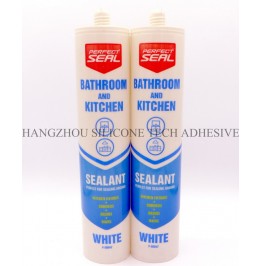
Silicone polymers form the backbone of most bathroom sealants. They provide excellent flexibility, water resistance, and adhesion to various surfaces. When cured, silicone polymers create a dense, non-porous structure that prevents water penetration, which is essential for inhibiting mold growth. The cross-linking density of the silicone network determines its water vapor transmission rate (WVTR). A lower WVTR, typically below 15 g/m²·day, ensures minimal moisture absorption, creating an unfavorable environment for mold.
Mold inhibitors are the core components that provide long-lasting mold resistance. There are two main types:
Organic Acid-Based Inhibitors: These include compounds like 2-n-butyl-1,2-benzisothiazolin-3-one (BIT). When incorporated into the sealant, they slowly release active ingredients that interfere with the enzymatic activity required for mold spore germination and mycelial growth. This continuous release mechanism ensures prolonged protection against mold, even in high-humidity conditions.
Inorganic Metal-Based Inhibitors: Zinc oxide and copper sulfate are examples of inorganic inhibitors. They work by creating an alkaline environment on the sealant surface. Most molds prefer slightly acidic to neutral conditions, and the alkaline pH disrupts their cellular processes, preventing growth and proliferation.
In addition to mold inhibitors, antibacterial agents can be added to combat bacteria that may cause odors or contribute to mold growth. Quaternary ammonium compounds (QACs) are widely used antibacterial agents. They have a positive charge that interacts with the negatively charged cell membranes of bacteria, leading to cell lysis and death. QACs are effective against a broad spectrum of bacteria, including Gram-positive and Gram-negative strains.
Fillers play a crucial role in enhancing the physical properties of the sealant. Calcium carbonate is a commonly used filler due to its low cost and availability. When treated with resin acid soap, calcium carbonate improves its compatibility with silicone polymers, resulting in better dispersion and mechanical properties. The particle size and surface treatment of the filler also influence the sealant's performance. A calcium carbonate filler with a carbonation rate of 15%–75% and resin acid soap treatment can create an alkaline environment that further inhibits mold growth.
Plasticizers are added to improve the flexibility and workability of the sealant. Phthalate esters, such as dioctyl phthalate (DOP), are traditional plasticizers. However, due to environmental and health concerns, alternative plasticizers like adipates and citrates are gaining popularity. These plasticizers provide similar performance while being more eco-friendly. They reduce the glass transition temperature of the silicone polymer, making the sealant more pliable at lower temperatures.
This formula combines the advantages of silicone polymers with advanced mold inhibitors and antibacterial agents. It is suitable for sealing joints around bathtubs, showers, and sinks.
Composition:
Working Principle: The silicone polymer forms a waterproof barrier, while the mold inhibitor and antibacterial agent provide dual protection against mold and bacteria. The treated calcium carbonate filler enhances the sealant's mechanical properties and contributes to the alkaline environment that inhibits mold growth. The plasticizer improves the sealant's flexibility, allowing it to withstand joint movements without cracking.
For those concerned about environmental impact, a water-based sealant formula can be a great choice. It is ideal for sealing gaps in tiled walls and floors in bathrooms.
Composition:
Working Principle: The water-based acrylic emulsion provides adhesion and water resistance. Tea tree oil, a natural mold inhibitor, releases volatile compounds that have antimicrobial properties. Silver nanoparticles act as a potent antibacterial agent, killing bacteria on contact. The cellulose filler improves the sealant's texture and filling capacity, while the thickener adjusts the viscosity for easy application. The preservative prevents microbial growth in the water-based formulation during storage.
This hybrid sealant combines the benefits of silicone and polyurethane polymers, offering superior durability and mold resistance. It is suitable for sealing joints in high-traffic bathroom areas, such as around toilet bases.
Composition:
Working Principle: The silicone-polyurethane hybrid polymer combines the flexibility of silicone with the strength and chemical resistance of polyurethane. The advanced mold inhibitor uses a combination of organic and inorganic mechanisms to provide broad-spectrum mold resistance. Copper ions act as an antibacterial agent, disrupting bacterial cell functions. The hollow glass microsphere filler reduces the sealant's density, improving its insulation properties and reducing shrinkage during curing. The plasticizer enhances the sealant's workability, and the cross-linking agent initiates the curing process.
Before applying the sealant, ensure that the surfaces are clean, dry, and free of any old sealant, dust, or grease. Use a suitable cleaner and allow the surfaces to dry completely. This provides a clean substrate for the sealant to adhere to, ensuring long-lasting performance.
Use a high-quality caulking gun to apply the sealant evenly along the joint. Hold the gun at a 45-degree angle and apply steady pressure to ensure a continuous bead. After applying the sealant, use a caulk smoothing tool or your finger dipped in soapy water to smooth the surface, removing any excess sealant and creating a neat finish.
Allow the sealant to cure according to the manufacturer's instructions. This usually takes 24–48 hours, depending on the formula and environmental conditions. During the curing process, avoid exposing the sealant to water or excessive moisture. Once cured, regularly inspect the sealant for any signs of damage or mold growth. Clean the sealant periodically with a mild detergent and water to remove dirt and grime, which can provide a breeding ground for mold and bacteria.
By understanding the key components and their functions, as well as following proper application and maintenance techniques, you can create a long-lasting, mold-resistant, and antibacterial bathroom sealant that keeps your bathroom clean and healthy for years to come.
Copyright 2019 by Hangzhou Silicone Tech Adhesive Co., Ltd. All rights reserved.
Bathroom Sealant | Acrylic Sealant | Dow Corning 795 | Aquarium Sealant | Dow Corning 732 | Clear Silicone Sealant | Polysulfide Sealant | Glazing Sealant | Mirror Sealant | IG Sealant
Powered by Onepound


