E-mail:
sales@silicone-sealant-china.com

It is one of the most common questions we hear from installers and DIY enthusiasts: you have a cartridge of all-purpose silicone left over from another job — can you use it to seal around the bath, shower, or kitchen sink? Technically, yes. Should you? In most cases, no. Bathrooms and kitchens are the harshest environments a sealant will ever face, and using the wrong product there is the fastest route to black mould, peeling joints, and a costly redo. Here is what you need to know before you pull the trigger on that caulking gun.
A bathroom or kitchen joint lives in near-permanent humidity, with daily temperature swings, splashes, steam, and cleaning chemicals. Two problems dominate this environment:
A sealant that works perfectly around a window frame can fail badly in a shower enclosure within months.
All-purpose (general-purpose) silicone is formulated for broad adhesion across glass, metal, wood, and masonry in ordinary indoor and outdoor conditions. What it usually lacks is a significant fungicide package. Standard formulations contain little or no mould inhibitor, because dry, well-ventilated applications simply do not need one. Put that same product in a shower joint and mould spores will colonise the surface — and eventually penetrate it — turning your bright white bead grey or black within a year.
For bathrooms and kitchens, choose a silicone explicitly labelled as sanitary or mould-resistant. These products embed a fungicide into the cured sealant that actively suppresses mould growth for years. Both cure chemistries work well in wet areas:
Whichever chemistry you pick, confirm the cartridge states "mould resistant" or carries a sanitary certification mark.
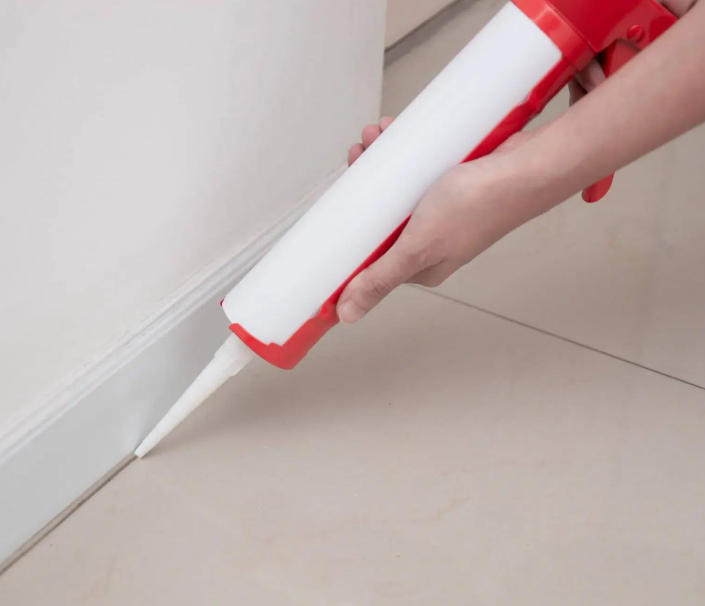
All-purpose silicone is not a bad product — it is simply the wrong tool for continuously wet areas. It remains an excellent choice for:
For splash-prone but not permanently wet spots — such as a kitchen splashback behind the hob — a quality general product may survive well enough, provided the joint is wiped down regularly. For anything inside the shower or around the sink drainer, however, always step up to sanitary grade. If you need a flexible adhesive-sealant for damp interior zones where silicone adhesion is tricky, our acrylic sealant range offers a paintable alternative worth considering.
You can use all-purpose silicone in the bathroom or kitchen, but you should not. Without mould inhibitors, the sealant will discolour and degrade quickly in constantly damp conditions. For a seal that stays clean and intact for a decade or more, spend a little more on a sanitary, mould-resistant silicone — whether a fast-curing acetoxy type for tiles and ceramics or a neutral cure type for stone and metal. Your future self, scrubbing a still-white sealant line years from now, will thank you.
Copyright 2019 by Hangzhou Silicone Tech Adhesive Co., Ltd. All rights reserved.
Bathroom Sealant | Acrylic Sealant | Dow Corning 795 | Aquarium Sealant | Dow Corning 732 | Clear Silicone Sealant | Polysulfide Sealant | Glazing Sealant | Mirror Sealant | IG Sealant
Powered by Onepound


