E-mail:
sales@silicone-sealant-china.com

Achieving perfectly aligned sealant joints in bathrooms requires attention to detail and strategic planning. Whether sealing gaps around tiles, fixtures, or corners, misaligned joints can compromise both aesthetics and functionality. Below are practical techniques to ensure clean, professional-looking results without relying on brand-specific tools or expensive products.
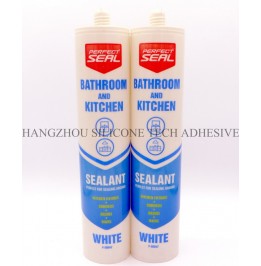
Proper preparation is the foundation of seamless joint alignment. Start by thoroughly cleaning the surfaces to remove dust, grease, or old sealant residue. Use a non-abrasive cleaner and a scraper for stubborn debris, ensuring joints are dry before proceeding.
Use a laser level or chalk line to create straight reference marks along the joints. For curved or irregular areas, trace the edge of a flexible ruler or template to maintain consistency. Align these marks with natural breaks in the bathroom layout, such as tile edges or fixture boundaries, to create a cohesive visual flow.
Closed-cell backer rods help control sealant depth and prevent uneven application. Select a rod diameter slightly larger than the joint width (typically 20–30% bigger) to ensure a snug fit. Insert the rod gently into the joint using a blunt tool, avoiding overcompression that could distort the shape. This step is critical for maintaining uniform alignment, especially in deep or wide gaps.
The application process itself demands steady hands and a methodical approach. Here’s how to execute it effectively:
Hold the caulking gun at a consistent 45-degree angle to the joint. This position allows for smooth, controlled dispensing while minimizing wobbling. Cut the nozzle tip to match the joint width—a smaller opening reduces excess material and improves precision. For long, straight joints, consider using a nozzle extension or a guide rail to keep the application steady.
In joints deeper than 6mm, apply sealant in two layers. First, fill the joint halfway and tool it flat with a plastic spatula. After partial curing (usually 1–2 hours), apply the second layer and tool it into the desired shape. This prevents shrinkage and ensures the final joint aligns perfectly with adjacent surfaces.
Immediately after applying sealant, use a damp finger or a silicone tool to shape the joint. For straight lines, press firmly and pull in one continuous motion. In corners, round the edges slightly to prevent water pooling. If the sealant shifts during tooling, gently reposition it with a toothpick or fine needle before it cures.
Even experienced professionals encounter challenges. Here’s how to address them:
If the sealant bead becomes uneven, pause and smooth it with a damp cloth or spatula before it cures. For minor dips, add a small amount of fresh sealant and blend it seamlessly. Avoid overworking the area, as this can introduce air bubbles or weaken adhesion.
Corners are prone to misalignment due to their sharp angles. To fix this, score the excess sealant with a utility knife at a 45-degree angle, then remove it with tweezers. Reapply a small amount of sealant and tool it into a clean, rounded edge. For best results, align the corner with the adjacent walls using a square tool as a guide.
Air bubbles can distort joint alignment, especially in vertical surfaces. To prevent them, apply sealant in short, steady bursts and tool the joint immediately. If bubbles appear, prick them with a needle and press the sealant flat. For persistent issues, switch to a lower-viscosity sealant or adjust the application speed.
Bathrooms with curved walls, multiple fixtures, or intricate tile patterns require additional planning:
Divide the bathroom into smaller sections based on fixtures or tile patterns. For example, treat each wall as a separate segment and align joints with tile grout lines. This approach simplifies navigation and ensures consistency across the entire space.
If the bathroom features repeating designs (e.g., hexagonal tiles), create a cardboard or plastic template to trace joint lines. This guarantees identical alignment in every section, saving time and reducing errors.
Use angled lighting to highlight imperfections during and after application. Shadowed areas can hide misaligned joints, so inspect the work from multiple angles. A magnifying glass or smartphone camera can also help spot tiny inconsistencies before the sealant cures.
By mastering these techniques, you can achieve professional-grade sealant joints that enhance both the durability and appearance of any bathroom. Attention to detail at every stage—from preparation to tooling—ensures results that stand the test of time.
Copyright 2019 by Hangzhou Silicone Tech Adhesive Co., Ltd. All rights reserved.
Bathroom Sealant | Acrylic Sealant | Dow Corning 795 | Aquarium Sealant | Dow Corning 732 | Clear Silicone Sealant | Polysulfide Sealant | Glazing Sealant | Mirror Sealant | IG Sealant
Powered by Onepound


