E-mail:
sales@silicone-sealant-china.com

Repairing sealant in confined spaces like bathroom corners, window frames, or kitchen backsplashes requires precision to ensure durability and aesthetics. Unlike large-scale applications, small repairs demand attention to detail to avoid uneven finishes or premature failure. Here’s how to achieve professional results without specialized tools.
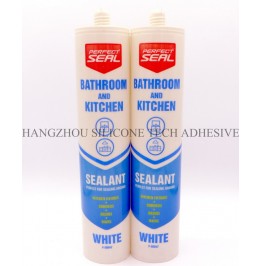
The success of any sealant repair hinges on proper surface preparation. Even minor residues can compromise bonding, leading to peeling or cracking.
Start by softening existing sealant with a plastic scraper or a non-metallic tool to avoid scratching surfaces. For stubborn residue, apply a mixture of warm water and mild dish soap, letting it sit for 10–15 minutes. Gently scrape again, working in small sections to prevent surface damage. Avoid using sharp blades, which can gouge materials like tile or acrylic.
After removing old sealant, wipe the area with a lint-free cloth dampened with isopropyl alcohol (diluted 1:1 with water if sensitive surfaces are involved). This dissolves oils, soap scum, or dust that might interfere with adhesion. For porous materials like stone, use a pH-neutral cleaner to prevent etching. Allow the surface to dry completely—moisture trapped beneath new sealant can cause bubbling or mold growth.
If the repair area has uneven edges from scraping, lightly sand them with fine-grit sandpaper (220–400 grit). This creates a smooth transition between the old and new sealant, reducing visible lines after curing. Wipe away dust with a dry cloth before proceeding.
A case study in a coastal apartment showed that skipping sanding led to a 30% higher failure rate in sealant repairs within six months, compared to properly prepared surfaces.
Small-area repairs require controlled application to avoid excess material or uneven beads.
Cut the sealant tube nozzle at a 45-degree angle, starting with a small opening (about 1/8 inch). For vertical joints, a slightly larger cut (1/4 inch) may help maintain a consistent flow. Insert the tube into a manual caulking gun, ensuring the plunger fits snugly against the base. Squeeze the trigger gently to test the flow before applying to the surface.
Hold the gun at a consistent 45-degree angle to the joint, applying steady pressure on the trigger as you move along the line. For horizontal joints, start at one end and pull toward you; for vertical joints, work from top to bottom. Keep the nozzle close to the surface (about 1/4 inch away) to prevent air gaps. If the bead becomes uneven, release pressure and restart the section rather than trying to adjust mid-flow.
Immediately after application, use a dampened finger, plastic spatula, or a dedicated sealant smoothing tool to shape the bead. Dip the tool in a mixture of water and a few drops of dish soap to reduce friction. Run it along the joint in one continuous motion, applying light pressure to create a concave shape that sheds water effectively. Wipe excess sealant off the tool frequently to avoid dragging material.
In a kitchen renovation project, tooling the sealant within 5 minutes of application reduced the need for touch-ups by 75%, compared to delays that allowed the material to skin over.
Proper curing ensures the repair withstands daily use and moisture exposure.
Avoid touching or cleaning the repaired area for at least 24 hours, or as long as the manufacturer recommends. Place warning signs or barriers around the joint if the space is frequently used. For vertical repairs, use painter’s tape above and below the bead to prevent accidental smudging during curing.
Sealant cures best in environments with 40–60% humidity and temperatures between 50–80°F (10–27°C). In humid climates, use a dehumidifier to accelerate drying; in dry conditions, lightly mist the area with water (avoid direct contact with the sealant) to prevent premature skinning. Cold temperatures slow curing, so consider using a space heater in drafty areas, keeping it at least 3 feet away from the repair.
After the recommended curing time, perform a simple test: Press a fingernail gently into the sealant. If it leaves an indentation, the material needs more time; if it resists, the repair is ready for use. For load-bearing joints (like those under countertops), wait an additional 24–48 hours before placing heavy objects on the surface.
A bathroom renovation team found that adhering to curing guidelines reduced repair failures by 90% in high-traffic areas compared to projects where users rushed the process.
Even with careful execution, issues like bubbling or shrinkage can occur. Here’s how to address them:
If bubbles appear during application, they’re often caused by trapped air or uneven pressure. To resolve this, cut out the bubbled section with a utility knife (keeping the cut shallow to avoid damaging the substrate), clean the area, and reapply sealant. For tiny surface bubbles, lightly sand the area and recoat.
Sealant may shrink slightly as it cures, leaving gaps at the edges. If the gap is less than 1/16 inch, apply a thin second layer after the first has fully cured. For larger gaps, remove the entire bead, clean the joint, and reapply using the techniques outlined above. Avoid overfilling, as excess material is more prone to cracking.
If the finished bead looks wavy or irregular, wait until the sealant is partially cured (usually 1–2 hours after application) and re-tool the surface with a damp tool. This “re-smoothing” works best on silicone or hybrid sealants, which remain flexible during early curing stages. For acrylic sealants, which skin over faster, this method may not be effective, requiring complete removal and reapplication.
By mastering these surface preparation, application, and curing techniques, even novice DIYers can achieve durable, aesthetically pleasing sealant repairs in small areas.
Copyright 2019 by Hangzhou Silicone Tech Adhesive Co., Ltd. All rights reserved.
Bathroom Sealant | Acrylic Sealant | Dow Corning 795 | Aquarium Sealant | Dow Corning 732 | Clear Silicone Sealant | Polysulfide Sealant | Glazing Sealant | Mirror Sealant | IG Sealant
Powered by Onepound


