E-mail:
sales@silicone-sealant-china.com

Walk into any builder's merchant and you'll see rows of sealant cartridges lined up on the shelf. Most of them look identical — same size tube, same nozzle, same price bracket. It's easy to assume that one tube of silicone is much the same as another. But if you pick up a tube of weather sealant when the job calls for structural sealant, you're not just making a minor mistake — you could be creating a genuine safety hazard.
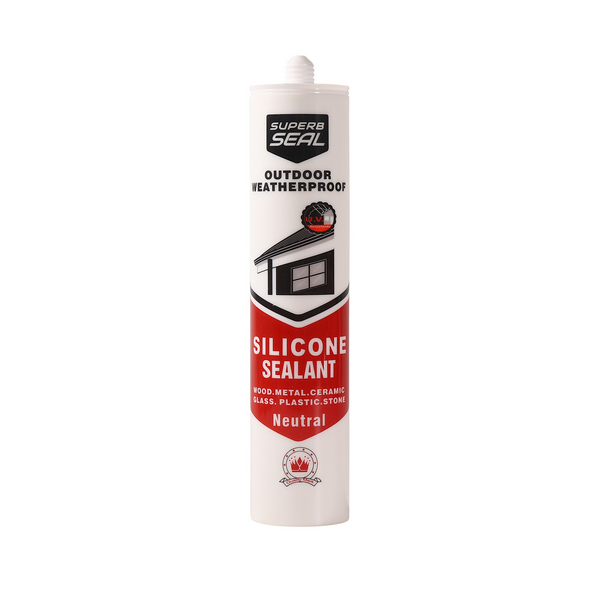
Choosing the right sealant for the job is critical — weather sealant and structural sealant serve fundamentally different purposes.
So let's cut through the confusion and talk about what actually separates these two types of sealant. No marketing fluff, just the information you need to make the right call.
Weather sealant, as the name suggests, is designed to keep the weather out. Its primary job is to form a waterproof, airtight barrier between building materials — sealing the gaps around windows, filling expansion joints in brickwork, stopping water from finding its way into places it shouldn't be.
Weather sealants are formulated to stay flexible after curing. Buildings move — they expand and contract with temperature changes, they settle over time, and they flex under wind loads. A good weather sealant stretches and compresses with these movements rather than cracking or pulling away from the substrate.
The key characteristics of a weather sealant are:
Weather sealants are what you reach for when you're sealing a window frame, filling a gap around a pipe penetration, or weatherproofing a roofline. They're the workhorse of weatherproofing — essential, widely used, and for most everyday sealing jobs, exactly what you need. Our neutral silicone sealant range includes weather-grade formulations that handle exactly these conditions without the corrosion risk you get with acid-cure alternatives. If you're working on interior projects that need fast curing, our acetic silicone sealant collection is also worth a look.
Structural sealant is a different animal entirely. It isn't just filling gaps — it's holding things together. Literally.
In a structural glazing application, the sealant is the mechanical connection between the glass panel and the building frame. There are no bolts, no clamps, no mechanical fasteners holding that pane of glass in place. The sealant is the fastener. If it fails, the glass falls. That's not hyperbole — it's the reality of structural silicone glazing, and it's why structural sealants are tested and certified to standards that weather sealants never need to meet.
Not all sealants are created equal — structural applications demand engineered, tested performance.
The defining traits of a structural sealant are:
Structural sealants are used in curtain wall systems, structural glazing, point-fixed glass facades, and anywhere that the sealant bond forms part of the engineered load path of the building. This is engineering-grade material — it's specified by structural engineers, not picked off the shelf because it was the cheapest option.
A weather sealant's job is to fill a gap and keep the elements out. A structural sealant's job is to transfer load between two building elements. When you apply weather sealant around a window, the window is held in place by fixings — the sealant is just stopping drafts and rain. When you use structural sealant in a curtain wall, the sealant is the fixing. This is the fundamental difference, and everything else flows from it.
| Property | Weather Sealant | Structural Sealant |
|---|---|---|
| Tensile strength | 0.5–1.5 MPa | 1.0–2.5+ MPa |
| Movement capability | ±25% to ±50% | Typically ±12.5% to ±25% |
| Tear resistance | Moderate | High |
| Designed for sustained load | No | Yes |
| Typical joint width | 10–50 mm | 6–24 mm (precisely engineered) |
Note something interesting here: weather sealants are actually more flexible than structural sealants. That's by design — they prioritise movement accommodation over absolute strength. Structural sealants sacrifice some elasticity to gain the load-bearing capacity they need. They're stronger but less stretchy, which is why you should never assume "stronger" means "better for every job."
Weather sealants are forgiving. You can apply them in less-than-perfect conditions, tool them with a wet finger, and get acceptable results with basic surface preparation. They're designed for site application by general tradespeople.
Structural sealants demand precision. Joint dimensions are engineered to the millimetre. Surface preparation is critical — substrates must be clean, primed where specified, and within a narrow temperature and humidity range. Application is often done in controlled factory conditions (for unitised systems) or by specialist installers following strict quality control procedures. A bad bead of weather sealant leaks. A bad bead of structural sealant can cost lives.
Structural sealants cost several times more than weather sealants per cartridge. But the material cost is almost beside the point — the real cost difference is in the engineering, testing, quality assurance, and installation complexity that structural applications require. If a weather sealant job costs £100, the equivalent joint done as a structural seal might cost £1,000 by the time you've factored in everything the spec demands. The price difference reflects the stakes involved.
Weather sealants are tested for basic properties — adhesion, movement capability, weathering resistance — against standards like ISO 11600. Structural sealants must pass far more demanding programmes: accelerated ageing, sustained load testing, compatibility testing with adjacent materials, and project-specific performance mock-ups for major buildings. A structural sealant's datasheet is backed by years of testing data; a weather sealant's datasheet is backed by, well, a datasheet.
No. Absolutely not. Never.
This isn't a case of "it's probably fine, just a bit overpriced." Weather sealant lacks the load-bearing capacity, the adhesive strength, and the long-term durability under sustained stress that structural applications require. If you use weather sealant where structural sealant is specified, the joint may look fine for weeks, months, or even a couple of years — until it doesn't. And when it fails, it fails without warning.
There is no safe substitute. If the specification says structural, use structural.
Technically yes, but it's financially insane. Structural sealant will keep the weather out just fine — it's waterproof, UV-resistant, and bonds well to most substrates. But you'll be paying several times more per metre for performance you don't need. It's like using aerospace-grade titanium bolts to hang a picture frame. It'll work, but your wallet will hate you.
The only scenario where it might make sense is if you're doing a small job and already have a tube of structural sealant left over from a previous project. In that case, go ahead — it won't hurt anything. But don't go out and buy structural sealant for a weatherproofing job. That's what weather sealant is for. For high-quality weather sealant options at sensible prices, browse our acrylic sealant and no-nails category alongside our silicone products — different formulations for different jobs, all tested and proven in the field.
Ask yourself one question: is the sealant holding something up, or is it just keeping something out?
If you're looking at a job and you're genuinely unsure, the safe approach is to ask. Speak to the sealant manufacturer's technical team, consult the building specification if there is one, or talk to a qualified surveyor or structural engineer. The cost of getting it wrong is too high to guess. Our neutral silicone sealant category covers most common weatherproofing needs, while more specialized applications may require product-specific guidance — we're always happy to help you find the right match.
Weather sealant and structural sealant look similar on the shelf, but they're designed for fundamentally different jobs. Weather sealant is for keeping the elements out of joints and gaps — flexible, affordable, and forgiving to apply. Structural sealant is an engineered load-bearing material that holds building components together — strong, precise, and demanding of proper installation.
Use the right one for the right job. Your building — and everyone in it — is depending on that choice. For everyday weatherproofing and general construction sealing, we offer a full range of neutral silicone sealants, acetic silicone sealants, and specialty products like our acrylic mastic sealant — each designed to deliver reliable, long-lasting results in the applications they're built for.
Copyright 2019 by Hangzhou Silicone Tech Adhesive Co., Ltd. All rights reserved.
Bathroom Sealant | Acrylic Sealant | Dow Corning 795 | Aquarium Sealant | Dow Corning 732 | Clear Silicone Sealant | Polysulfide Sealant | Glazing Sealant | Mirror Sealant | IG Sealant
Powered by Onepound


