E-mail:
sales@silicone-sealant-china.com

Silicone sealant and water have a more complicated relationship than most people realise. Ask ten different contractors what happens if silicone gets wet before it cures, and you'll get answers ranging from "it's ruined, start again" to "don't worry, water actually helps it cure." Both answers contain a grain of truth — which is exactly what makes the question worth unpicking properly.
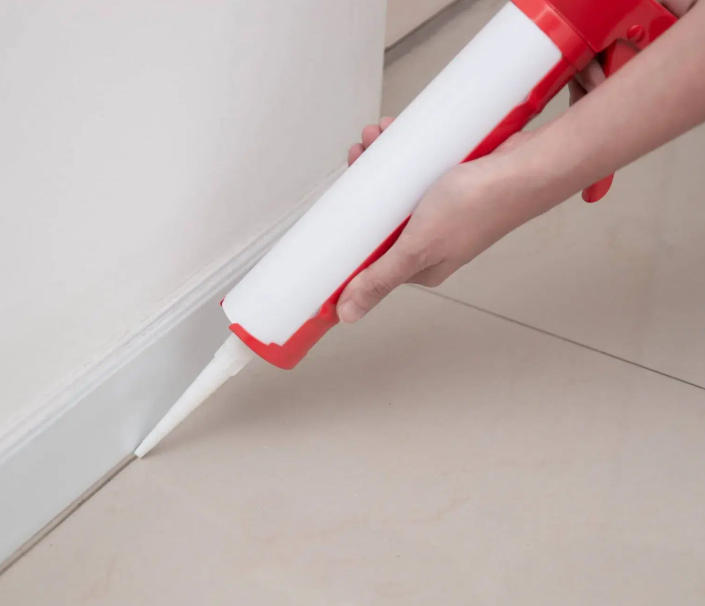
The outcome depends on two things: what type of silicone sealant you're using, and how far along the curing process the sealant was when moisture arrived. Understanding both will save you a lot of unnecessary rework and a fair amount of frustration.
Unlike many adhesives that cure by drying out, silicone sealant cures through a chemical reaction with atmospheric moisture. This is important: silicone doesn't evaporate or harden like paint. Instead, moisture in the air triggers a cross-linking reaction within the sealant that converts it from a paste into a stable, flexible rubber.
The curing process starts at the surface and works inward. A typical silicone sealant will skin over — form a dry, non-tacky surface film — within 15 to 60 minutes of application depending on temperature and humidity. Full cure through the entire depth of a bead takes considerably longer, often 24 hours for standard beads and potentially several days for larger applications or in cold, dry conditions.
This moisture-dependent curing mechanism is why the question of "getting wet" is not straightforward. During part of the curing window, water is what the sealant needs. At other points, it's a serious problem.
Most silicone sealants fall into one of two categories, and they respond differently to water exposure during curing.
Acetic cure silicone — the type that smells strongly of vinegar when fresh — releases acetic acid as a by-product of the curing reaction. It's the most common type of general-purpose silicone and is widely available in hardware stores. With acetic silicone, the curing reaction is vigorous and relatively fast. Brief water exposure after the surface has skinned (typically after 30–60 minutes) is usually not a problem; the acetic acid released during curing creates a slightly acidic environment at the surface that actually helps keep biological growth at bay during the first stages of cure.
Neutral cure silicone releases alcohol or oxime rather than acetic acid and is used where corrosion resistance, non-odour, or compatibility with sensitive materials is important. It tends to cure slightly more slowly than acetic silicone in most conditions. Our neutral silicone sealant range is commonly chosen for HVAC, electrical, and sensitive metal applications precisely because it doesn't produce corrosive by-products during cure.
Neutral cure silicone is somewhat more tolerant of moisture during the early curing stages, but it's still vulnerable to the same problems as acetic silicone if water contacts an uncured bead within the first few minutes of application.
This is the worst-case scenario. If water — rain, splashing, condensation — hits freshly applied silicone before any surface skin has formed, the consequences can be significant:
If your freshly applied silicone gets significantly wet within the first few minutes, the honest advice is to remove it and start again. Attempting to save it by continuing is unlikely to produce a reliable, long-term seal.
Once a surface skin has formed — typically 30–60 minutes after application in normal conditions — the sealant is considerably more resilient to water exposure. Light rain or condensation at this stage is unlikely to cause major problems:
That said, even at this stage, sustained water contact — a joint that sits submerged, or a surface being repeatedly hosed — can slow curing and may result in a weaker final bead than one that cured in dry conditions. For best results, even after skinning, it's worth avoiding heavy water exposure until full cure is complete.
Once silicone sealant has fully cured, water is not a problem at all — quite the opposite. One of the primary reasons silicone sealant is used in kitchens, bathrooms, aquariums, and marine applications is precisely its excellent water and weathering resistance. Fully cured silicone is unaffected by long-term immersion in clean water, and it resists the effects of humidity, condensation, and temperature cycling that would degrade many other sealant types.
For any application involving regular water exposure — showers, sinks, window frames in wet climates, or outdoor joints — silicone is typically the preferred choice over acrylic or polyurethane sealants. The acetic silicone sealant category covers a wide range of standard bathroom, kitchen, and sanitary sealing applications where water resistance is a primary requirement.
Ambient humidity is different from direct water contact. Silicone sealant cures faster in humid conditions than dry ones, because it's atmospheric moisture that drives the cross-linking reaction. In a very dry environment — a heated room in winter, or a climate-controlled space — silicone may cure noticeably more slowly than on the product datasheet, because there's less moisture in the air to initiate and sustain the reaction.
In practice, this means:
If you're working in an unusually dry environment and need to speed up curing, lightly misting the completed bead with water after it has skinned can help — this is a recognised technique in the trade, not an amateur workaround.
The best approach is simply to plan around the curing window:
If rain or water contact happened very soon after application and you're concerned about the result, the safest approach is to assess, not assume:
Partial repairs over existing silicone are rarely satisfactory. New silicone does not bond reliably to cured silicone, so if you leave a compromised section in place and apply fresh sealant over it, you're likely to see the failure recur in the same location.
Silicone sealant getting wet in the first few minutes of application is a problem worth taking seriously — adhesion failure, blistering, and wash-out are real risks. After the surface has skinned (30–60 minutes), light moisture is much less concerning, and after full cure, silicone is one of the most water-resistant sealants available. Plan your application around dry conditions and a sensible curing window, and silicone sealant will reward you with a durable, flexible seal that handles years of water exposure without issue.
Copyright 2019 by Hangzhou Silicone Tech Adhesive Co., Ltd. All rights reserved.
Bathroom Sealant | Acrylic Sealant | Dow Corning 795 | Aquarium Sealant | Dow Corning 732 | Clear Silicone Sealant | Polysulfide Sealant | Glazing Sealant | Mirror Sealant | IG Sealant
Powered by Onepound


