E-mail:
sales@silicone-sealant-china.com

Achieving Seamless Edge Finishing with Transparent Bathroom Sealants
Bathroom renovations demand precision, especially when balancing aesthetics and functionality. Transparent bathroom sealants offer a discreet solution for edge finishing, creating invisible seams that enhance visual continuity while preventing water damage. Below, we explore how these sealants achieve their inconspicuous effect and their practical applications in modern bathroom design.
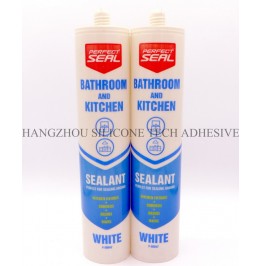
Transparent sealants derive their clarity from advanced polymer chemistry. Unlike traditional colored sealants, which rely on pigments to mask imperfections, transparent formulas use high-purity resins that refract light uniformly. This optical property ensures the sealant blends seamlessly with surrounding surfaces, whether glass, tile, or metal.
Key factors influencing invisibility include:
For example, a transparent sealant applied between a glass shower door and tiled wall will appear nearly invisible, creating a sleek, modern look without visible lines or shadows.
Transparent sealants excel in areas where traditional caulking would disrupt design harmony. Common use cases include:
1. Shower Door Seals
Glass shower doors require flexible, waterproof joints to prevent leaks. Transparent sealants form a bond between glass panels and metal frames or tiles, creating a barrier invisible to the naked eye. Their elasticity accommodates movement from door slams or temperature changes without cracking, ensuring long-term durability.
2. Tile and Countertop Transitions
Where bathroom countertops meet tiled backsplashes, traditional sealants often leave bulky, noticeable lines. Transparent alternatives fill gaps without altering the visual flow, making them ideal for minimalist designs. They also resist soap scum and mineral deposits, maintaining clarity even in high-use zones.
3. Undermount Sink Installations
Undermount sinks rely on sealants to bridge the gap between the sink rim and countertop. Transparent formulas eliminate the need for color-matching, ensuring a cohesive appearance regardless of material (e.g., quartz, marble, or laminate). Their waterproofing properties prevent water infiltration, which could otherwise damage cabinetry beneath.
Achieving a truly finish requires attention to detail during installation:
For instance, a homeowner installing a frameless glass shower enclosure might apply transparent sealant along the base and vertical joints, then use a microfiber cloth to wipe away excess immediately. This ensures a crisp, invisible finish that remains waterproof for years.
Conclusion
Transparent bathroom sealants redefine edge finishing by merging functionality with aesthetics. Their ability to create invisible, waterproof joints makes them indispensable for modern designs prioritizing clean lines and minimal visual interruption. By understanding the science behind their clarity and mastering application techniques, homeowners and contractors can achieve professional-grade results that elevate both form and function in any bathroom space.
Copyright 2019 by Hangzhou Silicone Tech Adhesive Co., Ltd. All rights reserved.
Bathroom Sealant | Acrylic Sealant | Dow Corning 795 | Aquarium Sealant | Dow Corning 732 | Clear Silicone Sealant | Polysulfide Sealant | Glazing Sealant | Mirror Sealant | IG Sealant
Powered by Onepound


