E-mail:
sales@silicone-sealant-china.com

Sealants are widely used in construction and various projects to create a watertight, airtight, or dust - tight barrier. However, once applied, they can be significantly affected by external forces such as earthquakes and other types of vibrations. Understanding these impacts is crucial for maintaining the integrity of the sealed areas and ensuring the long - term performance of the structure.
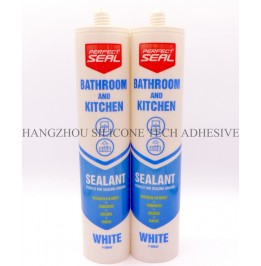
When an earthquake or strong vibration occurs, the sudden and intense movement can cause the surfaces to which the sealant is adhered to shift rapidly. This rapid shift can disrupt the initial chemical and mechanical bond that the sealant forms with the substrate. For example, if the sealant is applied between two concrete slabs, the violent shaking during an earthquake can make the slabs move in different directions or at different rates. As a result, the sealant may start to pull away from one or both of the surfaces, creating small gaps. These gaps, even if initially tiny, can compromise the seal's ability to prevent the passage of water, air, or other substances.
Repeated exposure to vibrations, whether from minor aftershocks or continuous low - level tremors in earthquake - prone areas, can lead to long - term degradation of the bond strength. Over time, the constant stress on the sealant - substrate interface can cause the adhesive properties of the sealant to break down. The sealant may become more brittle and less able to withstand the forces acting on it. This can result in a gradual loss of adhesion, leading to larger separations between the sealant and the surfaces it is supposed to seal, and ultimately, a complete failure of the seal.
The intense forces generated during an earthquake can cause the sealant to crack or tear. The sudden compression, tension, and shear forces acting on the sealant can exceed its elastic limit. For instance, if the sealant is used to seal a joint in a building's facade, the lateral movement of the building during an earthquake can put excessive stress on the sealant. This stress can cause the sealant to develop cracks, which can then propagate over time. Tearing of the sealant can also occur, especially in areas where the movement is more severe or where the sealant is already weakened due to other factors such as aging or improper application.
Vibrations can also cause the sealant to deform or become displaced from its original position. In some cases, the sealant may be squeezed out of the joint or pushed to one side, leaving the joint partially or completely unsealed. This can happen, for example, in the joints between floor tiles and walls. The shaking during an earthquake can cause the tiles to move, which in turn can displace the sealant. Deformed sealant may not be able to regain its original shape, and displaced sealant will no longer serve its purpose of creating a tight seal, allowing water and other elements to enter the structure.
In areas such as bathrooms, kitchens, and swimming pools, sealants are used primarily for waterproofing. An earthquake or vibration can severely compromise this function. If the sealant around a bathtub or shower tray cracks or loses its adhesion, water can leak through the gaps and into the underlying structure. This can cause damage to the sub - floor, walls, and even the foundation of the building. In the case of swimming pools, a damaged sealant can lead to water leakage, which not only wastes water but can also cause soil erosion around the pool and damage to nearby structures.
In industrial facilities, sealants are often used to create airtight and dust - tight seals around doors, windows, and equipment. Vibrations from machinery or earthquakes can disrupt these seals. If the sealant loses its effectiveness, air can leak in or out of the facility, affecting the indoor air quality and temperature control. Dust and other contaminants can also enter the facility, which can be harmful to the equipment and the health of the workers. For example, in a cleanroom environment, a compromised sealant can lead to the entry of particles that can contaminate the products being manufactured.
Copyright 2019 by Hangzhou Silicone Tech Adhesive Co., Ltd. All rights reserved.
Bathroom Sealant | Acrylic Sealant | Dow Corning 795 | Aquarium Sealant | Dow Corning 732 | Clear Silicone Sealant | Polysulfide Sealant | Glazing Sealant | Mirror Sealant | IG Sealant
Powered by Onepound


