E-mail:
sales@silicone-sealant-china.com

If you've ever applied silicone sealant on a humid day and noticed it seemed to set faster than usual, you're not imagining it. Water does play an important role in how silicone cures — but the relationship is more nuanced than simply "water makes it dry faster." Understanding exactly what's happening will help you get better results every time you reach for a tube of sealant.
Here's what science and field experience tell us about water, humidity, and silicone cure times.
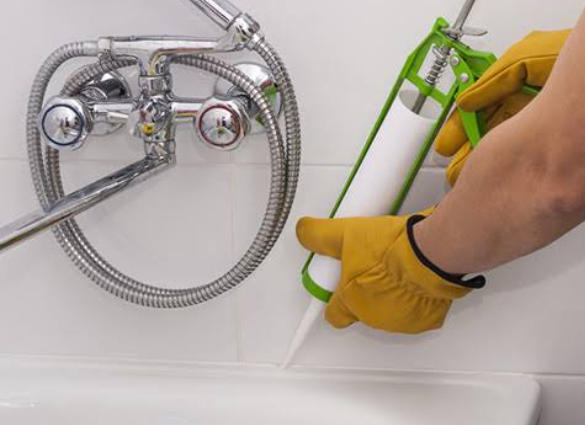
Before we talk about water, we need to clear up one of the biggest misconceptions about silicone: it doesn't dry. Paint dries — the solvent evaporates, leaving pigment behind. Silicone cures. There's no solvent to evaporate. Instead, silicone undergoes a chemical reaction called condensation polymerisation, where molecules in the sealant link together to form long chains.
That reaction needs one key ingredient: atmospheric moisture. The water vapour in the air triggers and sustains the cross-linking that turns soft paste into flexible rubber. This means, counter-intuitively, that some amount of water isn't just harmless during curing — it's essential.
In normal conditions, silicone sealant skins over within 15–60 minutes and fully cures through its depth in roughly 24 hours. But those numbers can shift significantly depending on the moisture level in the surrounding air.
Higher humidity = faster initial cure. When relative humidity is above 50%, there's plenty of water vapour available at the surface of the bead to drive the cross-linking reaction. In these conditions, skinning often happens within 20–30 minutes, and the surface feels dry to touch noticeably sooner than on a low-humidity day.
Low humidity = slower cure. In heated indoor spaces during winter, where humidity might drop below 30%, the same product can take twice as long to form a surface skin. The reaction still proceeds — it just does so more slowly because there's less water available to feed it.
This is why experienced applicators often prefer applying silicone on slightly damp days rather than bone-dry ones. The ambient moisture gives the chemistry a head start.
This is where things get interesting. A technique used by professional sealant contractors involves lightly misting freshly applied silicone with clean water after the surface has skinned over. The idea is simple: adding controlled moisture to the surface accelerates the cure from both sides simultaneously.
When misting works:
Under these conditions, a light mist can shave hours off the effective cure time, particularly for thicker beads where the interior would otherwise be waiting for moisture to diffuse inward slowly.
When misting causes problems:
This distinction matters enormously if you're trying to manage cure time. Water affects these two stages differently.
Surface skinning is driven almost exclusively by the moisture at the immediate surface of the bead. High humidity or a light mist dramatically speeds this phase. A skinned-over surface protects the interior from contamination, dust, and light contact — which is why reaching this stage quickly is useful.
Full through-cure, however, depends on moisture gradually penetrating deeper into the bead over time. While high ambient humidity helps here too, the rate-limiting factor becomes diffusion — water vapour moving through already-cured material to reach the uncured core. No amount of surface misting will dramatically accelerate deep-cure beyond a certain point; the chemistry just needs time.
For most practical purposes, this means you can meaningfully influence how fast the surface sets, but the full 24-hour (or longer) cure window for complete hardness is largely fixed by product formulation and bead thickness.
The two main families of silicone sealant behave somewhat differently when exposed to moisture during cure.
Acetic cure silicone releases acetic acid as it cures. The acid creates a mildly acidic micro-environment at the bead surface, which has two relevant effects: first, it tends to discourage mould growth during the vulnerable early stages, and second, the acid itself participates in accelerating the cure chemistry. Acetic silicones are generally forgiving of moderate humidity swings and respond well to careful post-skinning misting.
Neutral cure silicone releases alcohol instead of acid and cures slightly more slowly in most conditions. It's more tolerant of sensitive substrates — aluminium, copper, certain plastics — because there's no corrosive by-product. When it comes to water response, neutral cure silicones behave similarly to acetic types but may take marginally longer to reach equivalent firmness under identical humidity conditions. For applications near metals or electronics, this slower, gentler cure is worth the extra patience.
Water isn't the only environmental factor controlling cure speed. Temperature matters enormously, and it interacts with humidity in predictable ways.
If you're working in cool, dry conditions and need the job done quickly, raising the temperature (even temporarily with space heaters) is usually more effective than adding water alone. Warmth drives both the chemical reaction and the diffusion of moisture into the bead's interior.
Whether you want silicone to cure faster or need to keep it workable longer, here are proven approaches:
To speed up curing:
To extend working time:
Myth #1: "Pouring water on fresh silicone makes it cure instantly." False. Direct water contact before skinning damages the bead. After skinning, modest amounts help — pouring doesn't help more than fine misting.
Myth #2: "Silicone won't cure underwater." Partially false. Some specialised marine silicones do cure submerged, but standard construction silicone needs atmospheric oxygen access at least initially. Submerging fresh bead is not recommended.
Myth #3: "High humidity makes silicone turn cloudy permanently." Usually false. Temporary cloudiness during high-humidity curing typically clears once the bead fully cures and dries out. Persistent cloudiness usually indicates contamination or a defective product, not humidity itself.
Myth #4: "You should never let water near silicone while it's curing." False for anything beyond the first 30–60 minutes. Once skinned, moderate moisture exposure is generally beneficial and often intentional in professional practice.
Water does make silicone sealant cure faster — but only up to a point, and only when it arrives in the right way at the right time. Atmospheric humidity accelerates the surface skinning that protects the bead, and carefully timed misting after skinning can meaningfully reduce total cure time in dry environments. But direct water contact before the surface has formed causes real damage, and no amount of water will transform a 24-hour cure into a 10-minute one.
The practical takeaway is straightforward: use humidity to your advantage when you can, avoid water contact during the first hour, and trust the chemistry to do its work given reasonable time and conditions. Your sealed joints will reward you with years of reliable performance.
Copyright 2019 by Hangzhou Silicone Tech Adhesive Co., Ltd. All rights reserved.
Bathroom Sealant | Acrylic Sealant | Dow Corning 795 | Aquarium Sealant | Dow Corning 732 | Clear Silicone Sealant | Polysulfide Sealant | Glazing Sealant | Mirror Sealant | IG Sealant
Powered by Onepound


