E-mail:
sales@silicone-sealant-china.com

Timing Rain Exposure After Sealant Application: Critical Factors for Long-Term Performance
Proper timing of rain exposure after sealant application is essential to ensure adhesion, durability, and cost efficiency. Whether sealing driveways, roofs, or joints, moisture interference during critical curing phases can lead to peeling, cracking, or reduced lifespan. Below, we explore the science behind rain timing, environmental considerations, and strategies to mitigate risks.
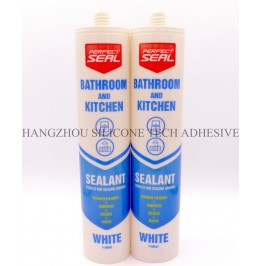
The initial drying period, typically lasting 4 to 8 hours, is when sealants transition from a liquid to a tack-free state. During this time, surface moisture can disrupt molecular bonding, causing streaks, uneven textures, or even partial washout. For example, asphalt sealants applied in damp conditions may exhibit patchy coverage, requiring full reapplication.
Key Risks:
Actionable Tip: Schedule applications during periods of stable, dry weather with at least 12 hours of no precipitation predicted.
While sealants may feel dry to the touch after 8 hours, full curing—where the material achieves maximum hardness and chemical resistance—takes 24 to 72 hours. Temperature and humidity significantly influence this timeline. For instance, cold weather (<50°F) can double curing time, while high humidity may slow solvent evaporation.
Long-Term Consequences of Early Rain:
Mitigation Strategies:
While rain is the primary concern, other environmental elements can indirectly affect sealant performance:
Temperature Fluctuations:
Humidity Levels:
Wind and Debris:
If rain occurs unexpectedly during or shortly after application, immediate action is required to prevent long-term damage:
Short-Term Fixes:
Long-Term Solutions:
Case Study: A 2023 study on asphalt sealants found that driveways resealed within 6 hours of rain required 40% more material over five years compared to those cured under dry conditions.
Controlling rain exposure after sealant application hinges on meticulous planning and environmental awareness. By prioritizing dry weather windows, monitoring curing progress, and addressing moisture risks promptly, contractors and homeowners can maximize sealant longevity. Always consult product-specific guidelines, as formulations vary in their tolerance to humidity and temperature.
Final Tip: Leverage weather forecasting tools to identify 48-hour dry periods, and consider fast-curing alternatives for regions prone to sudden showers. A proactive approach saves time, money, and frustration in the long run.
Copyright 2019 by Hangzhou Silicone Tech Adhesive Co., Ltd. All rights reserved.
Bathroom Sealant | Acrylic Sealant | Dow Corning 795 | Aquarium Sealant | Dow Corning 732 | Clear Silicone Sealant | Polysulfide Sealant | Glazing Sealant | Mirror Sealant | IG Sealant
Powered by Onepound


