E-mail:
sales@silicone-sealant-china.com

Sealants undergo a chemical transformation from a liquid or paste state to a solid, elastic material during curing. This process involves cross-linking of polymer chains, which determines the final mechanical properties such as flexibility, adhesion strength, and resistance to environmental factors. The curing time varies significantly based on the sealant type—silicone, polyurethane, or acrylic—and environmental conditions like temperature and humidity.
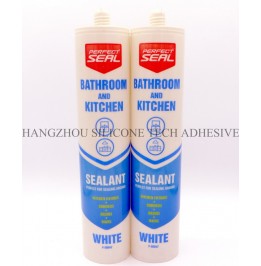
For instance, silicone sealants, commonly used in high-vibration environments like automotive and aerospace applications, rely on moisture in the air to initiate curing. Under standard conditions, they may achieve surface dryness within 30 minutes but require 24–72 hours to reach full cure. In contrast, two-part polyurethane sealants cure through a chemical reaction between components, offering faster initial set times but still needing 24 hours or more for complete hardening.
Temperature and humidity play critical roles in sealant curing. Higher temperatures accelerate chemical reactions, reducing cure time, while low temperatures slow the process. For example, a silicone sealant applied at 25°C may cure in 24 hours, but at 10°C, the same product could require 72 hours. Humidity affects moisture-cured sealants; dry environments delay curing, while high humidity speeds it up.
Thicker sealant beads or layers take longer to cure due to reduced surface-area-to-volume ratios, which limit moisture or catalyst penetration. A 6mm-thick silicone bead may need 48 hours to cure fully, whereas a 3mm layer might reach the same state in 24 hours. Additionally, improper application, such as uneven spreading or air entrapment, can create voids that prolong curing or compromise structural integrity.
The substrate’s porosity and chemical composition influence adhesion and curing. Non-porous materials like glass or metal may require primers to enhance bond strength, adding steps that indirectly affect cure time. Rough or contaminated surfaces, such as oily concrete, can delay curing by preventing proper sealant-substrate contact.
In automotive manufacturing, sealants used for engine gaskets or chassis components must withstand constant vibration and thermal cycling. Manufacturers typically specify a minimum cure time of 24 hours at 23°C before subjecting parts to dynamic testing. For high-temperature sealants used in exhaust systems, a 72-hour cure at ambient temperature followed by a heat-aging cycle ensures stability under extreme conditions.
Structural glazing and joint sealing in buildings require sealants to resist wind-induced vibrations and seismic activity. Industry standards like ASTM C920 mandate a 7-day cure period for silicone sealants in critical joints, with interim checks for adhesion and flexibility. In cold climates, contractors may use accelerated curing agents or heated enclosures to meet deadlines without compromising performance.
Aerospace applications demand sealants that maintain elasticity under vibration and pressure fluctuations. For example, fuel tank seals must cure for 48–72 hours at controlled temperatures before pressure testing. Marine environments, where saltwater exposure accelerates corrosion, require sealants to cure fully within 24 hours to prevent premature failure.
To ensure sealants achieve optimal vibration resistance, follow these guidelines:
By aligning cure times with material properties and application requirements, professionals can ensure sealants deliver long-lasting performance in vibration-prone environments.
Copyright 2019 by Hangzhou Silicone Tech Adhesive Co., Ltd. All rights reserved.
Bathroom Sealant | Acrylic Sealant | Dow Corning 795 | Aquarium Sealant | Dow Corning 732 | Clear Silicone Sealant | Polysulfide Sealant | Glazing Sealant | Mirror Sealant | IG Sealant
Powered by Onepound


