E-mail:
sales@silicone-sealant-china.com

One difference, and it sits in the additive package rather than the polymer. Sanitary silicone carries a fungicide that slows mould growth; regular silicone does not. Everything else — adhesion, flexibility, movement capacity, cure chemistry, temperature range — is the same chemistry under a different label. That single additive typically adds 20–40% to the cartridge price, which is either excellent value or wasted money depending on where the joint sits. This page sets out where the two grades genuinely diverge and where the choice is simply cost.
It inhibits mould and mildew colonising the cured rubber, and it works from inside the bead as well as the surface. In a shower that never fully dries, that is the difference between a seal that stays white for five years and one that speckles within eighteen months. Quality matters here: the dosage and the active ingredient vary widely between factories, and an underdosed cartridge behaves exactly like a regular one.
It does not stop mould growing on soap scum, shampoo residue, or body oils sitting on the surface. It does not make the seal waterproof in the structural sense, and it does not extend service life in a dry location. Those are the cases where buyers pay a premium for an additive that never gets a chance to work.
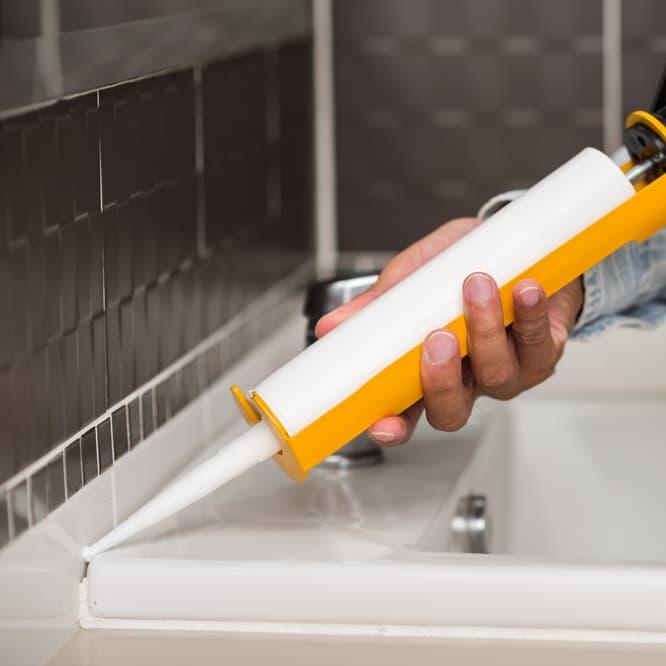
Both grades bond the same way, move the same amount, and cure on the same schedule. Both come in acetoxy and neutral systems, and the chemistry rule does not change with the grade: an acetoxy silicone sealant suits glass and glazed tile, while a neutral cure silicone is required around chrome, mirrors, and stone. Neither sticks to a damp or dirty substrate, and neither will bond over old silicone. A sanitary label does not rescue bad preparation.
Choose sanitary silicone for wet rooms and regular silicone everywhere else. The fungicide is the whole difference, so pay for it where mould can actually take hold and skip it where it cannot. Confirm the dosage with your supplier rather than trusting the word "sanitary" on the label, and the specification takes care of itself.
Copyright 2019 by Hangzhou Silicone Tech Adhesive Co., Ltd. All rights reserved.
Bathroom Sealant | Acrylic Sealant | Dow Corning 795 | Aquarium Sealant | Dow Corning 732 | Clear Silicone Sealant | Polysulfide Sealant | Glazing Sealant | Mirror Sealant | IG Sealant
Powered by Onepound


