E-mail:
sales@silicone-sealant-china.com

When it comes to applying sealant using a caulking gun, the way you hold the tool can significantly impact the quality of the application. A proper grip and angle ensure a smooth, even bead of sealant, reducing the need for extensive touch - ups later. Here are some essential tips for mastering the caulking gun here, we'll use the English equivalent "holding" angle during sealant application.
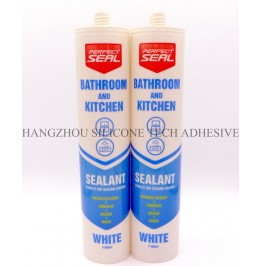
Before focusing on the angle, getting the basic grip right is crucial. A comfortable and stable grip forms the foundation for precise sealant application.
For most applications, a two - hand grip is recommended. Place your dominant hand on the trigger of the caulking gun. This hand will control the flow of the sealant by squeezing the trigger. Your non - dominant hand should be placed near the front of the gun, just behind the nozzle. This hand provides stability and helps guide the gun along the surface being sealed.
On the trigger hand, position your index finger on the top of the trigger for better control. Your middle and ring fingers can wrap around the handle for added support. On the non - dominant hand, keep your fingers spread out slightly to maintain a firm grip on the front part of the gun. This grip allows you to have better maneuverability and control over the direction and speed of the sealant application.
When applying sealant on horizontal surfaces, such as countertops or window sills, the angle of the caulking gun plays a vital role in achieving a neat finish.
A 45 - degree angle between the caulking gun and the surface is often considered ideal for horizontal applications. This angle allows the sealant to flow smoothly out of the nozzle and onto the surface. As you move the gun along the joint, the 45 - degree angle helps in creating a consistent bead with a proper cross - section. It ensures that the sealant fills the joint evenly without creating air pockets or uneven bulges.
It's essential to maintain a steady 45 - degree angle throughout the application process. Any sudden changes in the angle can result in an inconsistent bead. To achieve this, keep your elbows close to your body and move your entire arm in a smooth, continuous motion. Avoid jerky movements, as they can cause the sealant to be applied unevenly. If you're working on a long horizontal surface, take short breaks to readjust your grip and ensure the angle remains consistent.
Applying sealant on vertical surfaces, like walls or the sides of bathtubs, presents a different set of challenges. The angle at which you hold the caulking gun needs to be adjusted to account for gravity.
For vertical applications, hold the caulking gun at a slightly upward angle, typically around 10 - 15 degrees from the vertical. This angle helps counteract the force of gravity, preventing the sealant from sagging or running down the surface before it has a chance to cure. As you move the gun up or down the vertical joint, the upward angle ensures that the sealant is applied in a controlled manner, creating a straight and even bead.
When working on vertical surfaces, it's generally a good practice to start from the bottom and work your way up. This allows you to build up the sealant bead gradually and gives you better control over the application. As you move upward, maintain the slightly upward angle of the caulking gun. If you're applying sealant around a corner on a vertical surface, be extra careful to adjust the angle smoothly to ensure a seamless transition.
Corners and curved surfaces require special attention when it comes to the caulking gun angle to achieve a professional - looking finish.
When applying sealant in inside corners, such as the corner where two walls meet or the corner of a shower enclosure, you'll need to change the angle of the caulking gun frequently. As you approach the corner, start to pivot the gun slightly to follow the angle of the corner. You may need to hold the gun at a more acute angle, close to 30 degrees, to ensure that the sealant fills the corner completely without leaving any gaps. Move the gun slowly and carefully around the corner to create a smooth transition.
For outside curves, like the edge of a rounded countertop or a curved window frame, the angle of the caulking gun should be adjusted continuously to match the curvature of the surface. As you move along the curve, rotate your wrist slightly to keep the nozzle in contact with the surface and maintain a consistent bead. It may take some practice to get the hang of following the curve smoothly, but with patience, you can achieve a seamless sealant application.
Copyright 2019 by Hangzhou Silicone Tech Adhesive Co., Ltd. All rights reserved.
Bathroom Sealant | Acrylic Sealant | Dow Corning 795 | Aquarium Sealant | Dow Corning 732 | Clear Silicone Sealant | Polysulfide Sealant | Glazing Sealant | Mirror Sealant | IG Sealant
Powered by Onepound


